
Smart traps that can identify predators in real time and decide for themselves whether to trigger are being tested by conservation projects around New Zealand.
For conservation projects working towards eradication, catching the first predator is rarely the hardest part. It’s the last ones that cause headaches.
After years of control efforts, the target species that remain have often learned to avoid traditional traps.
That’s why conservation groups are increasingly looking to new technology for help.
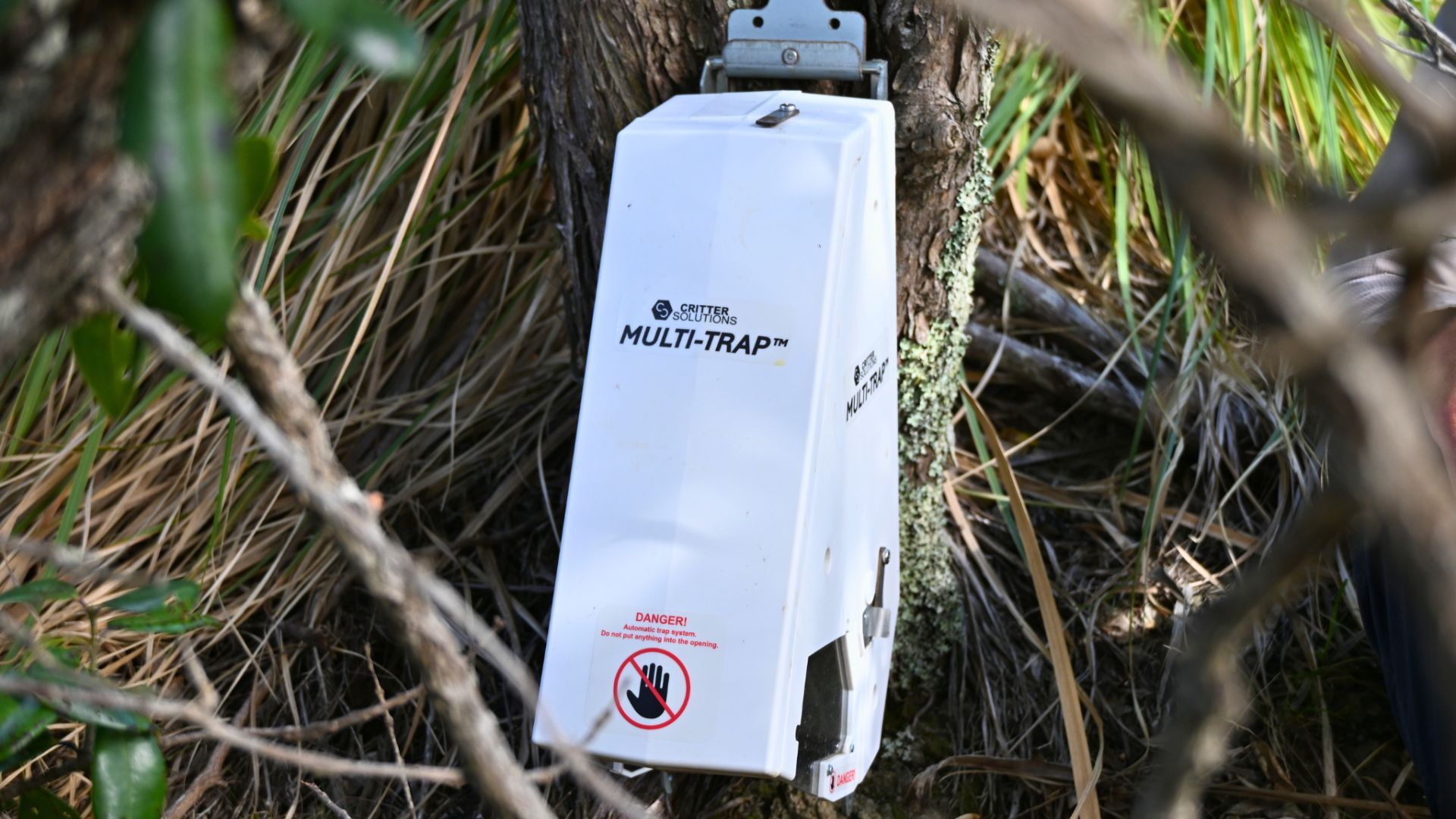
One such innovation is the Multi-trap, developed by Critter Solutions, with funding support from disestablished Predator Free 2050 Limited and ongoing support by the Department of Conservation.
Combining AI and rapid data capture, the trap has been designed to target a range of pest species – while avoiding everything else.
Teaching a trap to think
According to Critter Solutions research lead Helen Blackie, the ability to identify animals as a means of triggering a trap has long been a goal for predator control technology.
“The holy grail has always been being able to remove conventional trap barriers and have a technology that automatically identifies exactly what is interacting with the trap,” she says.
Unlike conventional traps, the Multi-trap doesn’t rely on a mechanical trigger. Instead, onboard AI uses image recognition and additional sensors to identify an animal in real time.
“It’s edge AI,” says Helen. “The trap is thinking for itself.”
The trap can identify animals and respond in fractions of a second, and does not require any connectivity to work.
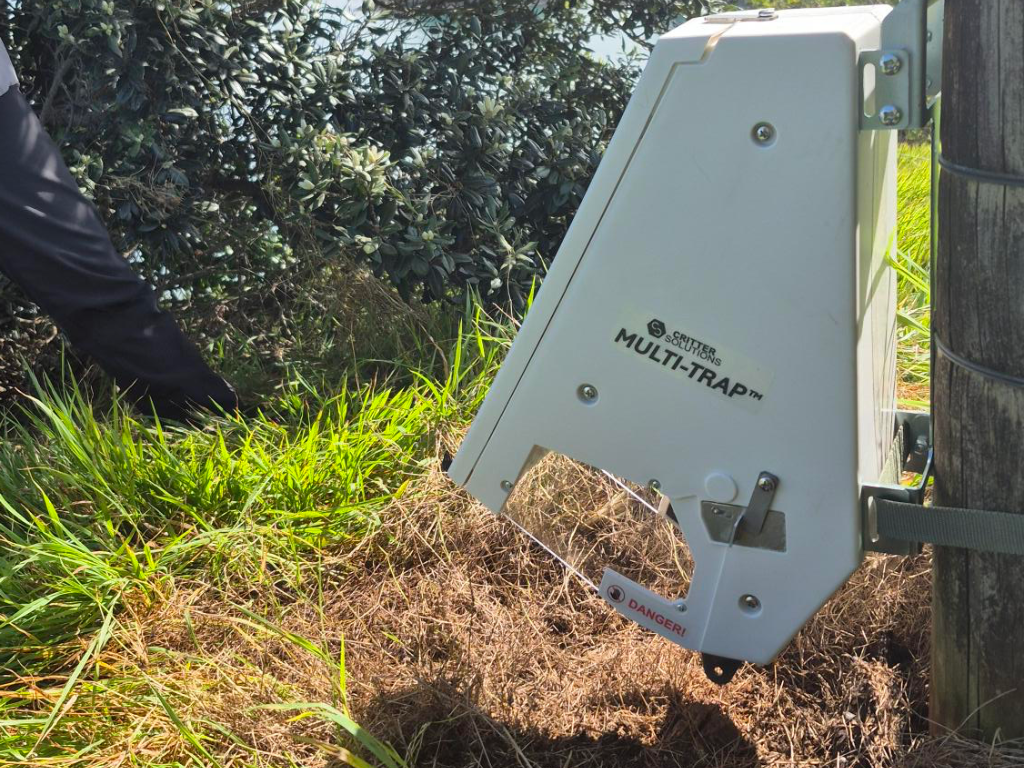
The AI doesn’t just determine whether an animal is a target species – it also checks whether the animal is positioned correctly for a humane kill. “You can’t do that with a conventional trap,” says Helen.
The trap has achieved NAWAC Class A welfare standards, and target species can be selected to focus on what the user is after, like rats or stoats.
Helping Waiheke search for the last stoats
Te Korowai o Waiheke was selected as one of several projects to receive some Multi-traps.
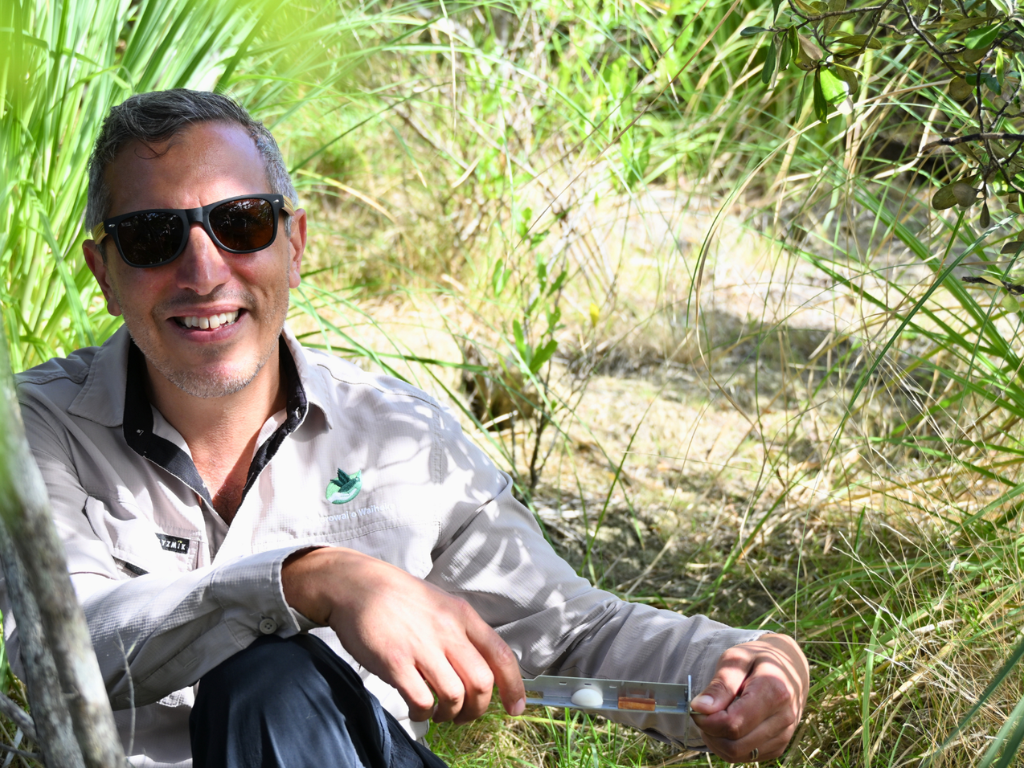
The island has already made significant progress in reducing predator numbers, with around 1,800 DOC 200 traps operating across the environment.
“The majority of any target species can be caught using a tool, but it’s the tail end – those last individuals – that takes a huge amount of effort,” says Te Korowai o Waiheke project director Jenny Holmes.
“The stoats that are left on the island have had the chance to walk past a wooden box trap and choose not to go inside.”
The team wanted traps that could be placed anywhere without risk of triggering on non-target
species, given that so much of the island is private land where people have pets.
Learning what’s not a pest
The Multi-trap can operate in a data-collection only mode, recording encounters without triggering. That information can then be used to improve the AI’s understanding of target and non-target species.
The trap must identify a target species within a confidence threshold (set by the user, usually around 95%) three separate times before triggering.
For Frank Lepera, Te Korowai o Waiheke’s stoat operations manager, the results have been encouraging.
“Even during that training period, it never identified a non-target, like a weka, as a target,” he says.
On Waiheke, the traps initially spent several months collecting data on local wildlife, such as weka.
More than just a smart trap
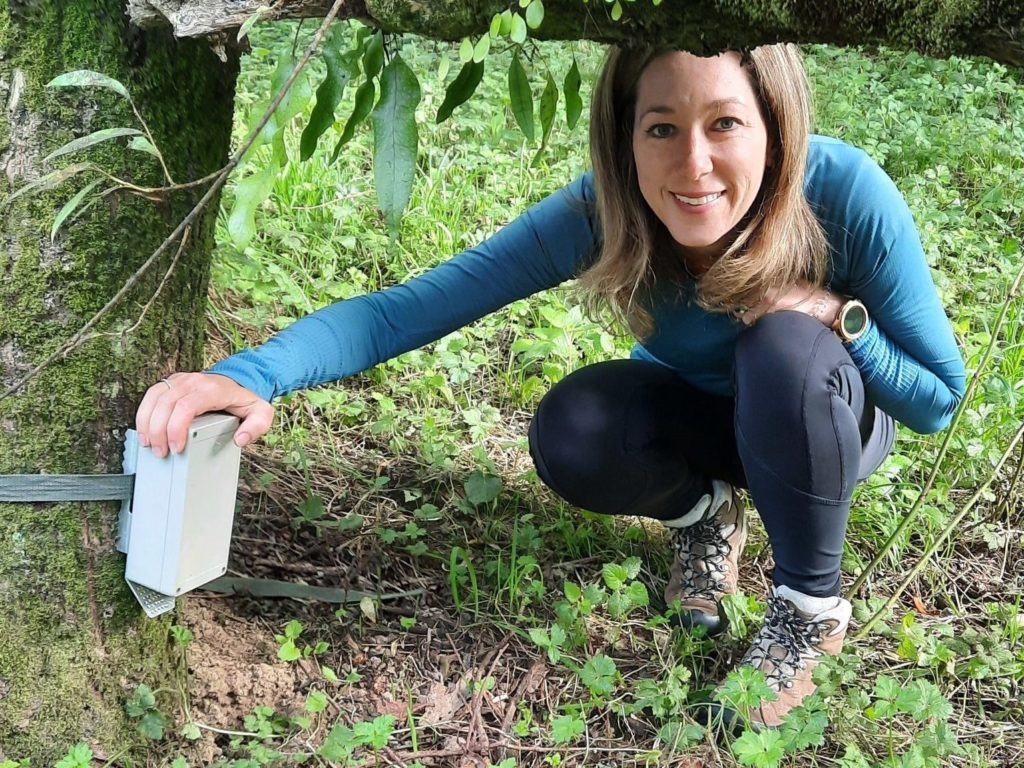
While the artificial intelligence is one of the main draws, Helen believes another feature is just as important: the trap resets itself.
“We’ve had situations where a trap has killed multiple rats and possums within a matter of hours. If it had been a single-set trap, you would only have caught one.”
That capability can significantly reduce labour requirements, particularly in remote locations.
“Labour is one of our biggest costs [on Waiheke],” says Frank.
“We visit our trap network at least every fortnight. Anything that reduces the number of hours required, while still giving us confidence that it’s doing the job, is hugely valuable.”
A tool for the final push
Helen believes the rapid advances in artificial intelligence mean New Zealand is approaching a point where many of the tools needed for large-scale eradication are becoming available.
The next challenge is proving they can work at scale and at a cost that conservation groups can afford.
“Anyone interested can register their interest online. We can then get back to people to discuss the specs of what they want.”
For teams like Te Korowai o Waiheke, however, the immediate focus remains much simpler.
“We’ve got tools that can catch stoats,” says Lepera. “What we need is a tool that can catch the last stoat.”
If smart traps can do that, they could become an important part of all conservation groups’ toolkits.