Drones that can lift up to 100kg are bringing innovation to the predator free space, delivering traps, bait – even lunch for hungry trappers – through thick bush and up tricky mountain slopes. And they’re making predator free projects significantly faster and cheaper.
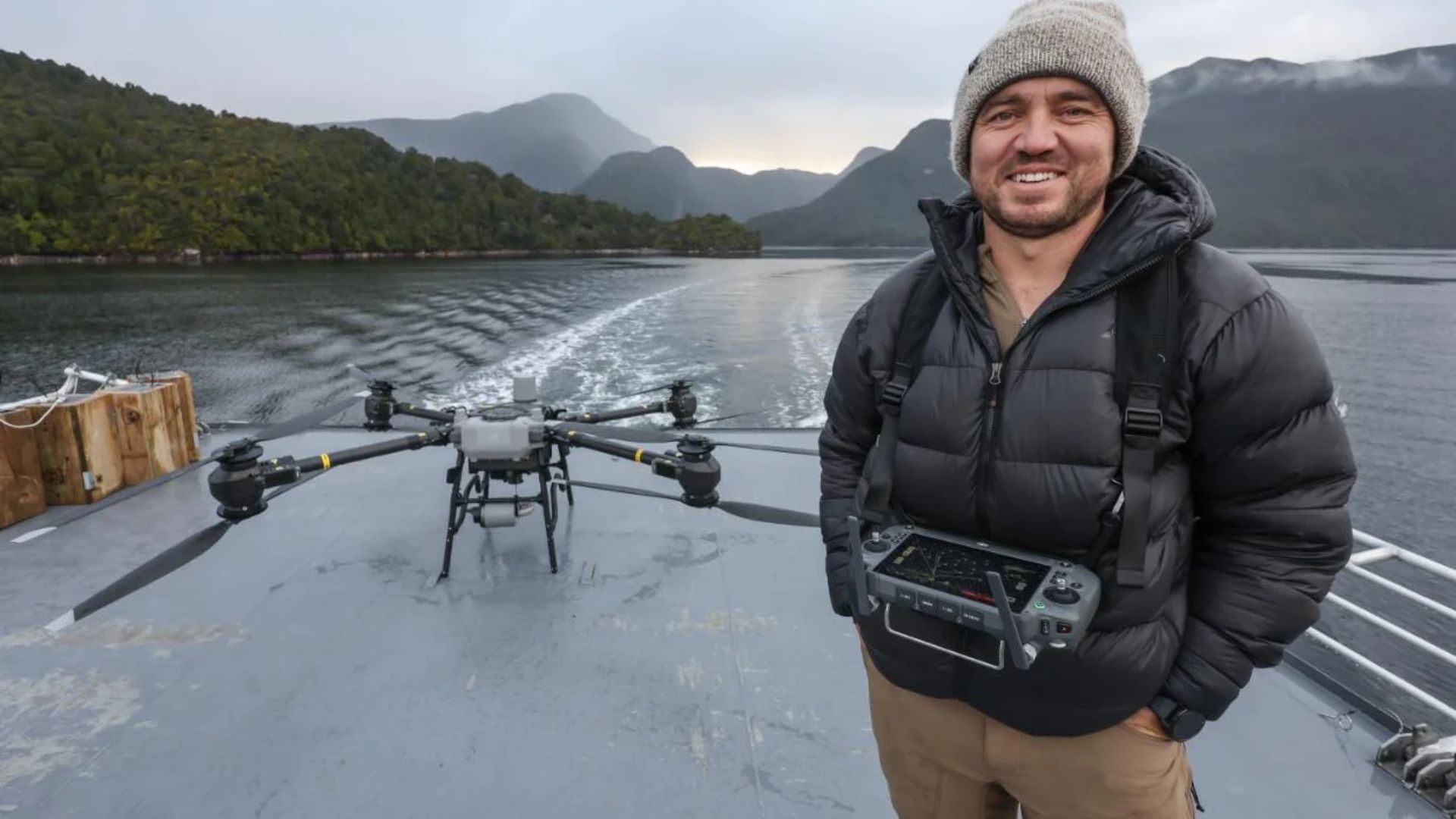
Khan Adam, managing director of specialist drone company ProVision Ltd in Canterbury, operates a fleet of drones with impressive high-tech capabilities, from hauling up to 100kg to spraying invasive weeds to heat-detecting hedgehogs from hundreds of metres away.
He spoke with the Predator Free NZ Trust about three impressive uses of drones in predator control.
Hauling traps
The traditional way to lay a trap line is hard physical labour. First, there’s the walking, on barely formed tracks (on mountains! across rivers! through dense bush!), then there’s the lugging in of the traps themselves. One DOC 200 in a wooden box, a common trap for stoats and rats, weighs over 6kg. Depending on the type of traps being installed, it can mean carrying up to 30kg on your back.
“We’ve kind of broken that model,” Khan says.
Working at Pigeon Island in Tamatea (Dusky Sound) earlier this year, Khan’s drones flew 220 traps from a ship, straight to volunteer trappers waiting in the bush.
Savings – in terms of labour and cash – can be massive.
“It probably would have taken five to seven days for a crew of four or five guys to do that, and we did it in just a day.
“There’s very minimal carrying where, historically, they would have had to carry them in massive loads to get them into place.”
They are planning a similar project for the West Coast’s Predator Free Te Kinga project. A helicopter will drop staff to the top of the mountain. In the past, they would have had to physically carry every single trap down the hill. This time, the drone will do about 600 lifts, delivering traps to people along the way.
“We’re saving a lot of money and manpower, and obviously [there’s a] big health and safety element to it. People aren’t carrying the big loads like they used to.”
The FlyCart30 has some cool in-built safety features too, like dual batteries in case one fails, eight separate motors, and a built-in parachute that deploys if there’s an issue with the drone.
And Khan’s just upped his game, getting his hands on a new drone capable of lifting 100kg or spraying 100L – the Agras T100. Khan says it’s the first in the country to be used commercially.
Tracking down the last tricky predators
Khan’s drones can also be used for monitoring, such as tracking down the last evasive possums on the Otago Peninsula for Predator Free Dunedin.

Thanks to millions of years of ocean slamming against the land, the Otago Peninsula has some pretty hostile cliffs. It’s just about impossible to survey this land, and that’s where the heat-detecting drones come in.
“The possums emit heat when they are out feeding, and the thermal camera on the drone detects this. We can then drop a waypoint location where we found the possums so the team can devise a control plan.
“The thermal technology and the drones have been a bit of a game changer,” Khan says, “especially when you get to our highest peak of thermal sensors, being able to find hedgehogs from a few hundred meters away.”
The surveillance tools can also be used to collect data on recovering bird populations.
“They’re a pretty key tool to the predator free movement,” Khan says.
Dropping bait – and saving big bucks
For virtually any project where a drone can replace a helicopter, there will be savings.
Heavy-lifting drones have significant potential for dispersing toxic bait, traditionally a job for helicopters.
Khan uses big agricultural drones to disperse bait – the Agras T25, T40 and T50, which can take loads of 25kg to 50kg.
These drones are accompanying Khan to the Chagos Islands, in the middle of the Indian Ocean. The British Government has contracted ProVision for a rat eradication project, another example of NZ exporting predator free expertise. Khan has been operating the drones from the bow of a ship for about a month.
He sees much greater potential for drones in this space back home in New Zealand, especially for island eradication projects.
And aside from the lower cost compared to helicopters, drones also emit far less carbon.
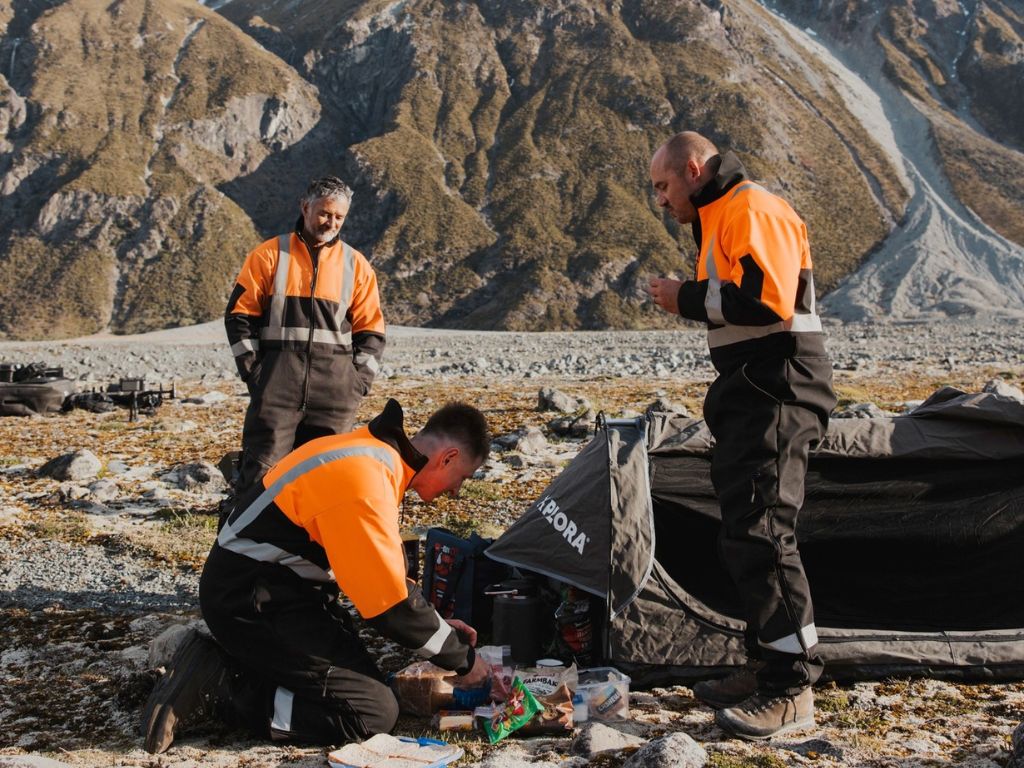
“We’ve got to run a small petrol generator to charge the batteries,” Khan says, “but there’s a massive difference.”
But, these are not drones that just anyone can operate.
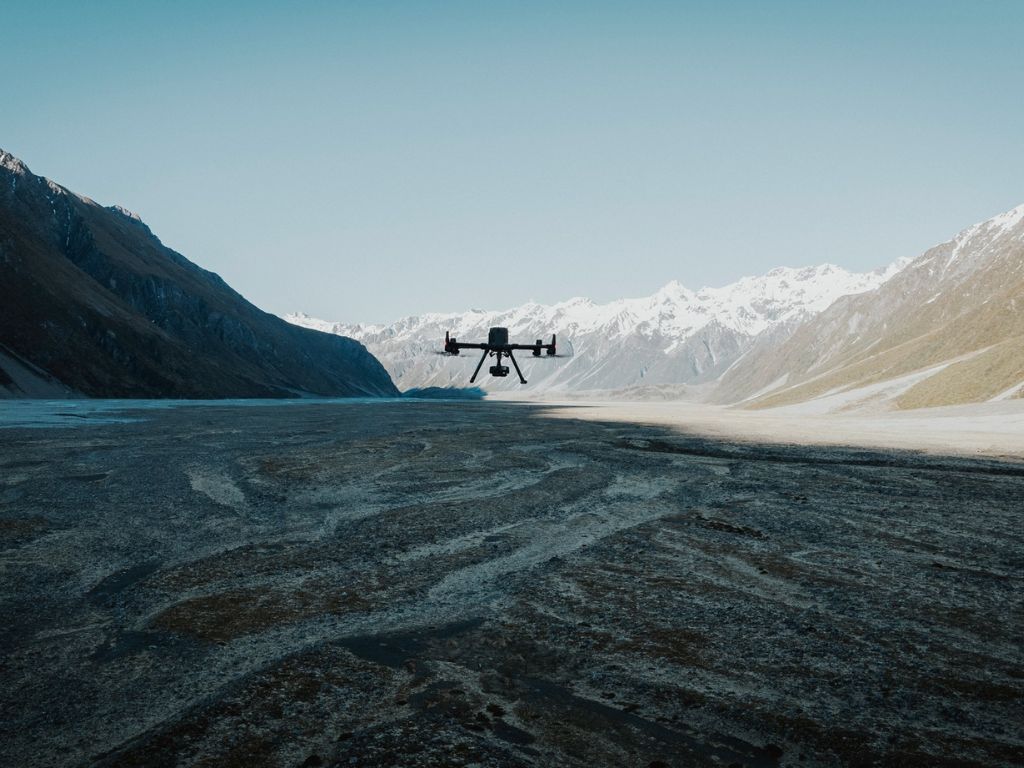
“There’s quite a pathway to being able to operate these bigger drones,” Khan says. “You need to be certified and have a manual signed off by the CAA [Civil Aviation Authority] to say that you can operate all of these drones in these conditions.”
Khan has additional certifications for a range of activities, including night flying, bait spreading, and operating aircraft weighing over 25kg.
Predator control is just one element of the type of work Khan’s doing. His drones are also delivering seedlings and gear to forestry workers, tracking down and spraying pest plants, and supporting search and rescue, fire and police.
The potential for drones seems endless. It’s just a matter of figuring out how to harness that potential to support predator free goals, Khan says.