If you take a closer look at the ubiquitous orange $5 note, you’ll see clues to one of the world’s biggest conservation triumphs, which began 25 years ago.
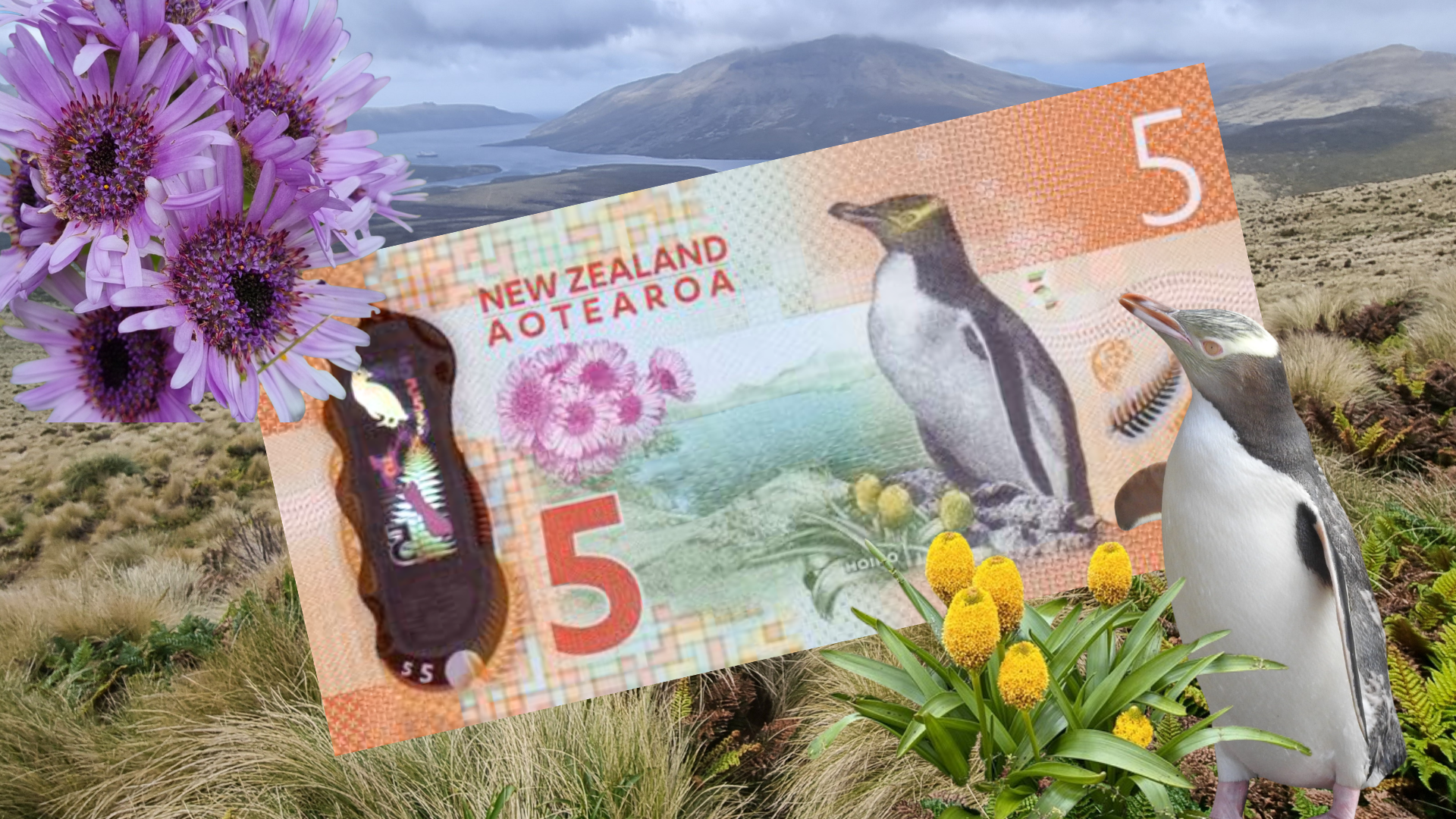
Most of us recognise our most intrepid adventurer, Sir Edmund Hillary, whose craggy face graces one side of the note. But turn it over, and there’s a story hiding in plain sight. Four clues feature: a tall penguin with yellow goggles, an island view, a tuft of funny-looking yellow flowers, and a bouquet of purple daisies.
Together they paint a picture from Motu Ihupuku (Campbell Island), the southernmost of NZ’s subantarctic islands and a UNESCO World Heritage Area.
Hoiho (yellow-eyed penguin) breed there, Ross lilies produce spectacular yellow flower heads, and Campbell Island daisies are purple mega herbs that grow only in the region. When the bill was first designed in the 1990s, the reality of life on the island was far less idyllic than pictured.
Ruled by rats
For nearly 200 years, rats ruled the 11,300-hectare island, decimating endemic wildlife and earning Campbell Island the dreadful reputation of having the highest Norway rat population density known anywhere in the world.
A rich and extensive smorgasbord greeted Norway rats as they scampered ashore from whaling and sealing ships in the early 1800s.
Albatross eggs and chicks were easy pickings, eaten from their sea-cliff nests.
Snipe and teal were easy meals as they foraged along waterways and in the vegetation. Some managed to survive by taking refuge on rocky outlying islets.
A species of kākāriki disappeared completely; all that remained were dusty bones, preserved in a cave.

Norway rats also munched through the island’s invertebrates and vegetation, including ground wētā, giant slugs, weevils and mega herbs found nowhere else on earth.
By the early 2000s, the rat population swelled to an estimated 200,000. They were the only introduced pests left on the island after feral sheep (the remains of a farming attempt gone awry) were removed, and feral cats had died out.
The island’s sheer size (about six times bigger than any island eradication attempted before), its consistently wet and windy weather, and its isolation (700km south of Bluff through stormy seas) made eradicating rats seem impossible.
It turns out New Zealand was up for the challenge.
All go in winter, 2001
In the world’s largest and most ambitious rat eradication operation at the time, Campbell Island was blitzed with rat poison in the winter of 2001.
The pros: a winter operation meant the penguins, albatross and skua would be at sea, away from the harmful helicopter blades and toxic bait.
The cons: winter conditions in an already inclement region.
The Department of Conservation (DOC) team tasked with the monumental mission would need 60 hours of relatively calm, clear weather to do the job. However, on three out of four days on Campbell Island, the wind blows 63 km/h, gusting up to 90 km/h. There’s an average of 12 hours of total sunshine in June. Rain falls 325 days a year. Temps barely rise above 6 degrees Celsius.
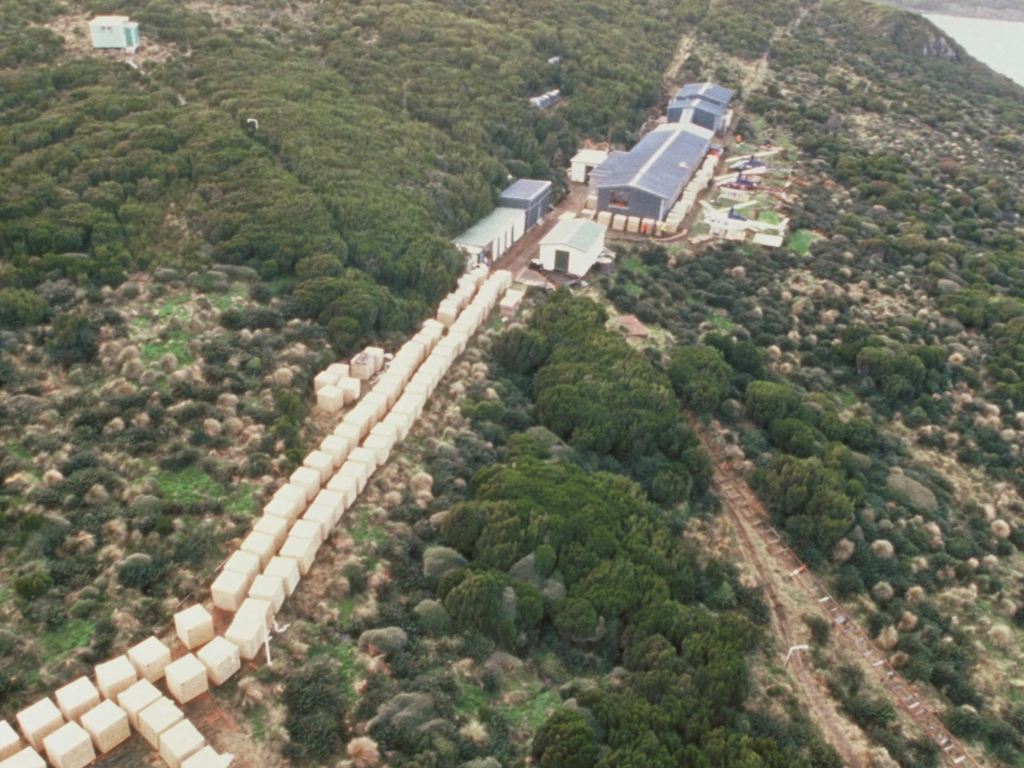
In an unbelievable window of uncharacteristically good weather, the 19-member eradication team spent just over a month on the island spreading 120 tonnes of poison bait.
Advances in technology like GPS-equipped helicopters (hot new tech in the early 2000s) were vital for covering Campbell Island’s rugged terrain. The helicopter pilots were carefully selected; not even the smallest gap in bait spread was permissible. Even a few missed rats would doom the operation. GPS let pilots see where they needed to fly using special bait-spreading buckets, and recorded their routes so they could revisit any missed areas.
In his account published by New Zealand Geographic, project leader Pete McClelland described the exceptional care and precision needed for sowing the bait – nowhere more so than along the island’s sea cliffs.
“Not only was there the danger of vicious updrafts, but especial thoroughness was required to land sufficient bait on ledges and clefts likely to be frequented by rats.”
After six weeks on the island, the operation was over. It became a waiting game.
Checking the results
Two years later, the DOC team returned to monitor whether it worked.
Hiking up and down the steep island, they found no rats.
Instead, they found fields of megaherbs, wētā, birds and evidence that snipe had already returned from exile.
In 2003, the island was officially declared rat-free. DOC was on a high: “If we can do Campbell, we can do almost anywhere in the world.”
Humans began visiting with special permits and under rigorous biosecurity procedures. Intrepid tour companies like Heritage Expeditions bring people to the captivating island to see the wildlife and megaherbs.

It changed what people thought was possible

Campbell Island’s success set a new standard for island restoration projects. It opened the possibility of further projects – at home and internationally.
The techniques and experience developed inspired predator eradication projects on other subantarctic islands. Macquarie Island (Australia) was cleared of rabbits, mice and rats in 2010, while South Georgia Island (Britain) gained the title of the world’s largest rodent eradication project, covering 100,000 hectares.
The story isn’t finished, though, as Auckland Island is the only remaining island in the NZ subantarctic region where pigs, cats and mice roam free. The eradication project plan is ready, but funding woes have pushed the plan back.
It would be our biggest and most complex island eradication job yet, but New Zealand has been there before. Twenty-five years ago there were 200,000 rats on Campbell Island. Today there are none, and we carry around the story in our wallets.