Monitoring birds can be hard, expensive and time-consuming. So a new acoustic device that “listens” to the forest 24/7 and provides detections, trends, and metrics gives time-strapped conservationists the real-time info they need.
Staying still for five minutes, recording all the birds seen or heard: the 5-minute bird count (5MBC) has been used to track forest bird populations since the 1970s. Anyone can do it, but it’s tough to juggle glimpses of birds and rapid auditory recognition. The twice-yearly snapshots leave a 363-day monitoring blind spot.
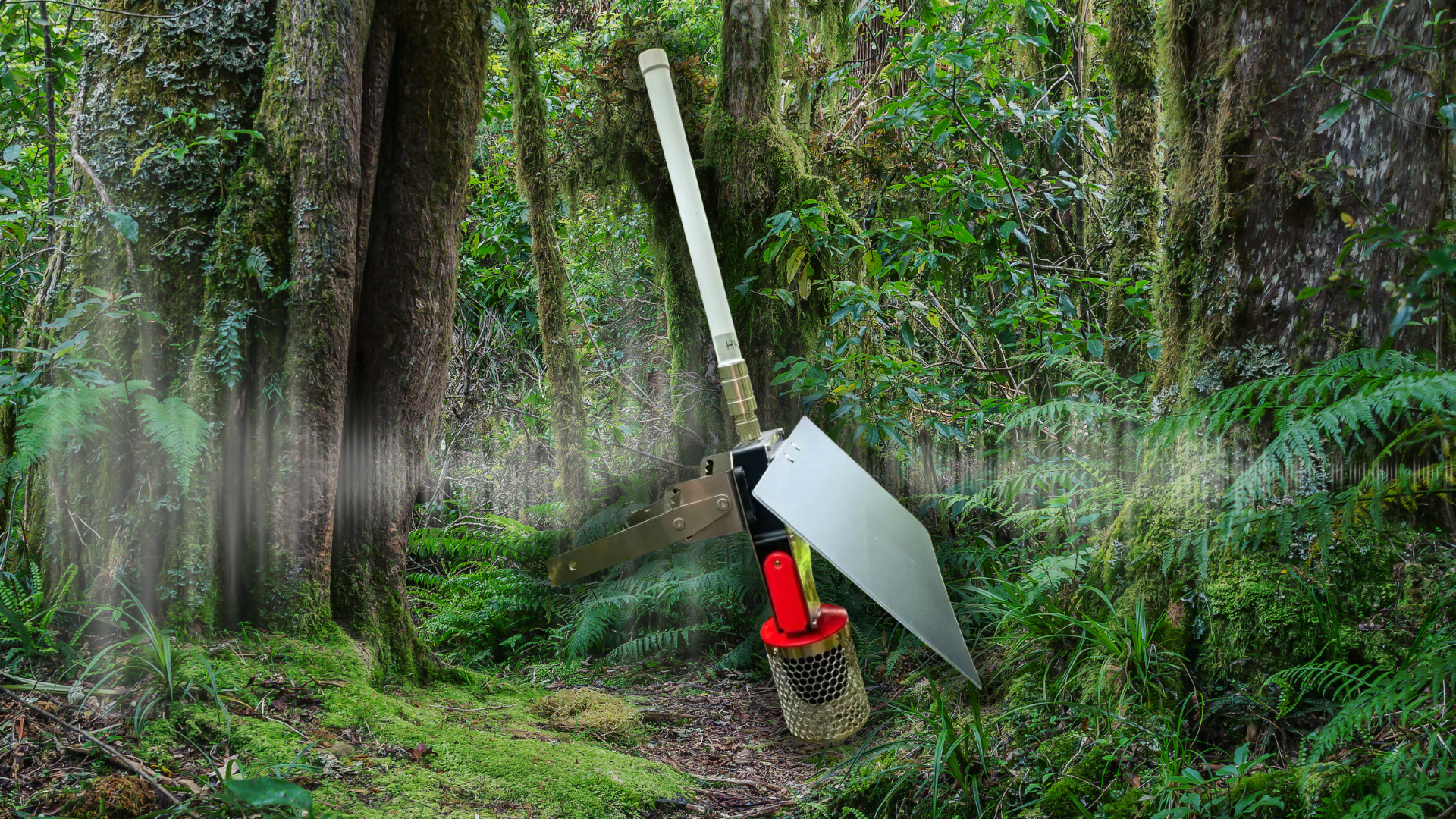
The acoustic monitor, HARK, was designed to fill this gap and capture every breath of the forest. It’s a tool that not only listens but also analyses, understands, and informs.
Tech under the canopy
Acoustic recorders have historically resulted in a bit of a “data graveyard”. Files upon files that go unanalysed due to time and labour constraints.
While some AI technology has started to process this information, such as Wildlife.ai’s Pepeketua ID project, barriers still remain.
Taranaki-based ecological organisation 800 Trust developed HARK to be the world’s first true edge AI acoustic wildlife monitor. Unlike traditional devices that store audio on SD cards, HARK is designed to run “Edge AI”, which runs on the device rather than in the cloud.
“Basically, it listens in real time and analyses everything it hears,” says Miranda Wells, 800 Trust project lead.
“It can run over 100 AI models in real-time… we’re able to identify all the different manu (birds) and also the pests.”
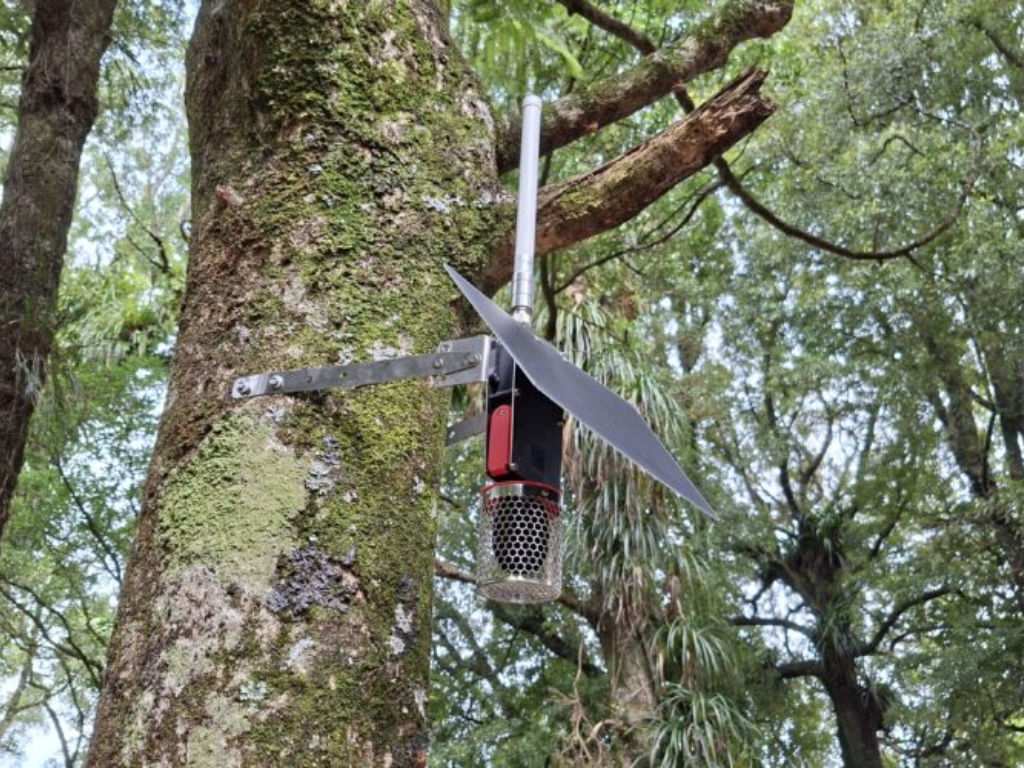
The hardware is “kiwi-hardened”: stainless steel, kea-proof, and rat-proof. It’s designed for a 10-year lifespan in extreme forest conditions. Because it runs Google’s Perch v2 AI model directly on the device, it manages power efficiently, running off low-light-optimised solar power.
If that sounds like a lot of computer jargon, no worries – the device self-configures so no IT degree is needed.
Three microphones listen non-stop at 192kHz, capturing every sound of the forest. It classifies without the need to transmit to data centres and transmits data via 4G (or a mesh network, where 4G is not available). Teams receive alerts in real time and see detections, trends, and metrics from anywhere.
Passive recording to active protection
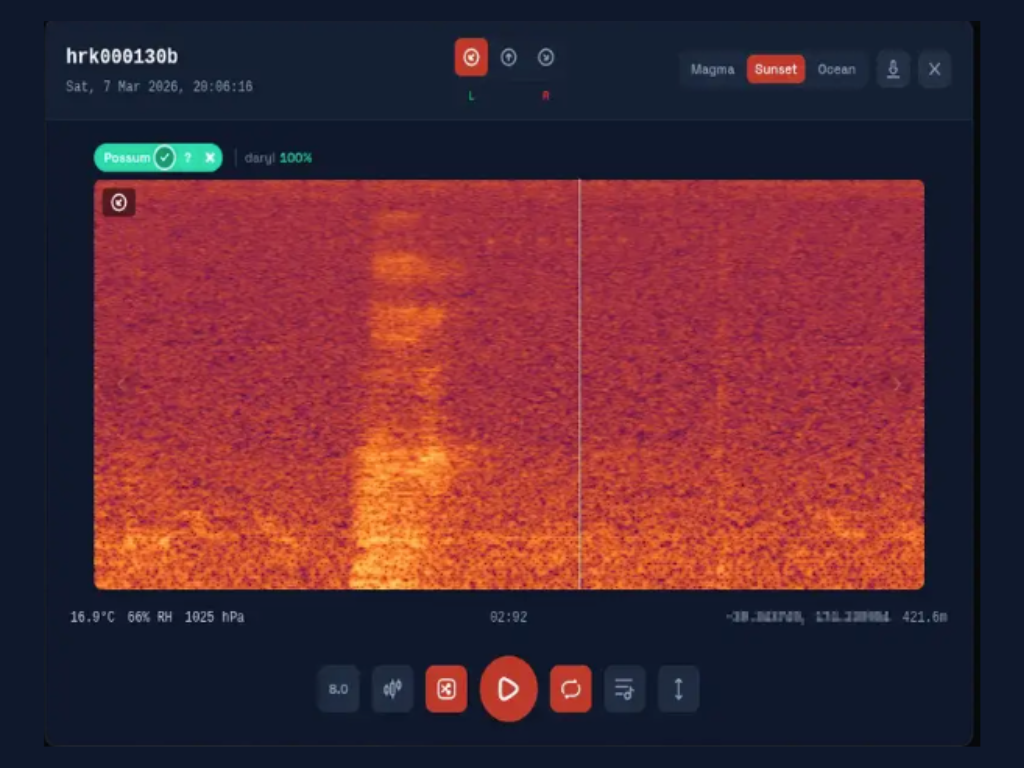
HARK captures nocturnal species, seasonal movements, response to environmental events and long-term population trends that traditional monitoring methods miss. No need for a delayed “post-mortem” of an SD card; instead, it replaces it with immediate awareness.
“At 2 am, you could receive a push notification that we’ve just heard a possum, and you’re trying to get rid of the last possum in an area,” says Wells. “Listen to it; it is a possum, and if it’s the last one, you’re quite likely going to get up and go!”
While the tech is not widely available until later this year, it has already been positively received locally, with Towards Predator-Free Taranaki utilising it in their zero possum project.
The device also monitors temperature, humidity, and barometric pressure, helping researchers correlate storm events with species loss.
HARK can do more than listen; the team is looking at ways to talk back.
“If a feral cat calls, we can talk back… have a conversation,” Wells adds. “Because we’re in real-time, why not have a conversation and bring it into the trap?”
Sound and stewardship
At the core of this project, HARK “gives forests a voice”, Miranda emphasises.
Having a continuous stream of data is an enormous advocacy tool that presents clear trends to policymakers and funding bodies.
Realising that community groups were held back by limited resources, the 800 Trust built HARK to remove time-intensive data collection and provide valuable insights essential for grant applications and funding endeavours. Funders want to know what is being achieved, what difference is being made.
“There was definitely a need to create something around monitoring because it’s really important to understand what’s going on when you are applying pest control. Are you succeeding? Are the pest numbers actually going down?”, says Miranda.
The device won “Best Hi-Tech Solution for the Public Good” at the 2026 NZ Hi-Tech Awards.