
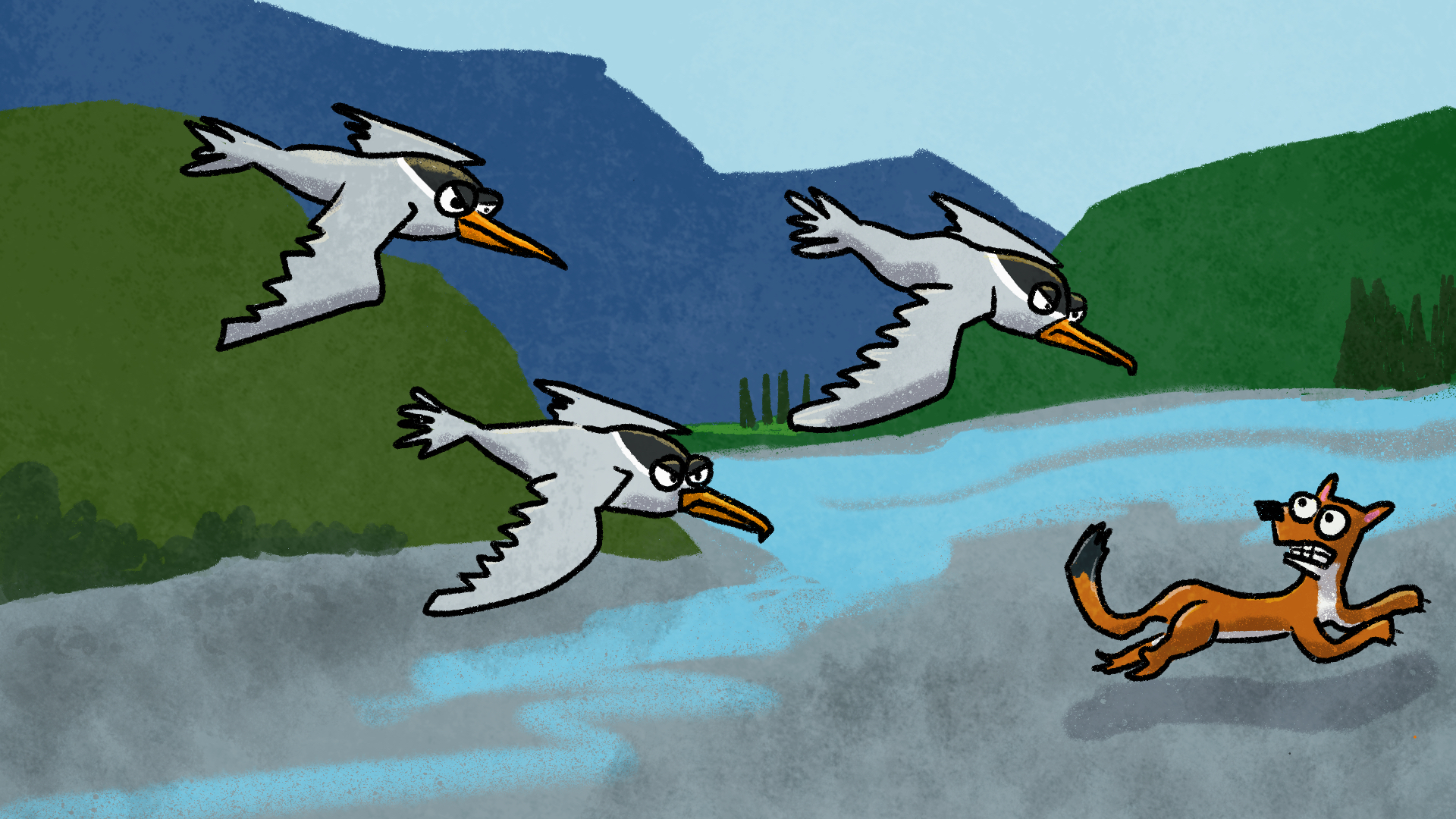
A flock of endangered black-fronted terns recently took on a stoat, dive-bombing until it disappeared. It was a small victory, but the encounter raises a bigger question: can New Zealand’s native birds learn to recognise and defend themselves against predators they never evolved alongside?
For millions of years, New Zealand’s native birds evolved in a world without mammalian predators. With the introduction of stoats, cats, rats and ferrets, many native species are on the back foot, having never developed ways to recognise, let alone defend against, these new threats.
But Wildlife Management International (WMIL) ecologist Simon Lamb recently witnessed something that fits outside this norm. While surveying endangered tarapirohe (black-fronted terns) on the Clarence River in Marlborough, he and a colleague noticed a commotion in the distance.
“We pulled up to the site and just witnessed this flock of terns pestering something,” Simon says. Looking through binoculars, they realised the target was a stoat. Rather than fleeing, the birds repeatedly harassed the predator, dive-bombing it, calling loudly and driving it away until it disappeared from sight. “I was just thinking, ‘go terns,’” Simon laughs.
At first, he didn’t dwell on it too much, but talking to others afterwards, he realised those interactions are actually quite rare to observe.
An intriguing possibility
The observation has since been published as a scientific short note (PDF, 288 KB) because it raises an intriguing possibility: are some native birds beginning to recognise introduced predators and respond collectively?
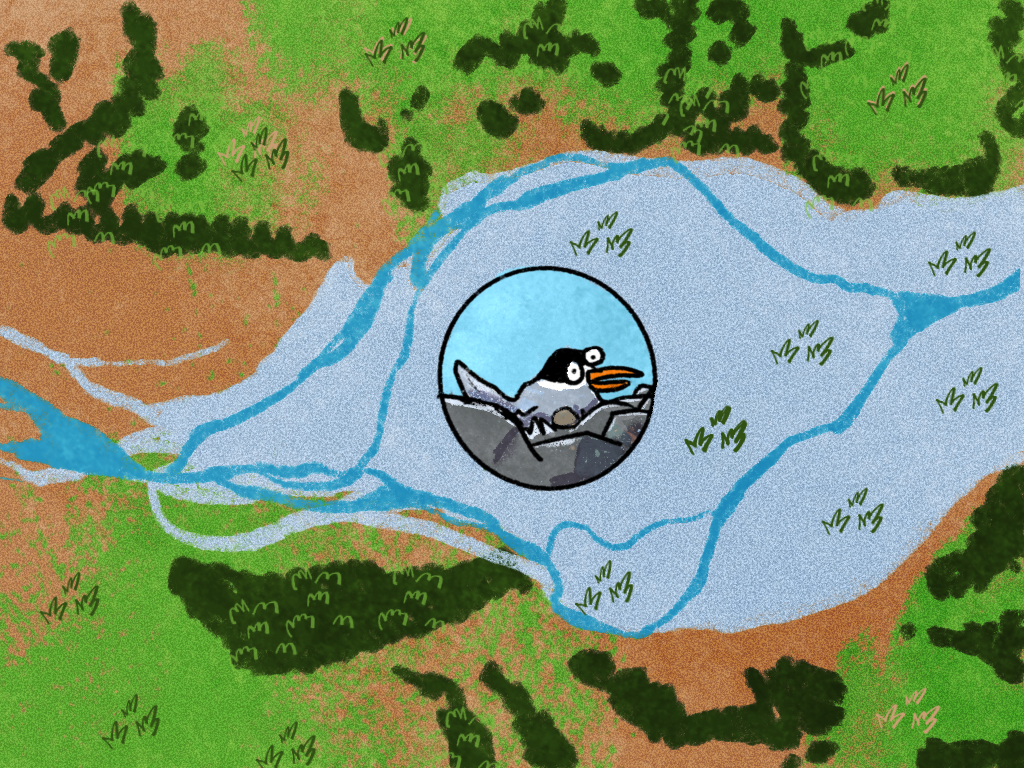
Tarapirohe (black-fronted terns) are one of New Zealand’s most endangered endemic birds, breeding almost exclusively on the braided rivers of the South Island.
They nest on exposed gravel islands in the middle of fast-flowing rivers, which can offer some protection from land-based predators – but also leave them vulnerable when predators do make it across. The birds are small, social and fiercely protective of their nesting colonies.
For black-fronted terns, mobbing isn’t new – they routinely dive-bomb black-backed gulls, harriers and even researchers who venture too close to their nests.
“They’ll dive-bomb us,” Simon says.

“They’ll also try to defecate on you as well.”
Some poor colleagues have discovered just how accurate the birds can be too. Wide-brimmed hats are now a must when visiting the birds. Whether the stoat was specifically recognised as a predator is harder to know, he says.
Simon points to studies of kakaruai (South Island robins) that have shown birds can learn to recognise predators – but they can also lose that ability when living in predator free sanctuaries, suggesting maintaining those behaviours comes at a cost.
Simon has one hypothesis for why the terns may have recognised a stoat.
Some research has suggested that cats and ferrets, larger predators higher up the food chain, can alter stoat behaviour, making them more active during daylight.
“If they’re active during the day, there might just be the opportunity for the birds to learn about what this creature is,” he says.
While it raises questions about whether behaviours like this could help New Zealand wildlife adapt to invasive predators, Simon urges caution.
More than one threat
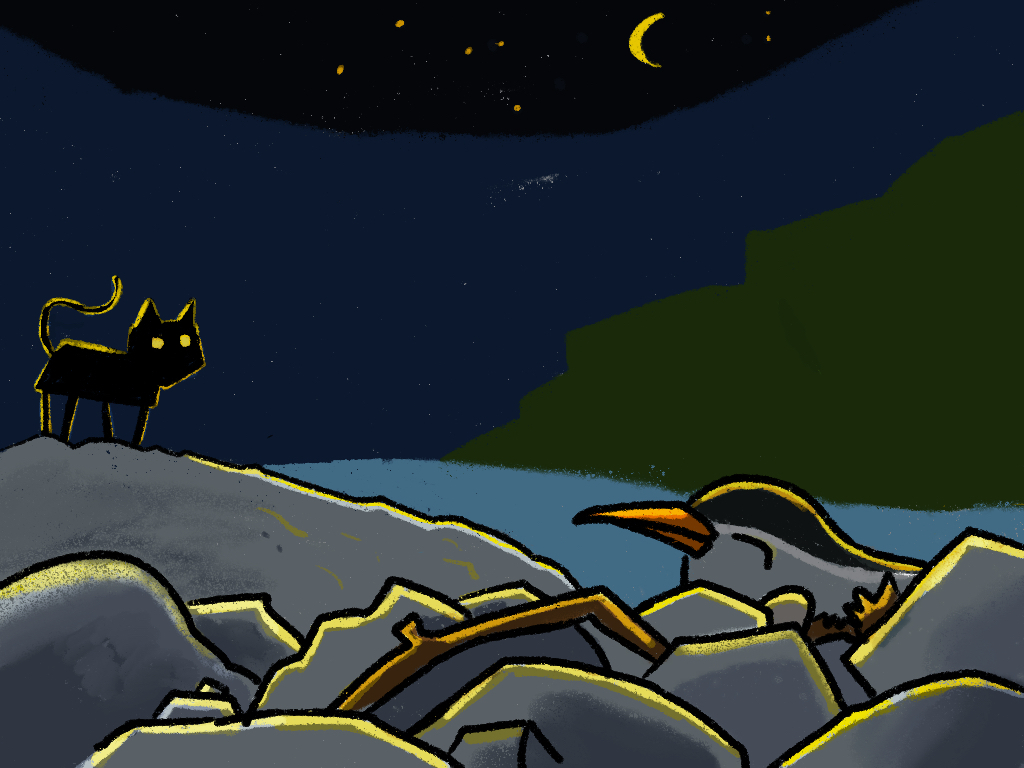
The biggest threat to black-fronted terns isn’t daytime stoats, he believes; it’s nocturnal predators, especially feral cats.
At night, when the birds are incubating eggs or sheltering chicks, mobbing isn’t an option.
“They’re just so vulnerable at night,” he says.
“If it can keep a stoat off the nest during the day, that would be awesome. But you’ve still got everything else that’s happening.”
In other words, mobbing a stoat could potentially give eggs or chicks a better chance of surviving a daytime encounter – but whether that makes a meaningful difference to the species as a whole is much harder to know.
That reality is why conservation efforts focus on predator control rather than hoping birds can adapt quickly enough.
Across the braided rivers where these terns nest, conservation teams trap predators, remove invasive vegetation that provides cover for pests, and reshape gravel islands to make them harder for predators to reach and less vulnerable to flooding.
Despite all that, success isn’t guaranteed.
“Even with a trapping network, predators still make it onto the islands,” Simon says.
He points to a devastating example that he knows of: a single feral cat that wiped out an entire breeding colony of almost 90 tern nests.
Climate change could make the challenge even harder, with lower summer river flows making it easier for predators to cross onto nesting islands.
“No amount of behavioural recognition could really offset the impact from these predators.”
That’s why, despite one encouraging observation of terns standing their ground, Simon says the best strategy remains the same.
“The best thing that can be done is just remove the threat.”
Simon’s research was part of the tarapirohe monitoring project along the Waiau Toa (Clarence) and Wakaputawatea (Acheron) rivers, a collaborative project between the Department of Conservation (DOC), Environment Canterbury (ECan) and Te Rūnanga o Kaikōura, undertaken by Wildlife Management International Ltd. Funding for the tarapirohe monitoring was provided by DOC and ECan.