
The largest of its type in Aotearoa, the Rangatira spider is a good mother and skilled insect hunter, but was driven off the Chatham Islands and now only lives on two small offshore nature reserves. Guest writer and scientist Zita Roithmair (who loves the species so much she’s studying them) will give you a new appreciation for this endemic spider.
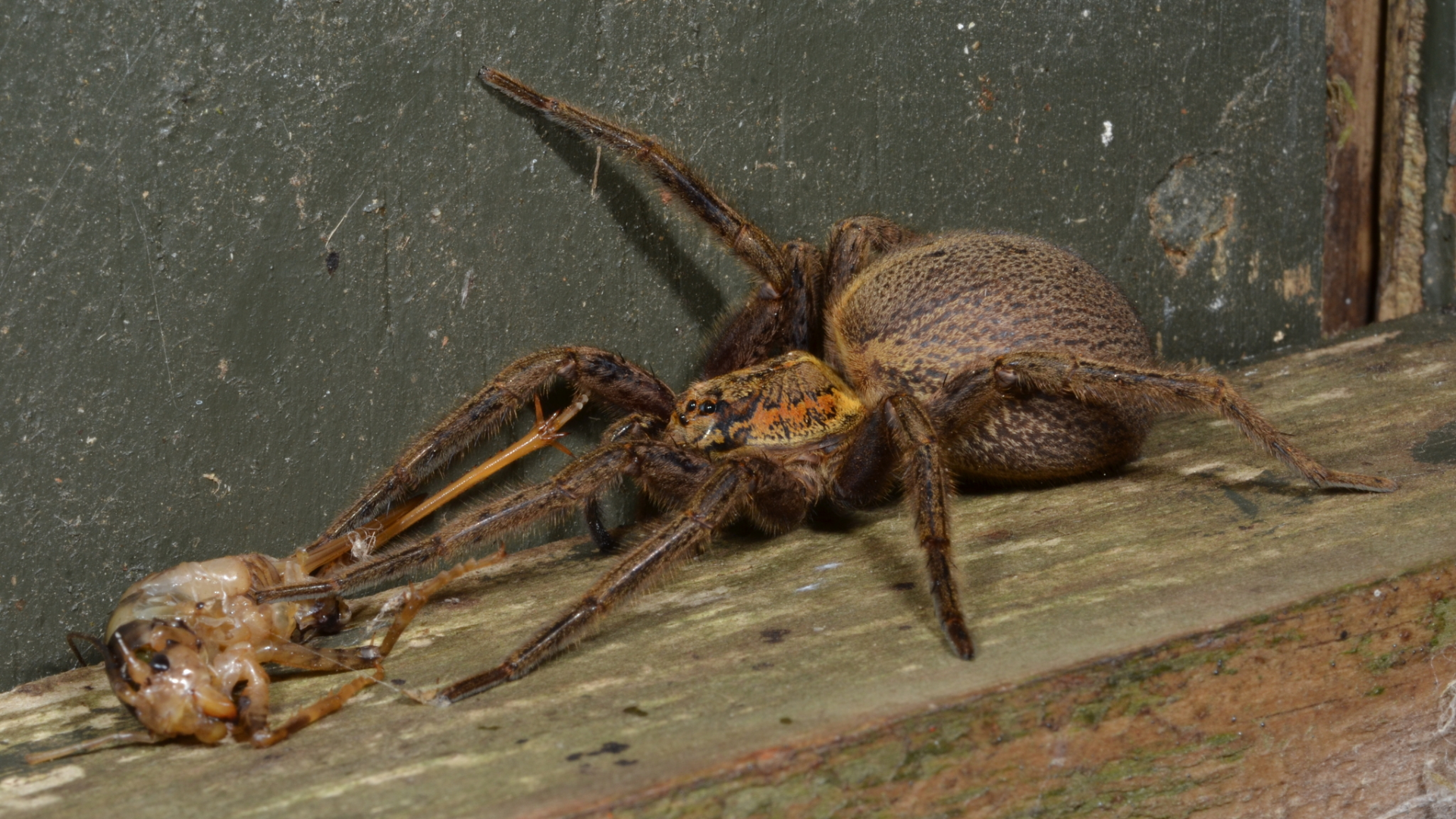
When I talk to people about the Rangatira spider (Dolomedes schauinslandi), most of them are concerned about finding one of these large, chunky spiders in their backyard.
First of all, there’s nothing to be afraid of! These spiders are very friendly and also very, very rare.
Hunted from home
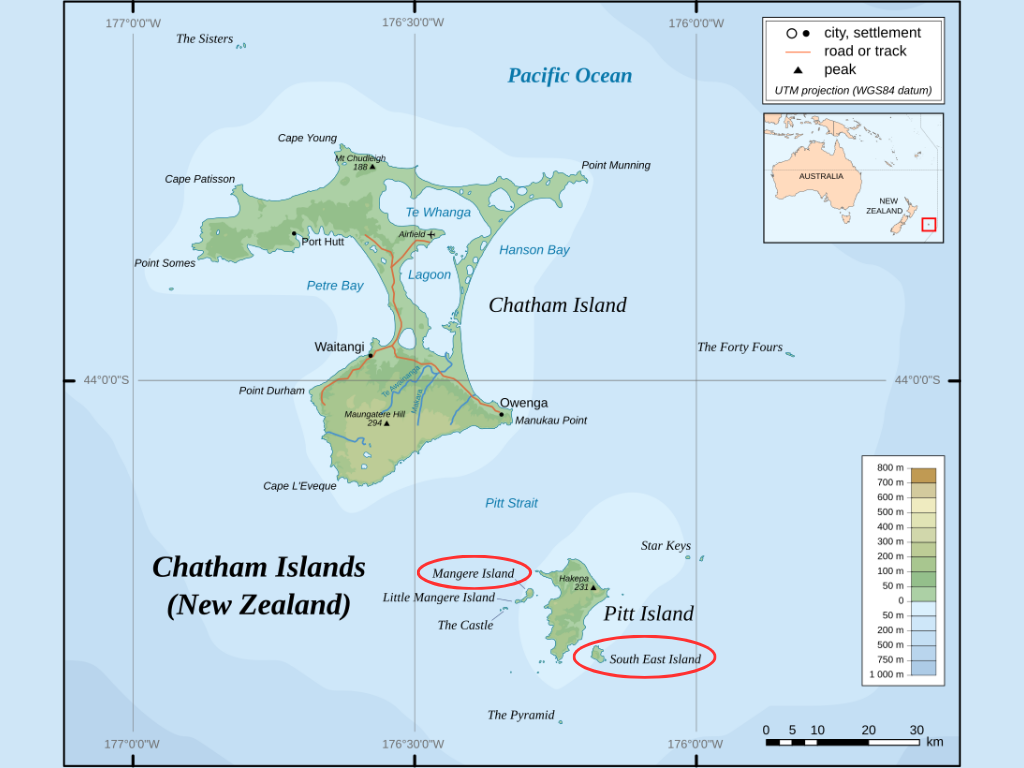
While it is assumed that the species once inhabited multiple islands of the Chatham Islands archipelago, today they are only found on the two nature reserve islands: Hokorereoro/Rangatira (South East Island) and Maung’Re/Mangere.
Rangatira spiders haven’t been recorded on Rēkohu/Wharekauri (Chatham Islands) or Pitt Island for over a century.
The most likely reason for their absence is loss of natural habitat and the presence of predators. Because of their relatively high numbers on Rangatira and Mangere, the Rangatira spider is not believed to face an imminent threat of extinction. However, it is classified as an ‘At Risk: Relict’ species.
They’re large, but peaceful.*
* As long as you’re not a wētā.
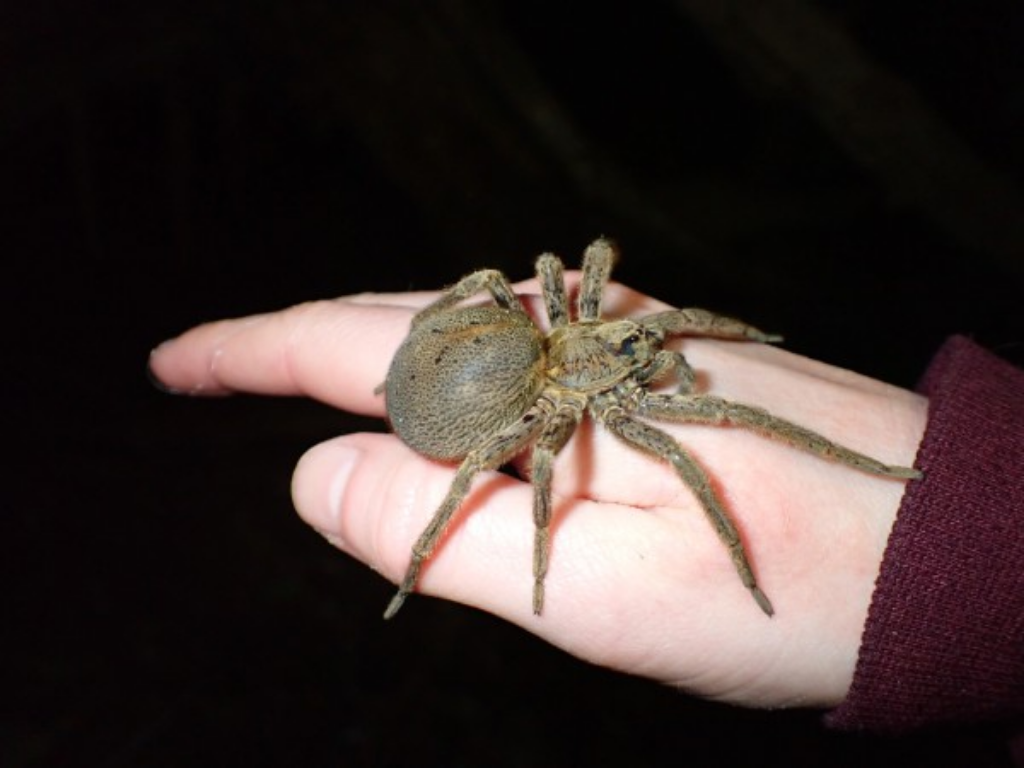
Despite its remarkable size, the Rangatira spider does not have a scary demeanour at all.
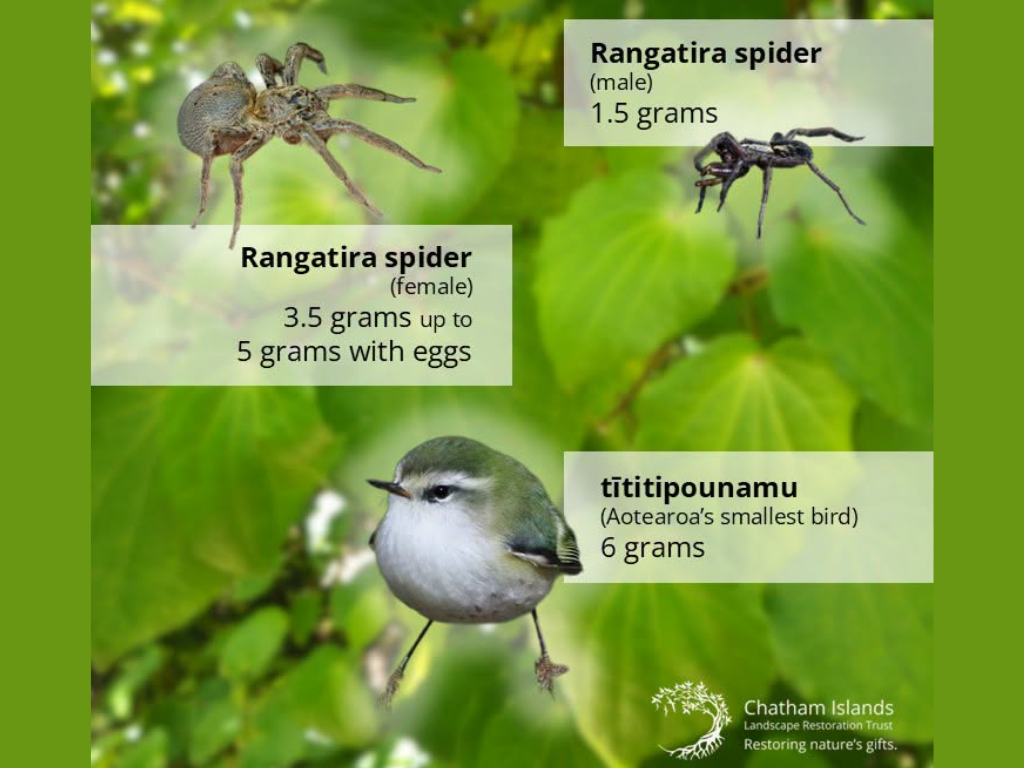
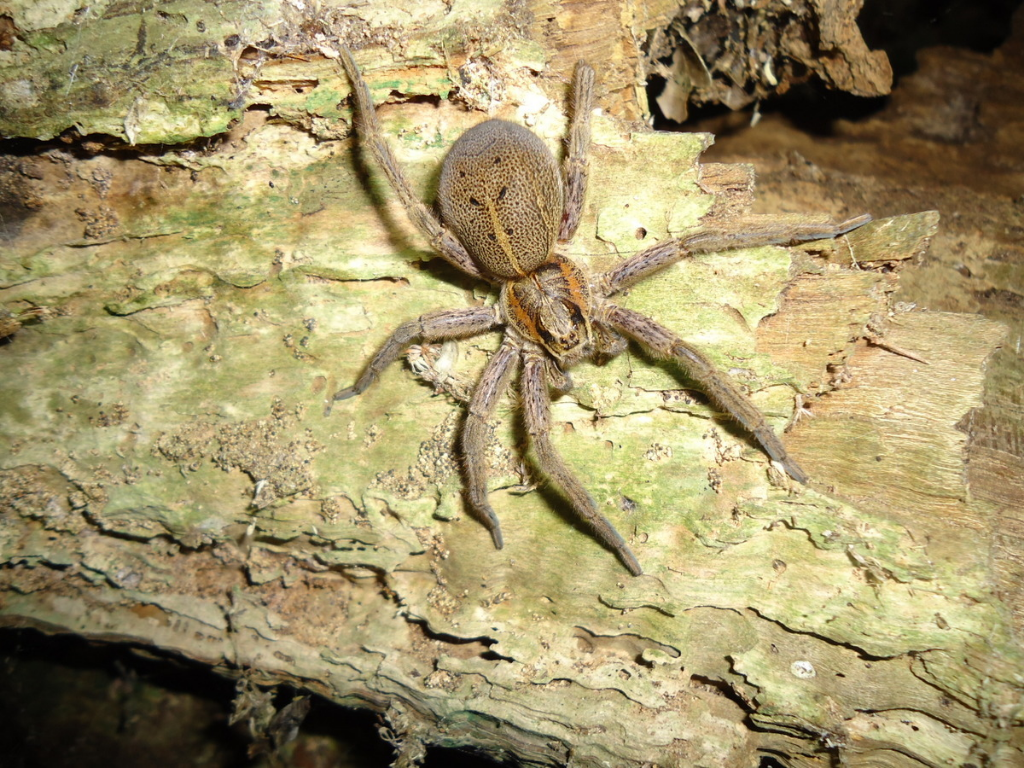
Males are slightly smaller than females, with bright yellow patterns on a dark body, while females are usually a soft brown with orange or yellow patterns.
Females can weigh up to 5 grams when they are just about to lay eggs, although most weigh around 3.5 grams on average. Males weigh around 1.5 grams. This is impressive for an arthropod (that’s the phylum it belongs to in the animal kingdom).
Just for comparison: Aotearoa’s smallest bird, the tītitipounamu (rifleman), weighs 6 grams on average.
They live for the night
Since Rangatira spiders are nocturnal animals, they are rarely seen during the day, as they hide in logs and tree holes. However, if you look for them a few hours after sunset, they can be spotted wandering around or lurking close to their hides, waiting for prey.
For my research, this means staying up late and waiting for the spiders to wake up.
Males are usually a bit more active than females, roaming around on the lookout for a potential mate, while females usually stick to their home site waiting for prey, a mate, or both.
Most spiders I found were eating wētā, which seems to be their favourite prey animal.
Even though they move relatively slowly when wandering around, Rangatira spider attacks are surprisingly fast and usually successful. After they capture a wētā, they paralyse it with their venom and start sucking it out, often while hanging upside down.
They make large webs, but not to catch prey
Rangatira spiders don’t need a web to catch their prey, as they are active hunters.
However, females build large webs to house their offspring, known as ‘nursery webs.’ When the female has laid her eggs, she will spin an egg sac in which she carries the eggs for several weeks, before finding a suitable place to weave her nursery web.
Usually, she builds this on shrubs or even higher up inside tree crowns. Care for her offspring doesn’t stop here: in most cases the mother guards the nursery web during the night, and sometimes even during the day. The spiderlings inside the nursery web are safe to hatch, grow, and leave the web after a few moults (shedding of skin).
The mother will stay with the nursery web until all spiderlings have hatched and dispersed, which they do either by walking away or by casting fine silk threads and being lifted into the air and dragged by the wind (also called ballooning).
More places to live would help secure future generations
At the moment, these spiders are safe on their remote island homes, but they completely rely on this small area of protected habitat, as they have nowhere else to go.
With their very limited distribution, they are vulnerable to any environmental changes or threats on Rangatira and Mangere.
As well as continuing to protect their current homes, it would help the species if it could increase its distribution. To successfully move to other islands of the Chatham archipelago, the spiders need safe forests with large, old trees, a healthy wētā population to feed on, and protection from predators (such as mice, rats, possums, and weka). That’s why Chatham Islands Landscape Restoration Trust’s predator eradication work is so important.
Creating additional habitats on other islands would provide safe alternative places for future generations of Rangatira spiders.
These spiders are very special. I hope that they stay safe in their beautiful island habitats, and maybe even return to their past distribution ranges at some point.