
In the vast open areas of the South Island’s western coastline, a rat is little more than a tiny speck in the driftwood. Tides and swells make trail cameras nearly impossible here, but a thermal camera mounted on a drone can detect rodents emitting a faint glow that can be zoomed in on and investigated in real time.
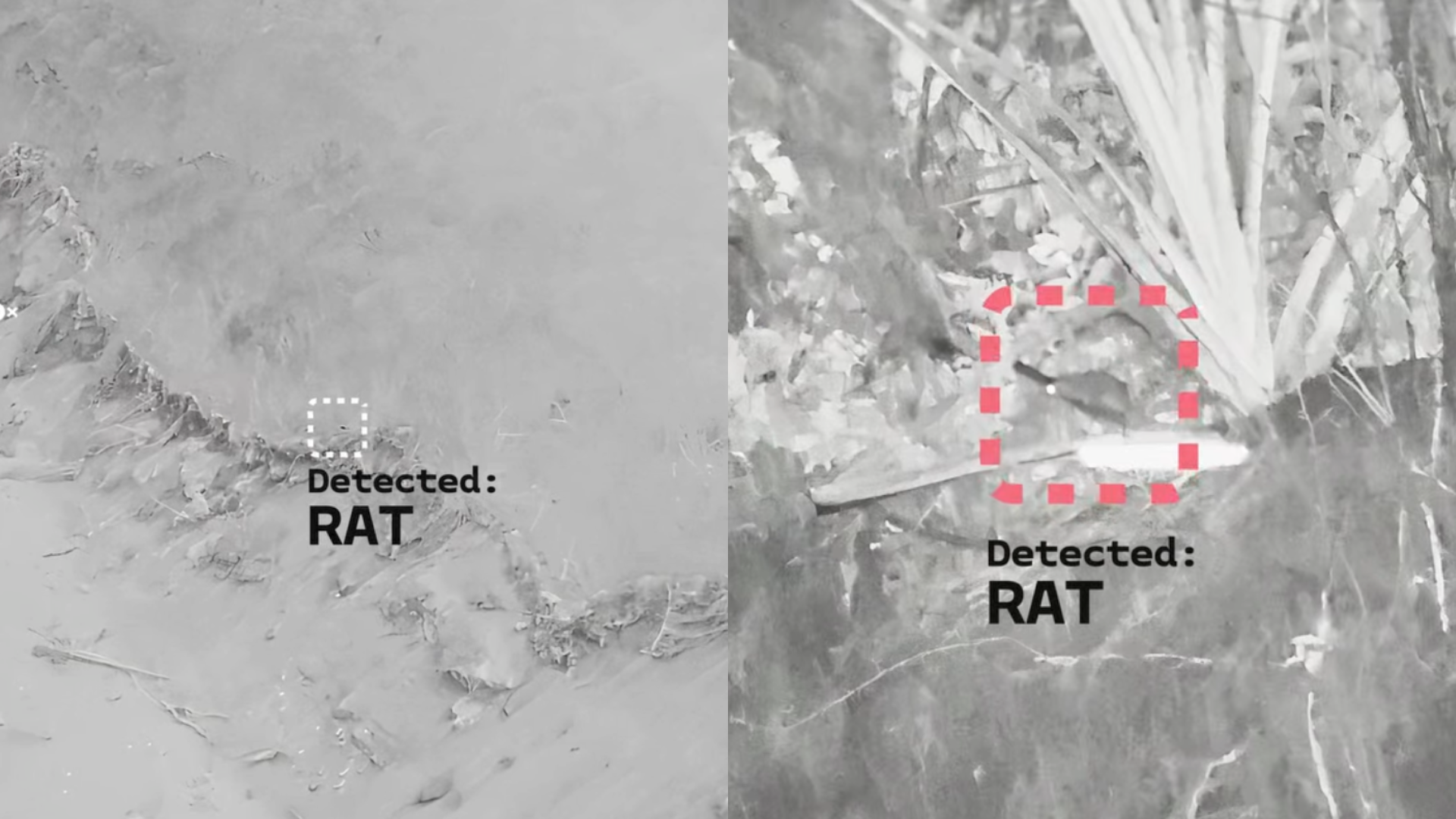
The technology has been trialled recently by research and development company Zero Invasive Predators (ZIP) as part of the 100,000-plus hectare Predator Free South Westland (PFSW) project.
The PFSW project is working to eliminate possums, rats and stoats from an area that stretches from the Southern Alps to the Tasman Sea. An array of tools has been used to help the project clear the area of predators – AI cameras, detection dogs, traps, bait stations and targeted aerial operations.
The challenge is maintaining that predator free status across a vast, rugged and open landscape. That’s where the drone comes in.
Fly by night
ZIP technical advisor Andrew Sides says an experienced ProVision pilot operates the DJI M300 drone remotely, adjusting its altitude and homing in with a mounted H30T thermal camera on anything that catches their attention.
He says the pilot does all the detection in real time, using years of experience to identify what an animal is by its heat signature.
“They can work out the difference between a mouse and a rat from 20m in the air,” he says.
On the West Coast, the team’s initial focus has been more than simply finding rats – it’s been about understanding where they are going.
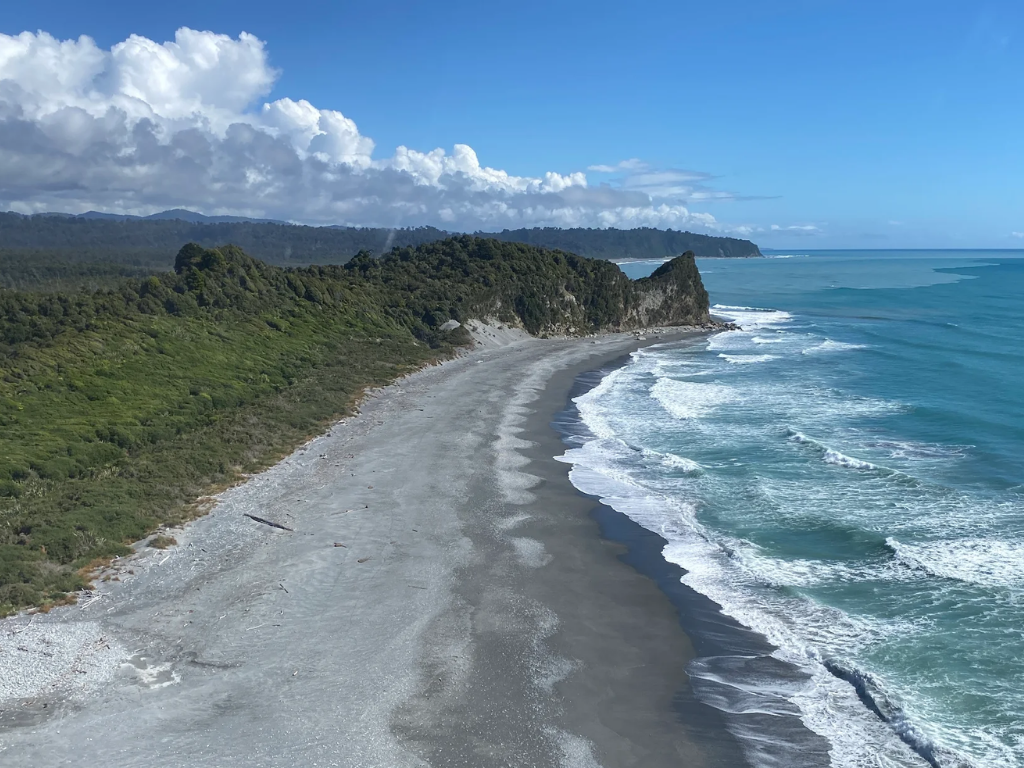
The researchers are particularly interested in monitoring rat activity in coastal areas and waterways.
One theory they are investigating is that rats could be using these relatively flat coastal areas as long-distance dispersal pathways, allowing them to move further than expected through the landscape.
Each detection adds another piece to the puzzle.
Where traditional methods can’t go
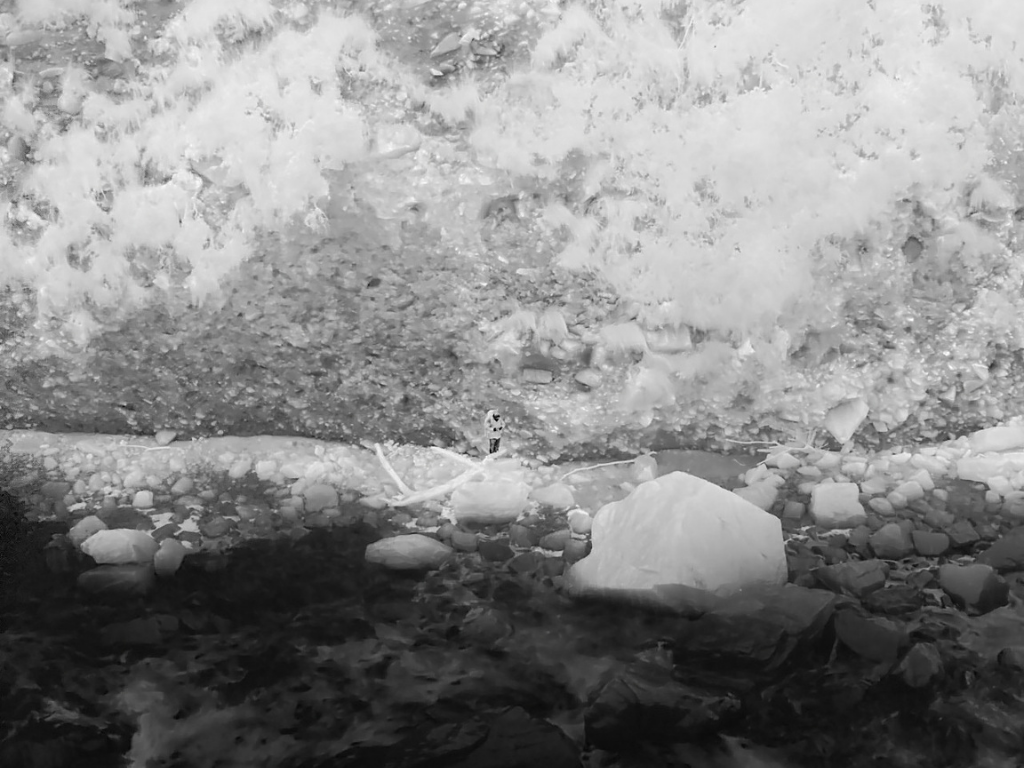
The drone’s biggest advantage is its ability to search places where researchers cannot easily go.
Coastal environments can be particularly challenging for conventional monitoring equipment. Tides that fluctuate dramatically can potentially bog down or damage equipment, while sending people in on foot to deploy cameras can also be difficult.
A drone, by contrast, can sweep across an area from above without requiring researchers to do much more physically than park up nearby. The drone allows rapid coverage of over 80 km of coastline at night in challenging terrain without physical ground disturbance.
With AI cameras and other monitoring devices operating continuously in bush areas, Andrew sees drones potentially filling a gap along the coast by flying regular searches every few months to check whether rat populations are beginning to build.
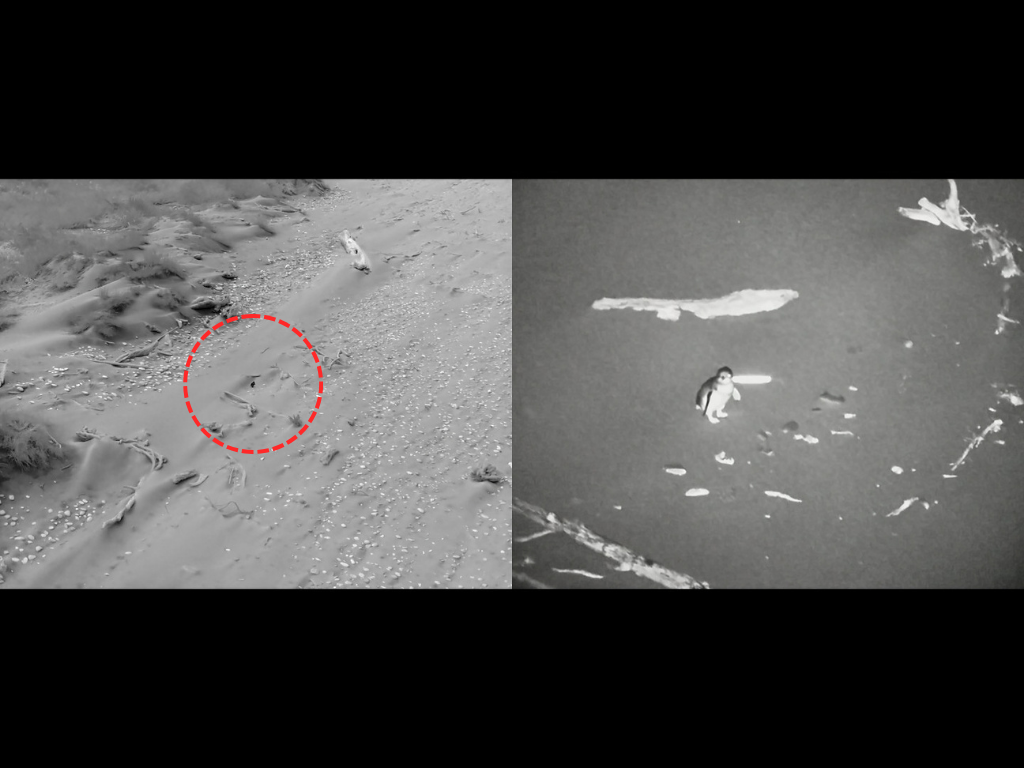
They’ve also spotted penguin colonies, as the birds are often active on beaches at night, raising another potential application for the technology – finding and monitoring endangered species.
Can’t escape the weather
But just because the drone is able to zip over the landscape easily doesn’t mean there are no challenges involved. Weather being the big one, Andrew says.
Of course, the technology still has limitations. A planned search around Ōkārito Lagoon had to be abandoned when conditions made flying impossible. The team has also encountered hail, while strong winds can significantly affect the drone too.
The equipment itself is also expensive, although battery life is relatively good, with the operator able to swap out batteries if longer flight times are needed.
It all adds up
Along with detection, the technology is also being considered as part of the wider predator control operation.
ZIP has previously used drones to help make aerial bait applications more targeted, including along sensitive boundaries such as roads, state highways and private property. Bait drops from a drone offer much better accuracy.
But rather than seeing the technology as a replacement for those existing tools, Andrew says the goal is to build up as many ways of detecting predators as possible.
It can look over large, difficult-to-access areas from above, search them in real time and return to them again and again.
And, as Andrew says, we need to increase our predator control tool suite as much as we can – because understanding animal behaviour is critical to elimination success. There’s established knowledge of what critters will do and why, but each animal is an individual and won’t act exactly like the others. Predator Free 2050 projects are chasing predators down to the last one; understanding this “weird” behaviour could be the difference between catching it or leaving it behind to breed.
“So it’s good to have the tech that helps us detect animals doing weird stuff.”