
New research found roaming cats can doom bird nests without ever touching the eggs or chicks – simply by paying a visit. In towns and cities where cats are beloved pets, control isn’t easy or welcome. But could the humble boombox be a non-lethal solution to keep cats away from precious birds and nests?
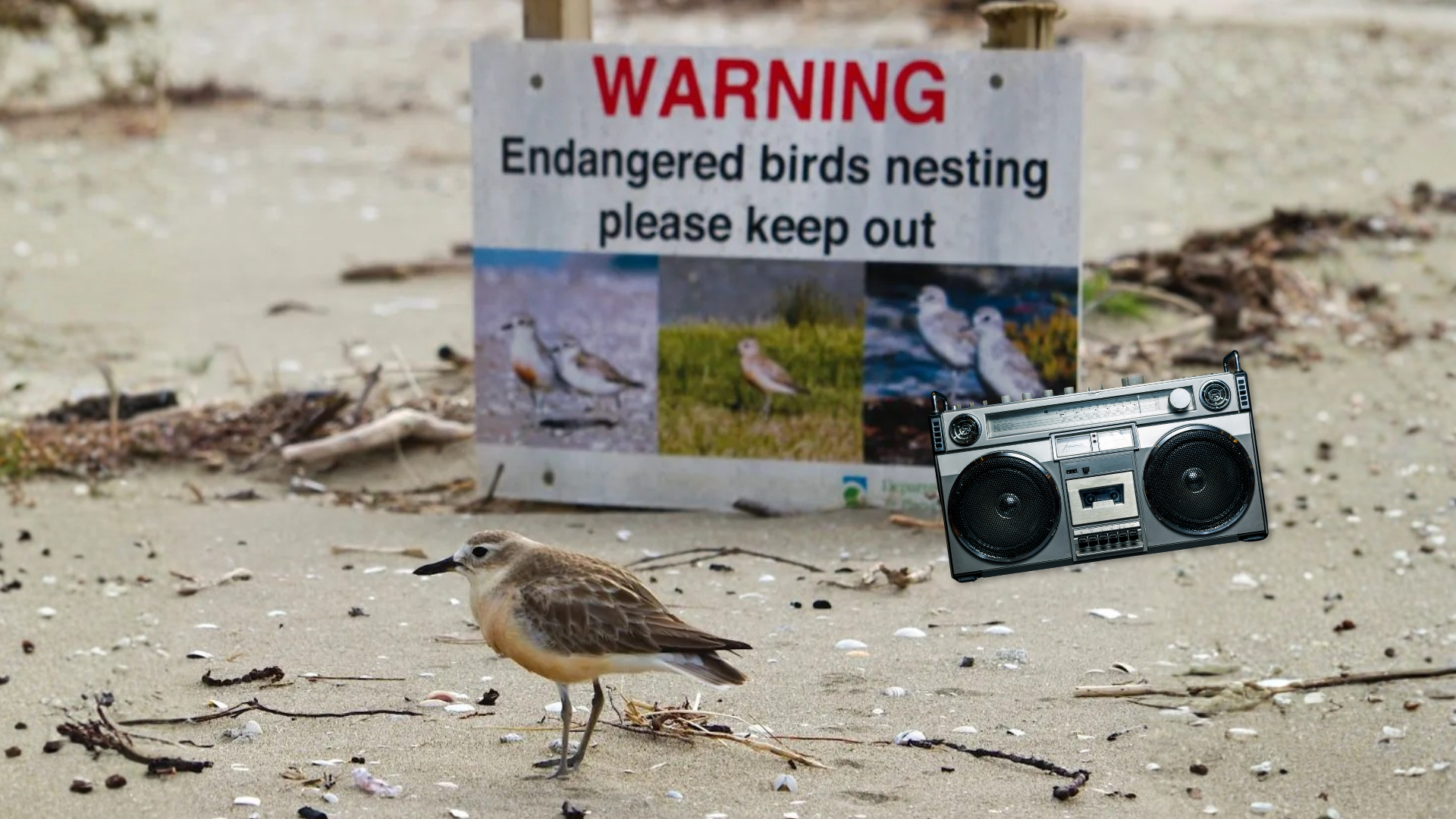
Cats are popular pets; about 1.26 million companion cats (40% of households), and up to 8 million feral cats roam the country. A recent survey found that 90% of companion cats can access the outdoors.
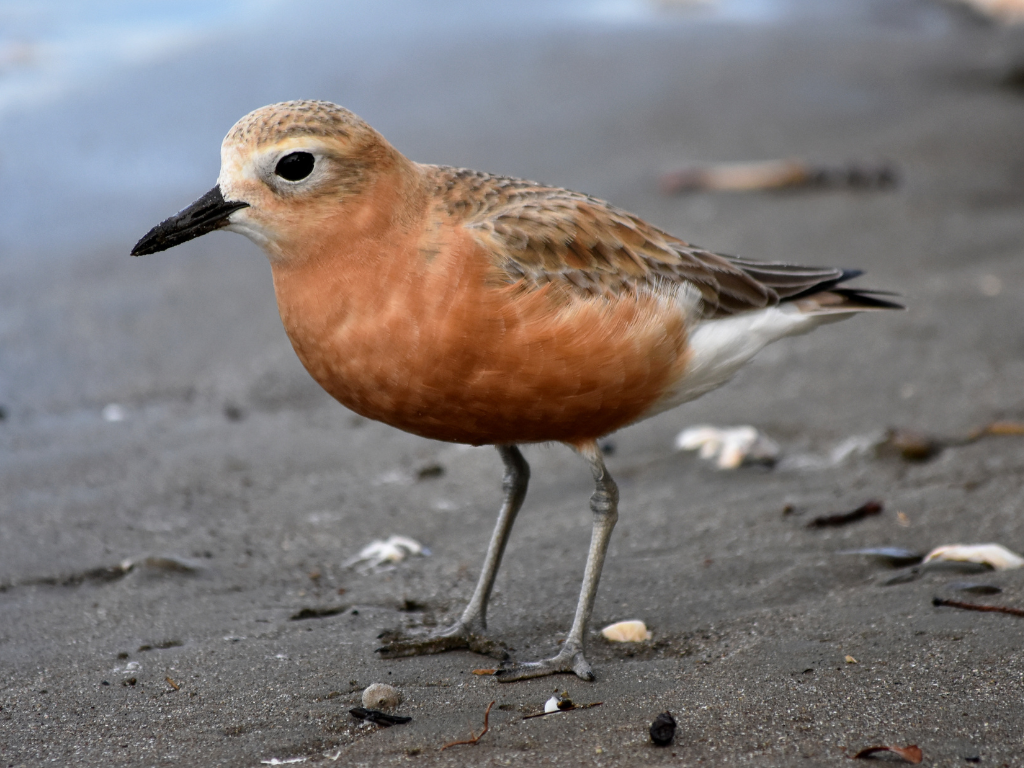
While roaming pets have been documented killing robins and dotterels in urban reserves, a new study found that simply visiting a nest can cause it to fail. The study, published in Global Ecology and Conservation, also found that a minority of pets are responsible for the majority of the trouble.
Researchers watched cats with motion-detection cameras at six urban reserves in Auckland, Wellington, and Christchurch. Despite their urban surroundings, these reserves are critical habitat for native birds, including northern New Zealand dotterels, kororā (little penguins), and the rare Australasian bittern.
Even though a couple of these reserves are free from rats, the native birds aren’t living in freedom. Cats were caught on camera almost every day during the study, which went for about three months at each site.
Sharp-eyed researchers identified individual cats by their markings, discovering a wide range of behaviours: some only come at night, while others come during the day.
At Auckland’s Omaha Shorebird Reserve, cameras monitored dotterel nests on a spit. A predator-proof fence protects them, but ends at the high tide line, leaving a gap at low tide. Researchers watched as one cat visited the nests every night, and though it didn’t eat any eggs or chicks, the nests it visited all failed as the adult birds were forced to abandon them for extended periods (up to 23 hours).
Repeat offenders
Across the six reserves, the researchers identified 159 individual cats.
“We recorded large numbers of cats visiting the reserves, but these are likely to represent a small percentage of resident cats in the adjacent residential areas, and some could have been stray cats residing in the reserves,” the report says.
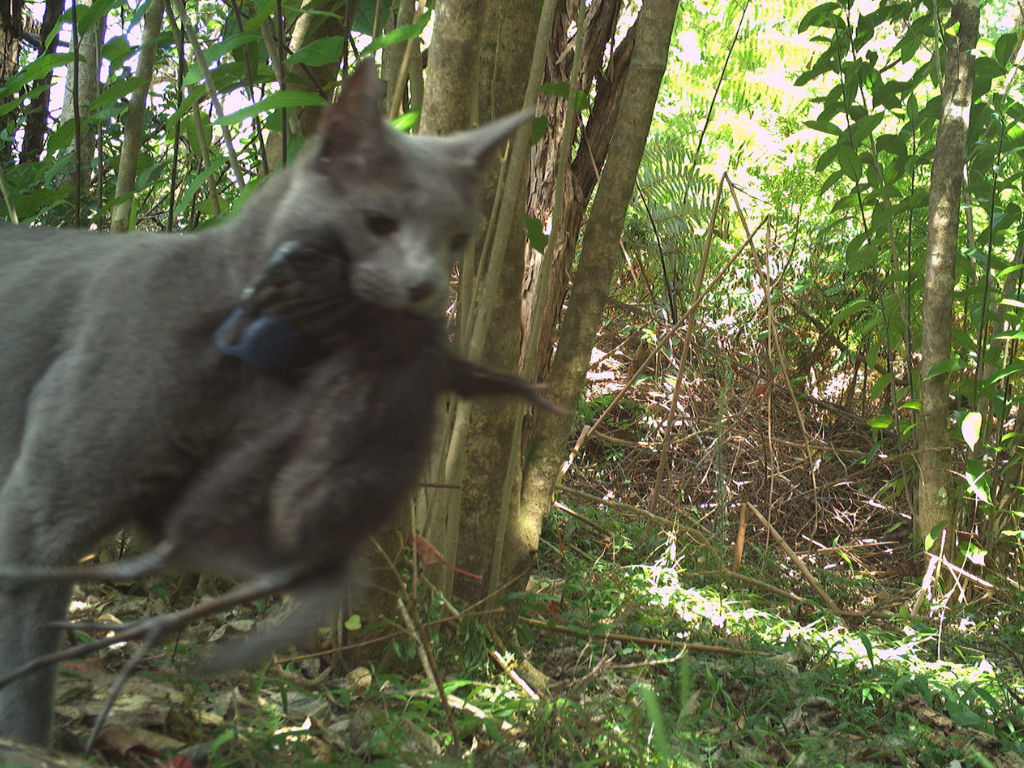
Most sightings were fleeting, curious cats spotted only once. But some cats returned again and again, and these “returners” were problematic – of the four predation events captured on camera in the study, three were the work of one cat, and all were “returners”.
Urban reserves need protection from introduced predators, including cats.
Predator-proof fences are a good start, but not always possible. Cat trapping in busy residential areas where companion cats could be caught is socially unacceptable. Could there be a better way?
Scary sounds
It turns out that cats can be deterred by sound. A second study, led by Bioeconomy Science Institute (Manaaki Whenua Group) researcher Patrick Garvey, discovered we can exploit “scaredy-cat” behaviour with motion-activated speakers.
Patrick conducted a captive trial with live-caught feral cats to determine which sounds would scare them away. Chicken mince was placed in each corner of a large pen, protected by a motion-activated speaker. Each speaker played a different cat-detering sound: dogs barking, people talking, and tomcats howling, with chirping crickets added as a control.
All of the sounds offered some degree of protection; feral cats were only slightly suspicious of crickets, suitably scared of other cats and dogs, but most afraid of people. 66% of cats exposed to the human sound fled immediately. Cats were less likely to flee when they heard the sound a second time, but most cats were exposed once and never returned.
Researchers then turned to protecting vital bird habitat in urban reserves.

Using the same motion-activated speakers, they tested the repellent sounds and monitored cat behaviour. Urban cats were unsurprisingly less afraid of people, but tomcat howling sounds proved an effective deterrent, reducing foraging behaviours by up to 90%.
There are some risks, though. Cats could become used to the sounds over time, and sounds could disturb native birds. To avoid both of these outcomes, researchers plan to use the speakers only during the vital bird breeding season and deploy them well away from the birds.
Will it work?
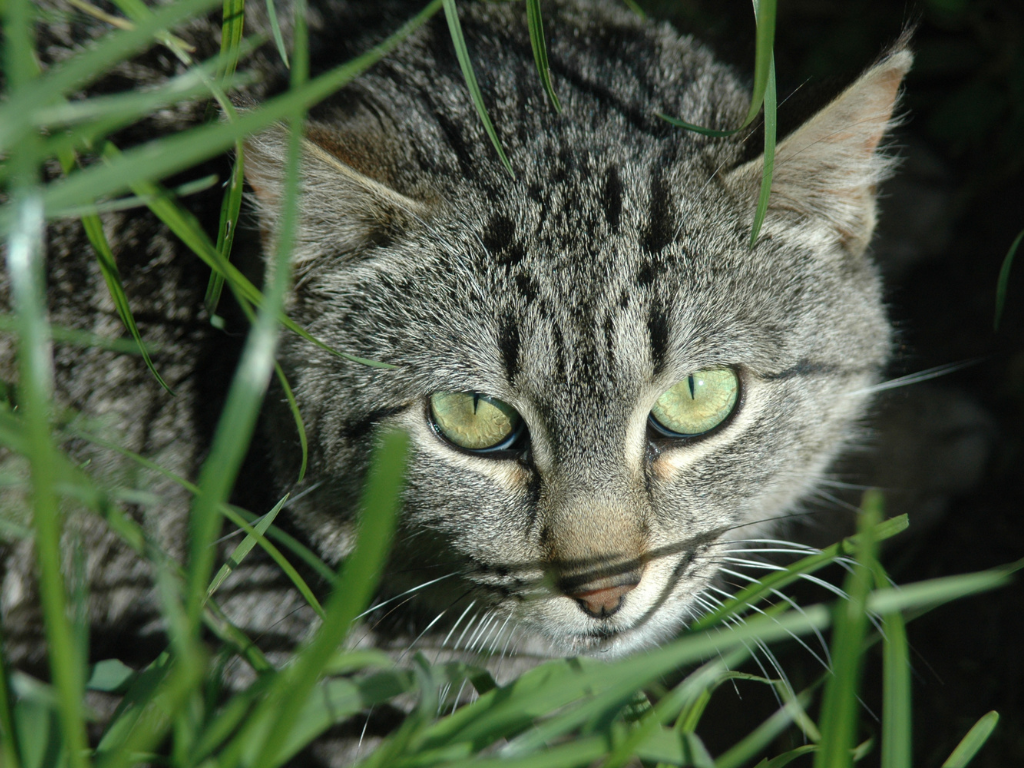
What isn’t yet known is whether the problematic cats – the “returners” that prey on birds – are repelled by these sounds. More research is needed to determine whether the scary boomboxes will successfully protect nesting birds.
Further field trials are planned in the Ashley-Rakahuri River near Rangiora, where researchers hope to deploy sound-repellent devices as a “virtual fence” around colony-breeding birds such as tarāpuka (black billed gull).
Researchers suspect a two-pronged approach using sound-repellent devices for more timid cats, along with cage traps for bolder cats, would provide excellent protection.
But even more effective is responsible pet ownership. Ensuring cats are de-sexed, microchipped and kept safe and happy at home is best for our pets and for our native wildlife, too.
This article is based on “Harnessing fear of predators and competitors as deterrents for an invasive predator” by Sze Wing Yiu, Justin P. Suraci, Grant Norbury, Patrick M. Garvey published in Ecosphere, and “Problematic cats in urban reserves: Implications for native biodiversity and urban cat management” by Sze Wing Yiu, Justin P. Suraci, Grant Norbury, Alistair S. Glen, Joanne E. Peace and Patrick M. Garvey, published in Global Ecology and Conservation.