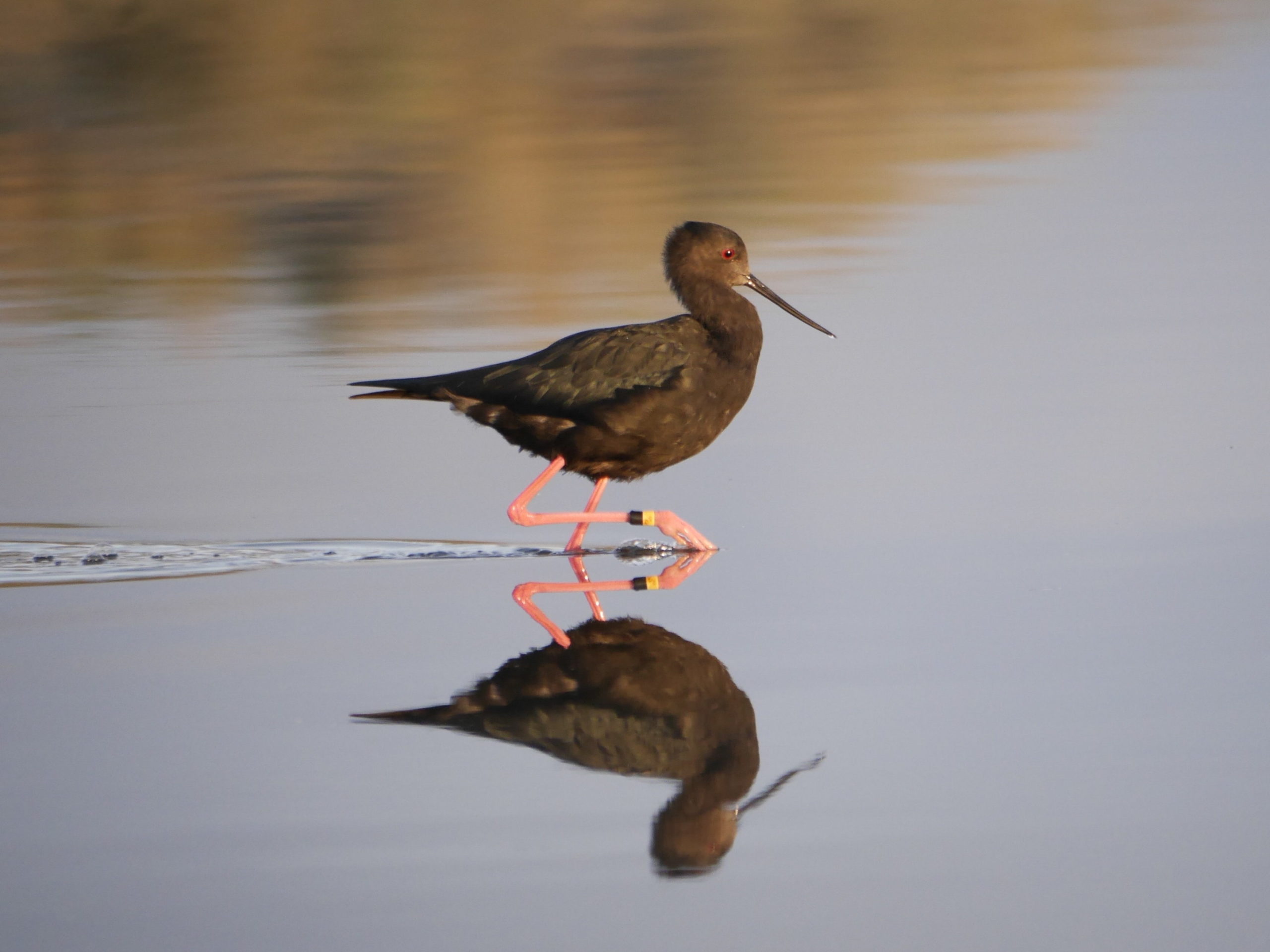
With only about 170 in the wild and confined to the central South Island, the kakī (black stilt) is one of New Zealand’s rarest manu (birds). Once spread across the entire country, this long-legged wader now survives in just a sliver of the Mackenzie Basin – its final refuge. Here are five facts about kakī.
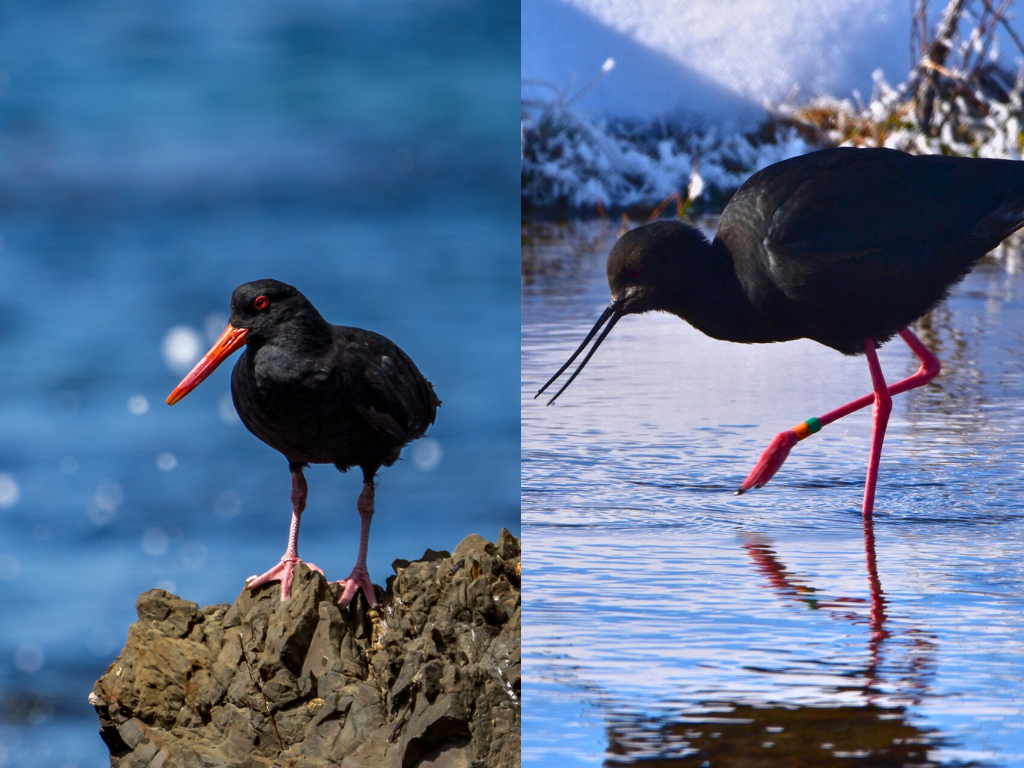
They’re not oystercatchers
Let’s get this straight – despite the superficial similarities, kakī are not tōrea pango (oystercatchers). Here are three key differences between these black birds with red legs.
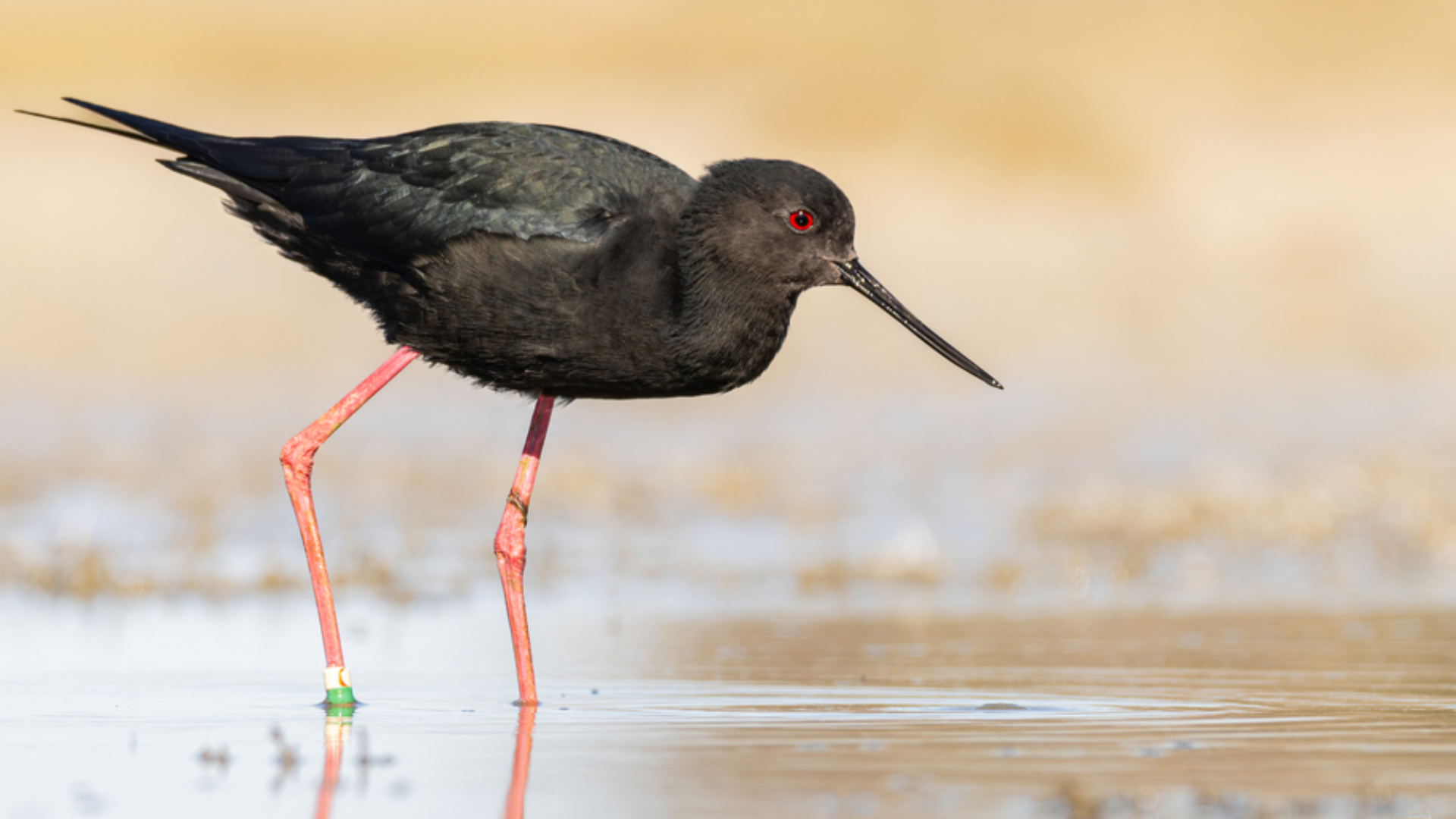
- The legs: Both species sport red legs, but tōrea pango legs are short and sturdy. Kakī walk on impossibly long, slender stilts.
- Bills: Kakī have slim, black bills built for precise foraging. Tōrea pango have short, stout red bills perfect for cracking shellfish.
- Location: Tōrea pango wander mudflats and beaches along the coast, but kakī are found only in the Mackenzie Basin.
They change colour as they age
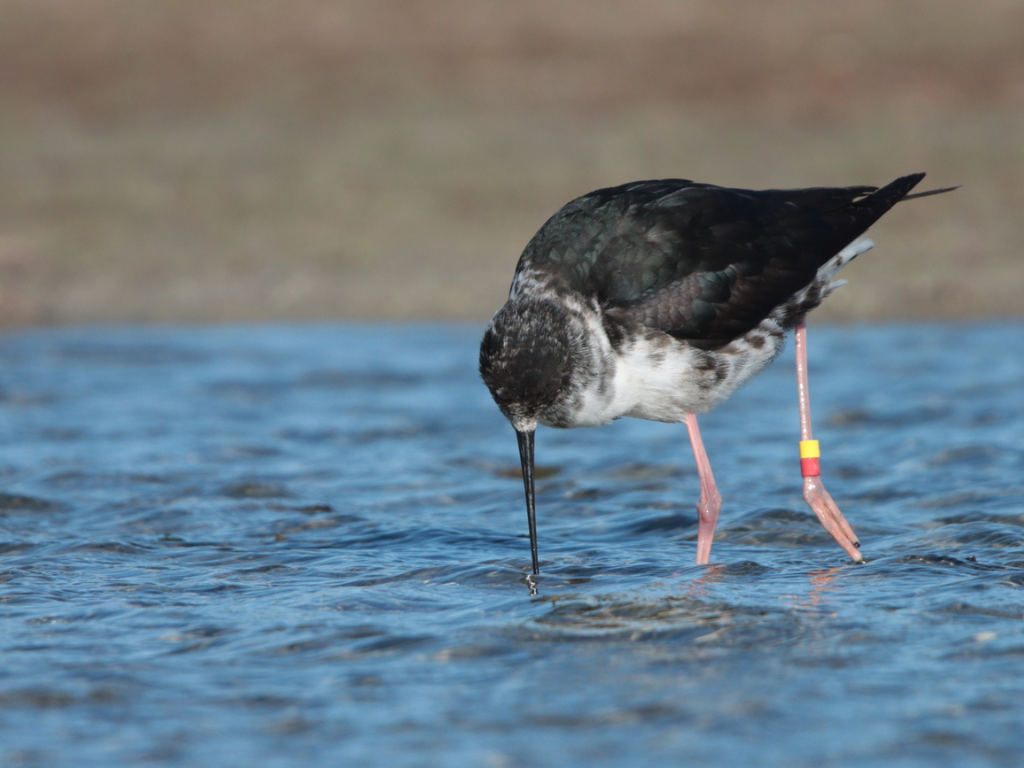
Kakī don’t start life with their signature jet-black glamour. Adults are sleek, glossy and almost impossibly tall on their skinny red legs. Juveniles? Not so much.
Young kakī hatch with a patchwork of black-and-white feathers. They keep this “awkward teenage” look until around 18 months old, when the dark breeding plumage begins to emerge, and they take on that unmistakable kakī elegance.
Their home is shrinking
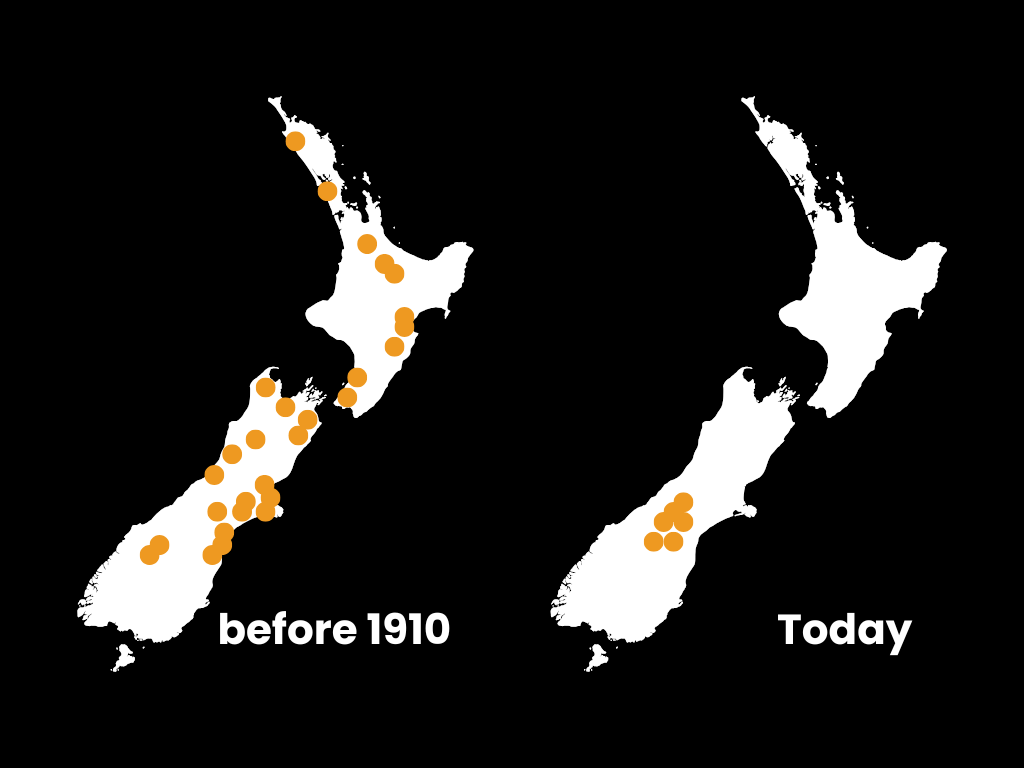
Kakī once bred throughout New Zealand, including large parts of the North Island, until around 1900.
As agriculture intensified throughout the 20th century, wetlands were drained, and braided rivers were modified. Their range contracted steadily – first to Canterbury and Otago by the 1950s, then to just the Mackenzie Basin by the 1980s.
Today, this small inland section of the South Island is the only place where kakī still breed.
They need protection
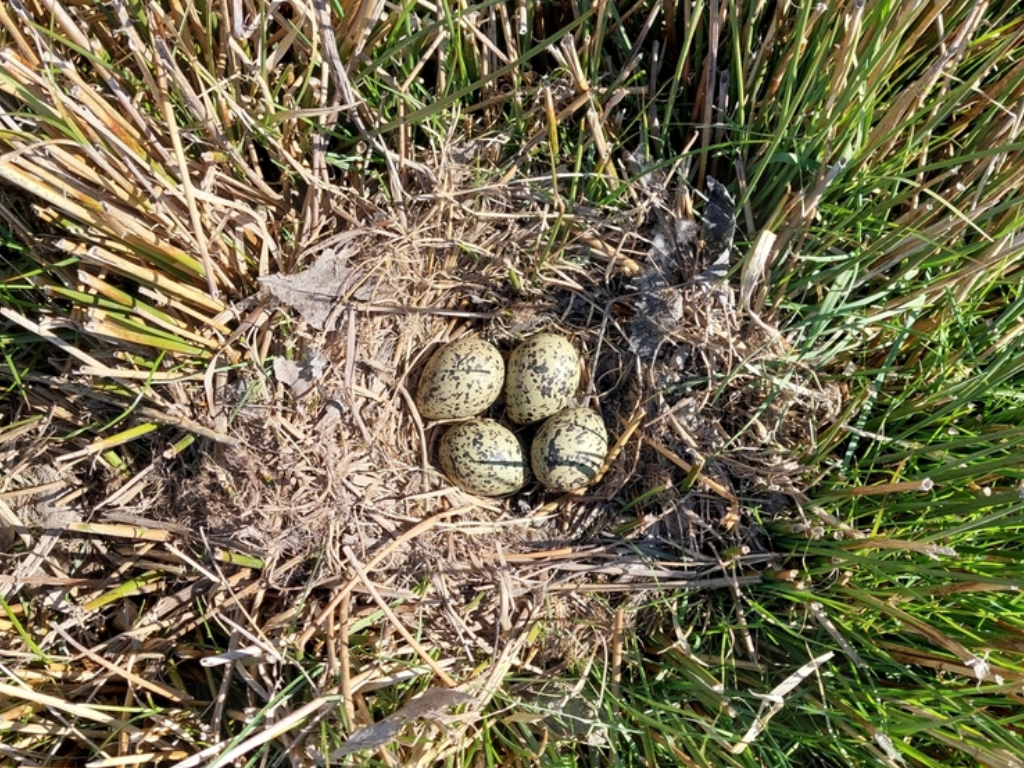
Like so many of Aotearoa’s native species, kakī face relentless pressure from introduced predators. Without control tools in place, most of their eggs and chicks fall prey to stoats, feral cats and hedgehogs.
Habitat loss set the scene, but predators drove the rapid decline. When rabbit numbers were heavily reduced in the 1950s, stoats and weasels turned to alternative prey – decimating kakī populations.
Thankfully, focused protection is now making a difference. Since 2018, Te Manahuna o Aoraki has worked to remove small mammal pests from the Mackenzie Basin. Their work includes a mustelid trapping network that covers roughly 80% of the remaining kakī habitat. Their ecosystem-based approach supports not only kakī but also the entire braided river community they rely on.
They breed for life (sometimes with their cousins)
Kakī are romantics; once they pair up, they often stay together forever. This commitment is endearing, but sadly problematic.
When a kakī can’t find another kakī, it may partner with a poaka (pied stilt). The species share similar courtship behaviours and can produce hybrid offspring. These hybrids complicate recovery efforts, but intensive management and captive breeding have greatly reduced cross-species pairings and boosted the number of pure kakī pairs.
Kakī are hanging on but only with our help. Ongoing predator control, habitat protection, and captive breeding are essential to ensure these elegant waders survive for future generations.