
With bright colours and bold mating habits, hihi (stitchbird) are fascinating little birds. With only about 2,000 remaining in predator free sanctuaries and offshore islands, understanding their reproduction is vital to keeping their species alive.
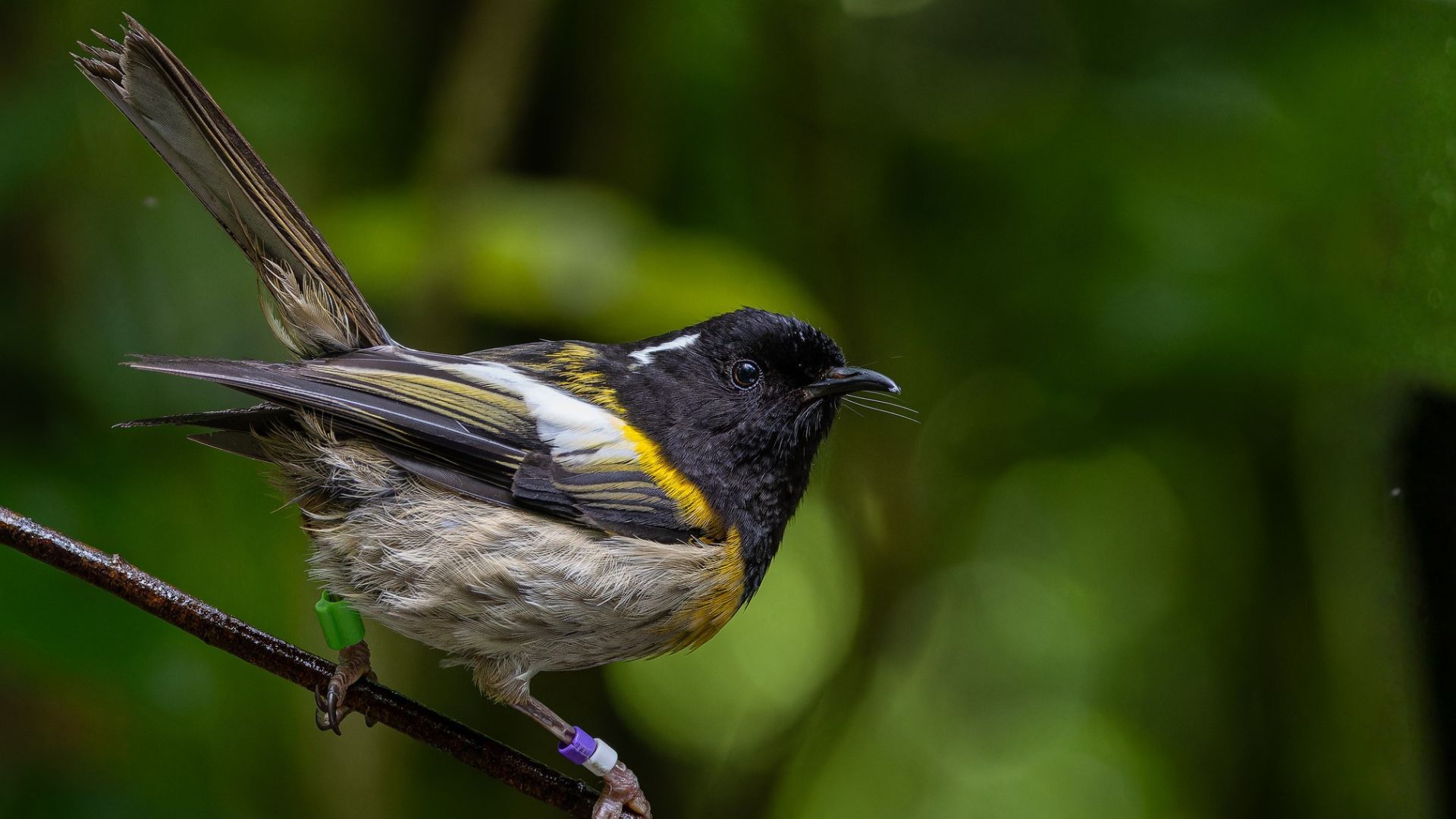
Their promiscuity might have helped save them
Hihi are extremely promiscuous, or as scientists call it, a “variable mating system”. Hihi will pair up, but also mate with birds outside their pairing. These extra-pair copulations can be initiated by the female or by bachelor males attempting to get in on the action.
All this mating means males often help raise chicks that are not theirs – in an extreme case, five eggs in one clutch had four different fathers. Te ao Māori acknowledges this with the whakataukī “hihi rau moenga” – a hihi going to many beds – which refers to a promiscuous person.
This unusual mating system might have helped save them. The high rate of interbreeding among pairs allows unpaired males to pass on their genes. Hihi have higher genetic variation than other New Zealand birds, and it is thought that their promiscuity may have contributed to this, making them less likely to become inbred.
They’re the only bird that mates face-to-face
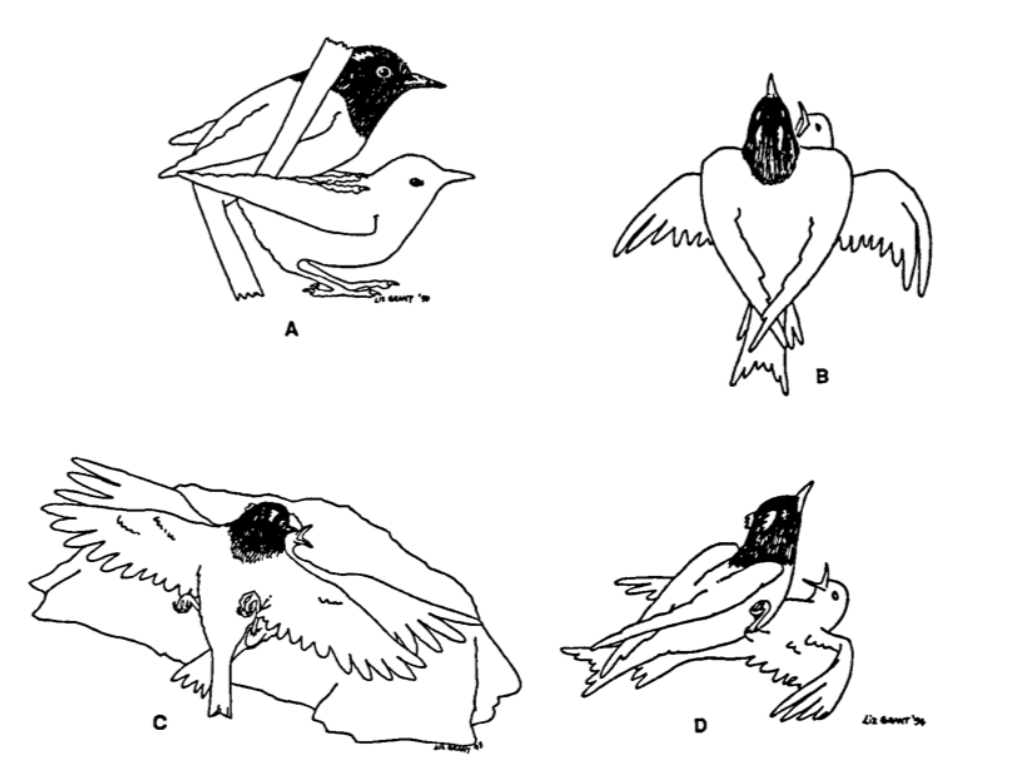
Hihi have one of the most unusual mating behaviours of all birds; while most birds mate with the male on top of the female, hihi are the only birds that’re known to mate face to face (but they only do this sometimes).
Almost all face-to-face matings are forced by bachelor males; in one study of 105 hihi sexual encounters on Tiritiri Matangi, 32% were face-to-face, with only five involving the female bird’s main partner. Males forcing themselves on females is an evolutionary strategy to maximise their chances of passing on their genes to the next generation.
Male partners protect their mate from bachelor males by scaring them off with raised feathers, loud calls, and aggressive chasing. If the bachelor manages to get on top, the resident male will peck and strike him before chasing him away.
Hihi testicles can be heavier than their brains
Because of their promiscuous mating system, male hihi need to produce relatively large volumes of sperm to increase their chances of fathering chicks. Therefore, they invest heavily in sperm production by having larger-than-expected testicles.
Hihi testicles are about four times larger than expected for their body size, making up over 4% of their body mass and weighing more than their brains.
This is part of a phenomenon called sperm competition: when females mate with several males, each male’s sperm is racing the others to fertilise the egg. The male that produces the most sperm has the best chance of winning this race, so natural selection favours larger testes.
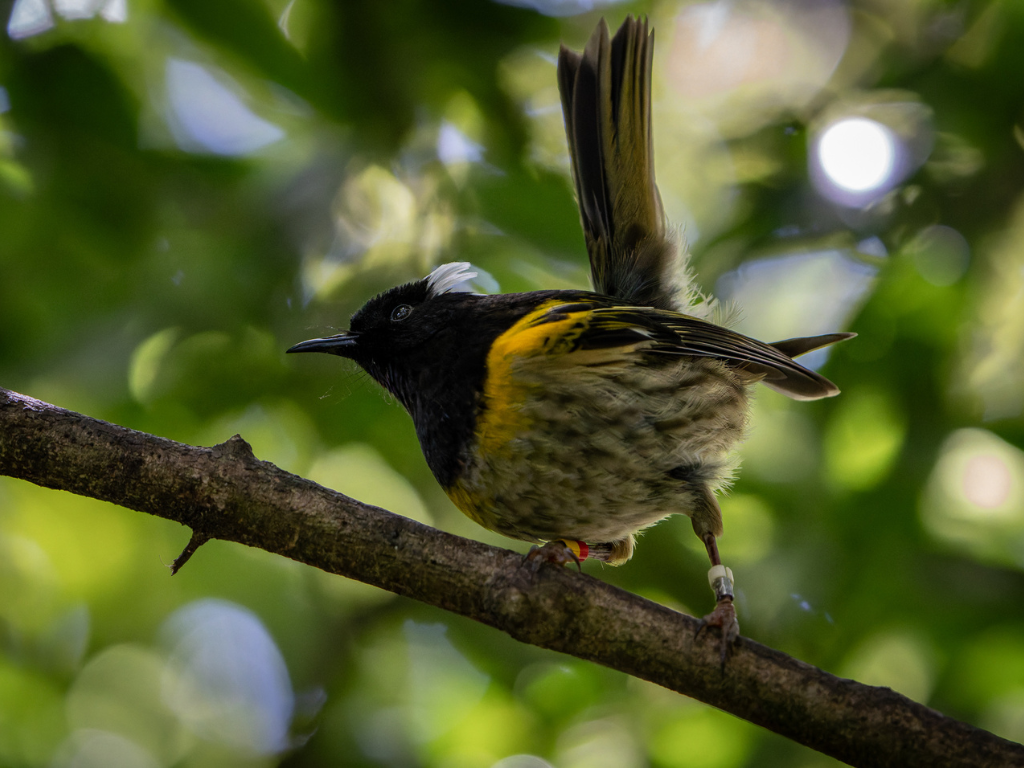
The testes are not the only big thing; they also have one of the largest known cloacal protuberances (where birds store sperm) relative to their size. This organ is about three times bigger than expected, and can swell by up to 400% during the breeding season.
Their brightness isn’t to attract females
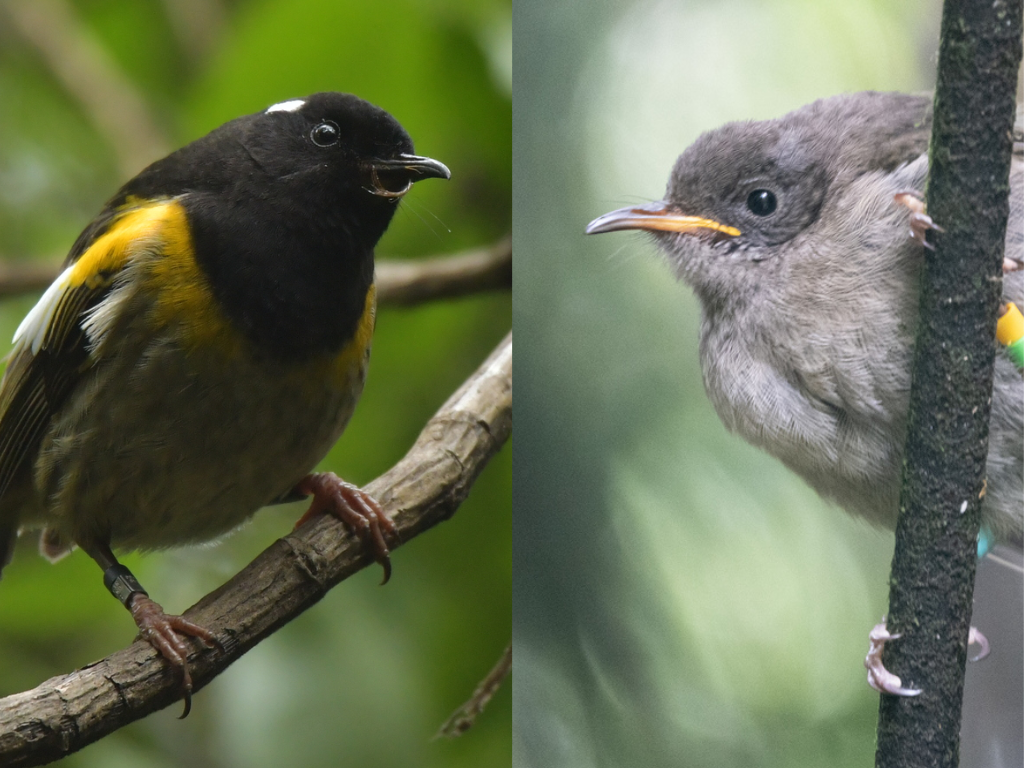
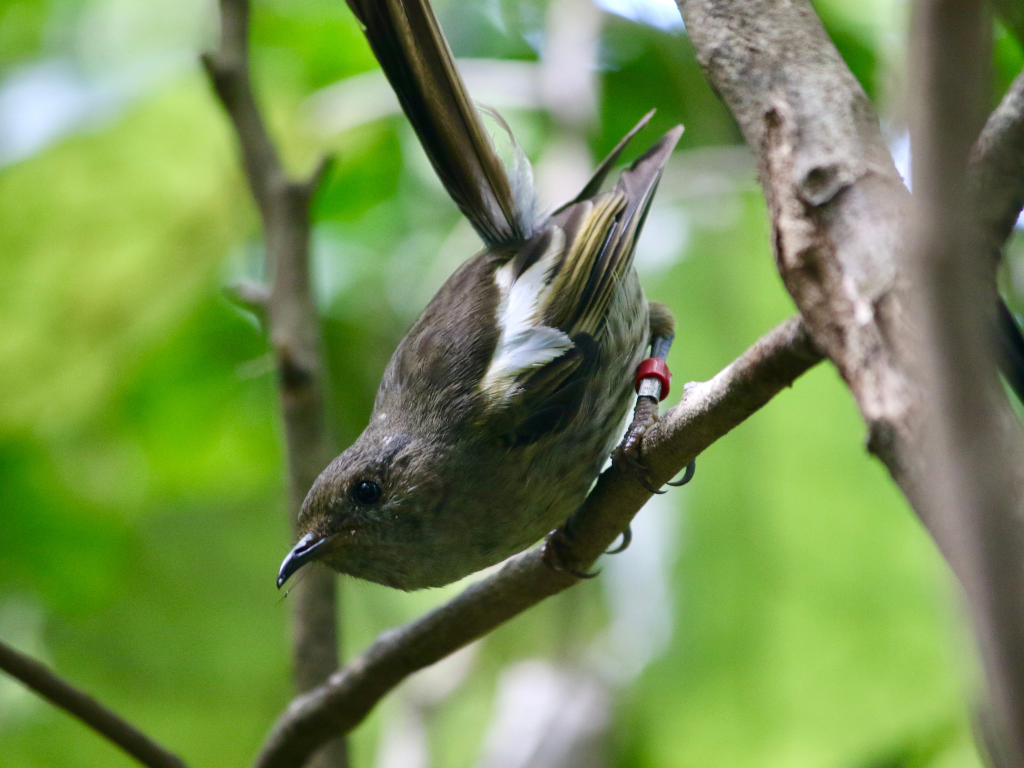
The striking yellow feathers are the first thing you notice about male hihi; it’s the reason for their te reo Māori name, meaning “rays of sun”. Like many in the bird world, hihi males are brighter than females.
Rather than being used to attract a mate, the yellow helps them compete with other males; brighter males are more successful at securing territory. The colours come from carotenoids, the same compounds that give carrots their orange colour.
Hihi cannot produce these pigments and must get them from their food. Brightly coloured forest fruits from hangehange and ti kōuka (cabbage tree) are rich in carotenoids, and hihi who eat more of these brightly coloured foods end up with brighter feathers.
Male hihi eat significantly more fruit than females during the moult, actively seeking out these bright coloured foods so they can replace their coloured feathers.
Forgotten for a century and still needs our support
The only wild hihi left are on Te Hauturu o Toi (Little Barrier). Historically, hihi were found throughout Te Ika a Māui (North Island) and the surrounding islands.
Introduced predators, habitat loss and disease drove them to mainland extinction, with the last mainland sightings in the Tararua Range in 1883. After that, hihi were confined to Little Barrier Island.
Nearly 100 years later, in the early 1980s, DOC began to translocate hihi to predator free offshore islands, with the first successful translocation to Kapiti Island in 1983.
Since then, DOC has translocated hihi to five other predator free islands and sanctuaries on and around the North Island.

Around 2,000 hihi hang on today on predator free sanctuaries, such as Zealandia Te Māra a Tane, and offshore islands, but these rare birds still need support through supplementary feeding, nest box construction and predator control. Understanding their mating system helps explain how populations persist and how best to help them.