
Volunteer traplines have helped grow a mainland colony of ōi (grey-faced petrel) from just two burrows to more than 150 today. Guest writer Mike Fox explains.
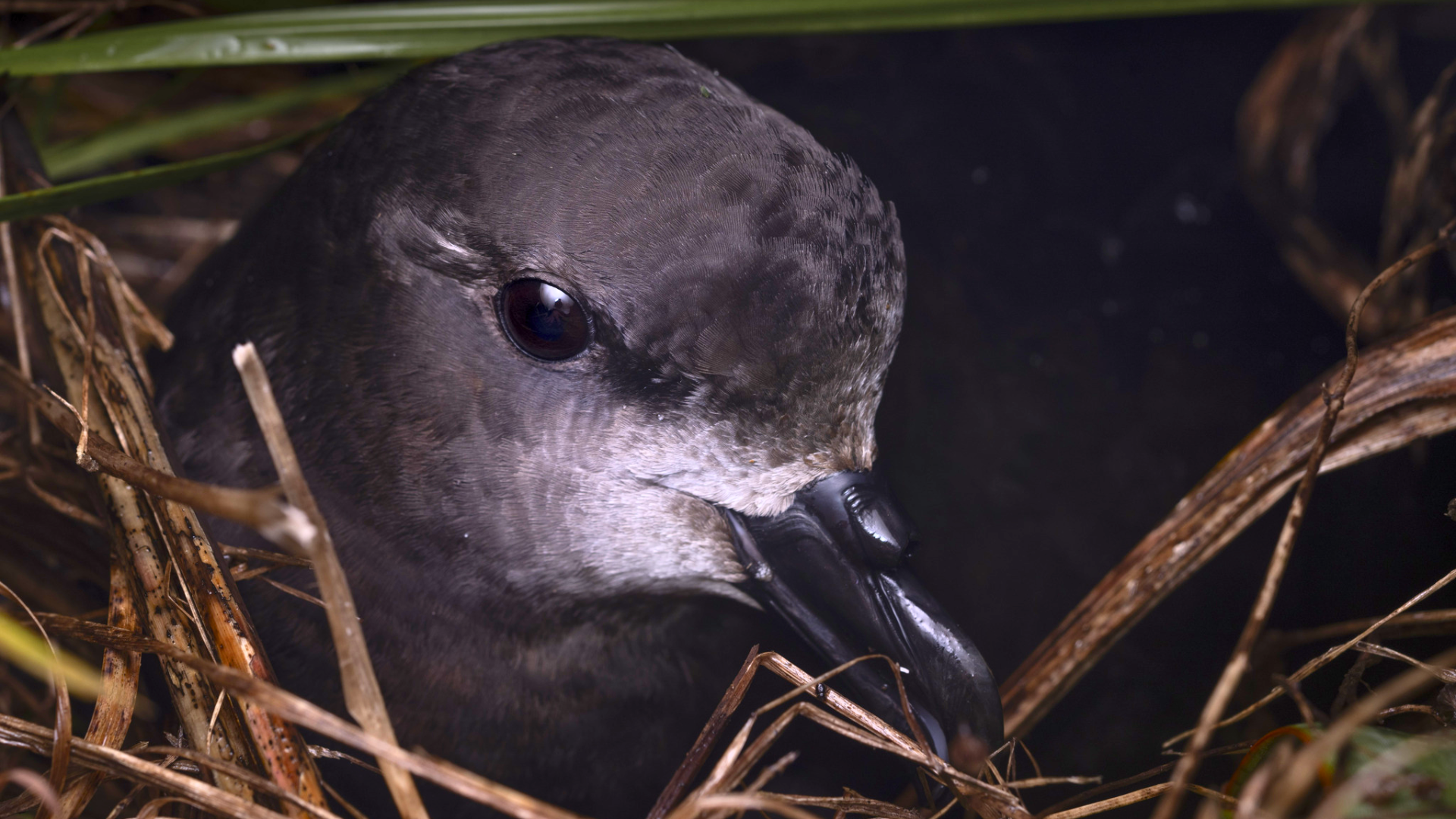
After more than 100 days at sea, a grey-faced petrel or ōi returns home with a thud – there’s nothing graceful about the landing.
I’ve heard multiple birds crash-landing in the Pōhutukawa at Te Henga (Bethell’s Beach) in west Auckland as the sun sets.
A decade ago, there would more likely have been silence.
The ‘Petrelheads’ doing the hard yards
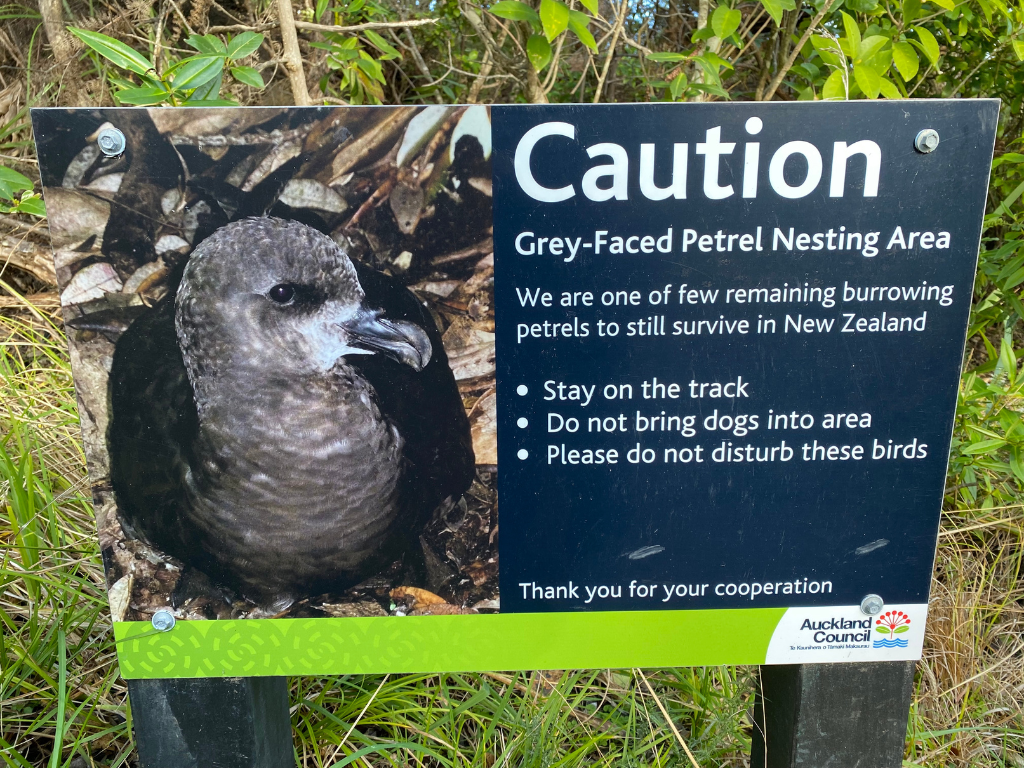
That more than 150 burrows now exist on the mainland at Te Henga, up from only two in 2014, is a testament to volunteers. Not all burrows are active, so I estimate 150 to 200 adult birds are based on the mainland in the greater Te Henga area.
A small group of dedicated volunteers maintain traplines, check bait stations, fill out funding applications, and dispose of dead stoats, rats, and, occasionally, ferrets.
A community group at Cornwallis has adopted the ōi as an emblem, wearing Petrelhead T-shirts and undertaking predator control across the Cornwallis peninsula.
The revival along the west coast is a reminder that the biodiversity story in Aotearoa isn’t just about loss – sometimes we quietly gain back with a little can-do attitude.
It also shows birds can be restored in inhabited landscapes rather than fenced sanctuaries or offshore islands, which is important because burrowing seabirds are in worldwide decline.
How much predator control is enough?
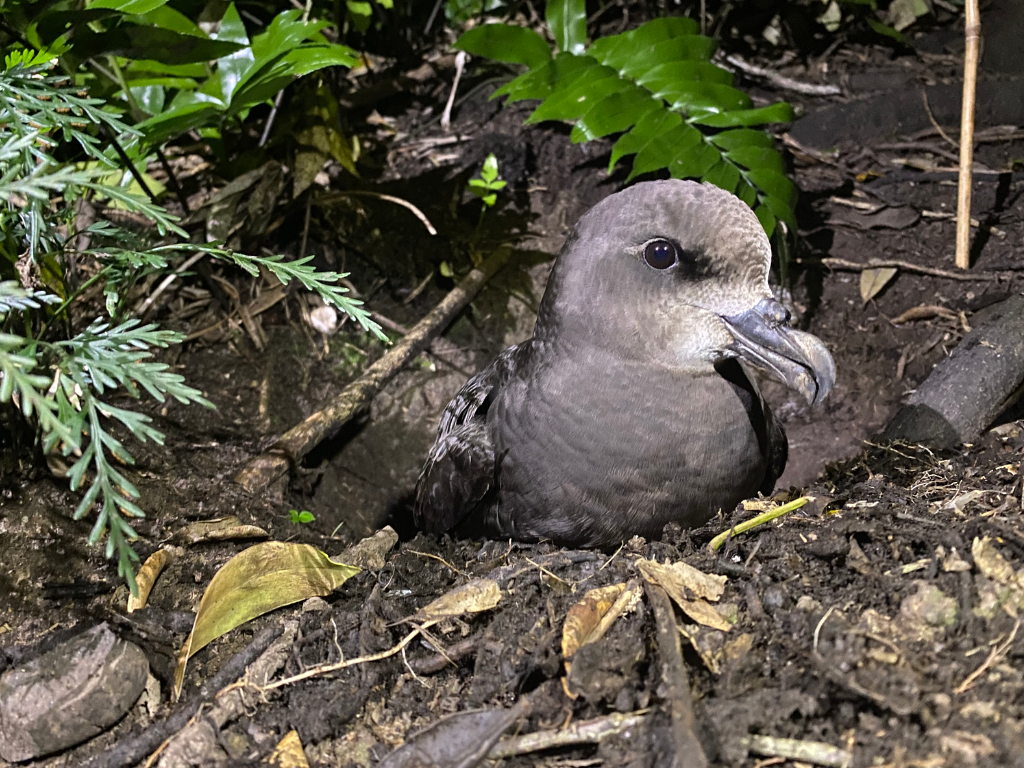
Between 2022 and 2024, for a University of Auckland study, I monitored more than 400 burrows across 14 colonies on the west coast with my homemade “burrowscope”, a camera and torch strapped to a harakeke branch with electrical tape. Investigating burrows, warm air and the musty smell signalled someone was home.
I paired the monitoring information with data from cameras recording the abundance of Norway rats, ship rats, stoats, cats, possums, and ferrets. This research showed that suppressing predators – especially Norway rats and stoats – was most crucial from August to October when chicks were youngest.
A chick spends most of its time alone, with both parents out foraging, returning periodically with food.
When predators were kept beneath certain thresholds over this period, the survival rate for chicks was often more than 60 percent, similar to predator free islands and enough to maintain or increase populations.
This shows that predator eradication is not absolutely required for seabird restoration; predator suppression can work.
The national ōi population is about 200,000 breeding pairs, almost all based on the east coast, owing to the more numerous islands, many of which are predator free. Mainland colonies mostly vanished because of predators.
The remarkable, somewhat eccentric, ōi
Long-lived – up to 40 years – and monogamous, ōi return to the same burrow every year to raise a single chick. Their burrows, dug with the birds’ feet and powerful beaks, can be as deep as 2 metres and they’re musty – the smell reminds me of my grandparents’ linen cupboard.
Ōi spend most of their lives offshore, foraging over waters more than a kilometre deep.
Deep-sea fishers know the bird, but on the mainland, it’s a different story.
Under the cover of darkness, ōi slip in, make a ruckus, and before dawn, they’re gone. Some volunteers setting traps have heard the birds’ distinctive “o-hoe” calls but only seen an ōi once or twice.
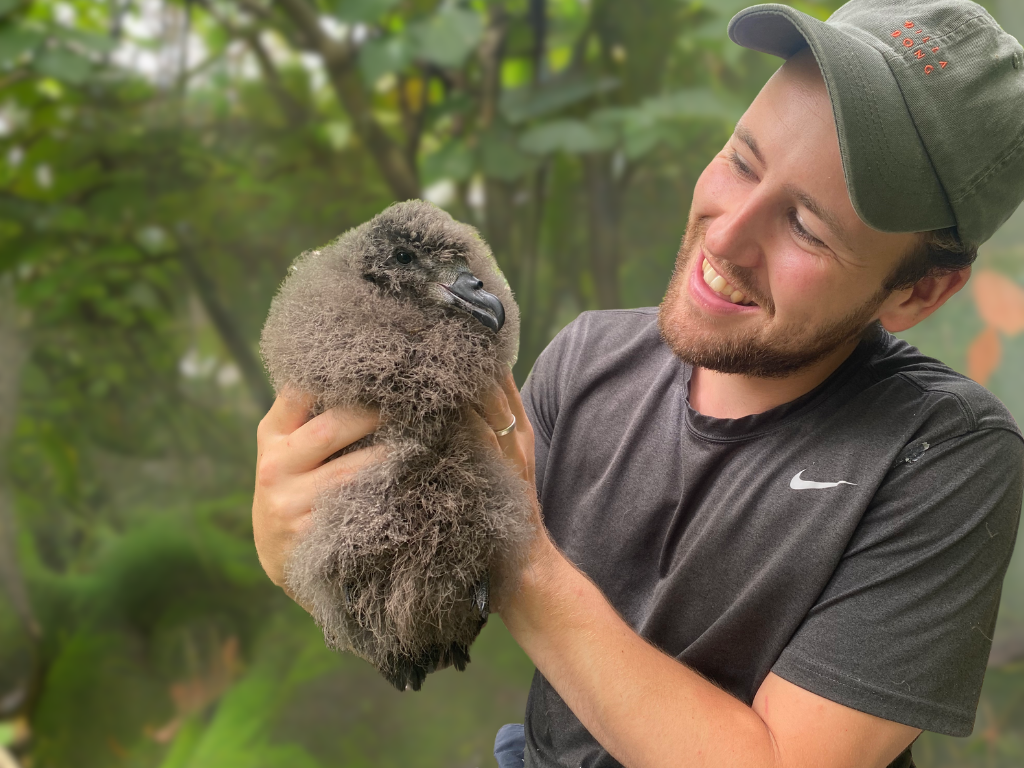
For long-term monitoring, the birds are caught and tagged with metal bands on their legs. It’s like holding a pet chicken that has a kitchen knife for a beak.
Helping ōi boosts related ecosystems. Seabirds act as fertilisers for our native coastal vegetation. They forage at sea, eating fish and squid, and bring those nutrients high in nitrogen and phosphorus back onto the land.
Their guano (poo) enriches soils and the birds’ digging turns over the earth. Most of these ecosystem roles once occurred at scale across Aotearoa but disappeared when seabirds vanished from the mainland with the introduction of mammalian predators.
A mainland comeback story
We spend a lot of time talking about how dire things are for native species. I’d love for us to talk more about the birds we’ve saved – and that’s happening with ōi right in front of us on the west coast.
If you want to experience the magic of ōi, go out on a windy autumn night and listen at headlands near the coast for the distinctive “o-hoe” calls at dusk. Or better yet, join a local group to be part of the action and protect a taonga.
Michael Fox completed his PhD at the University of Auckland in 2025 and is now working as a research associate at Murdoch University in Western Australia. This article was first published in Newsroom.co.nz.