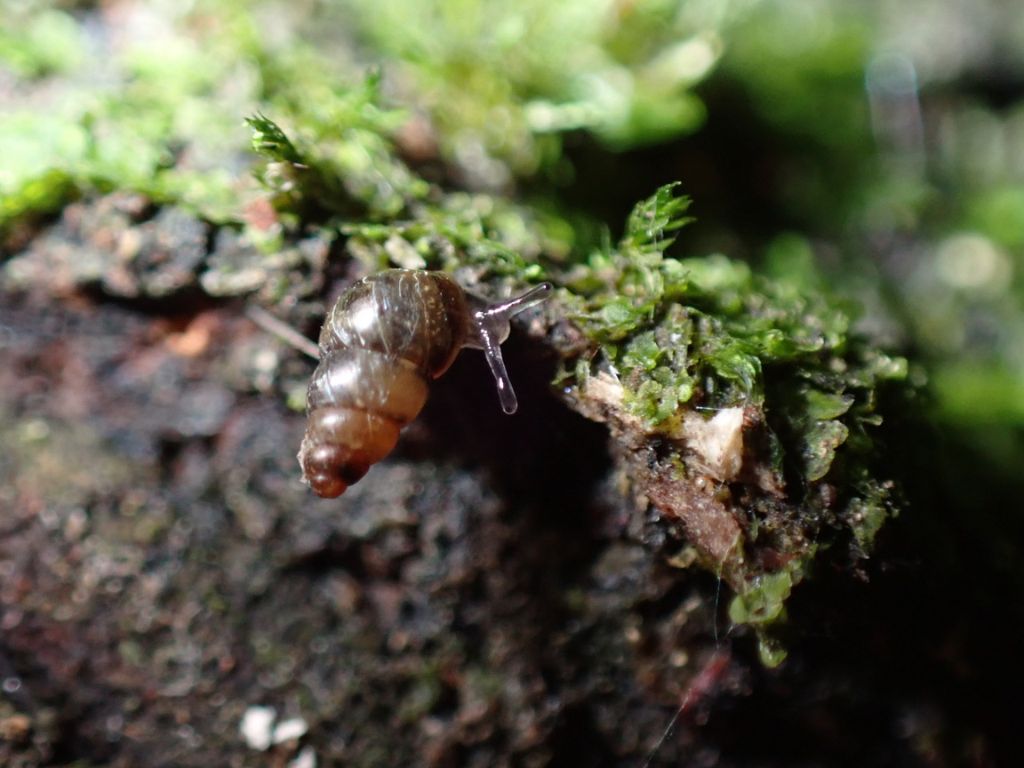
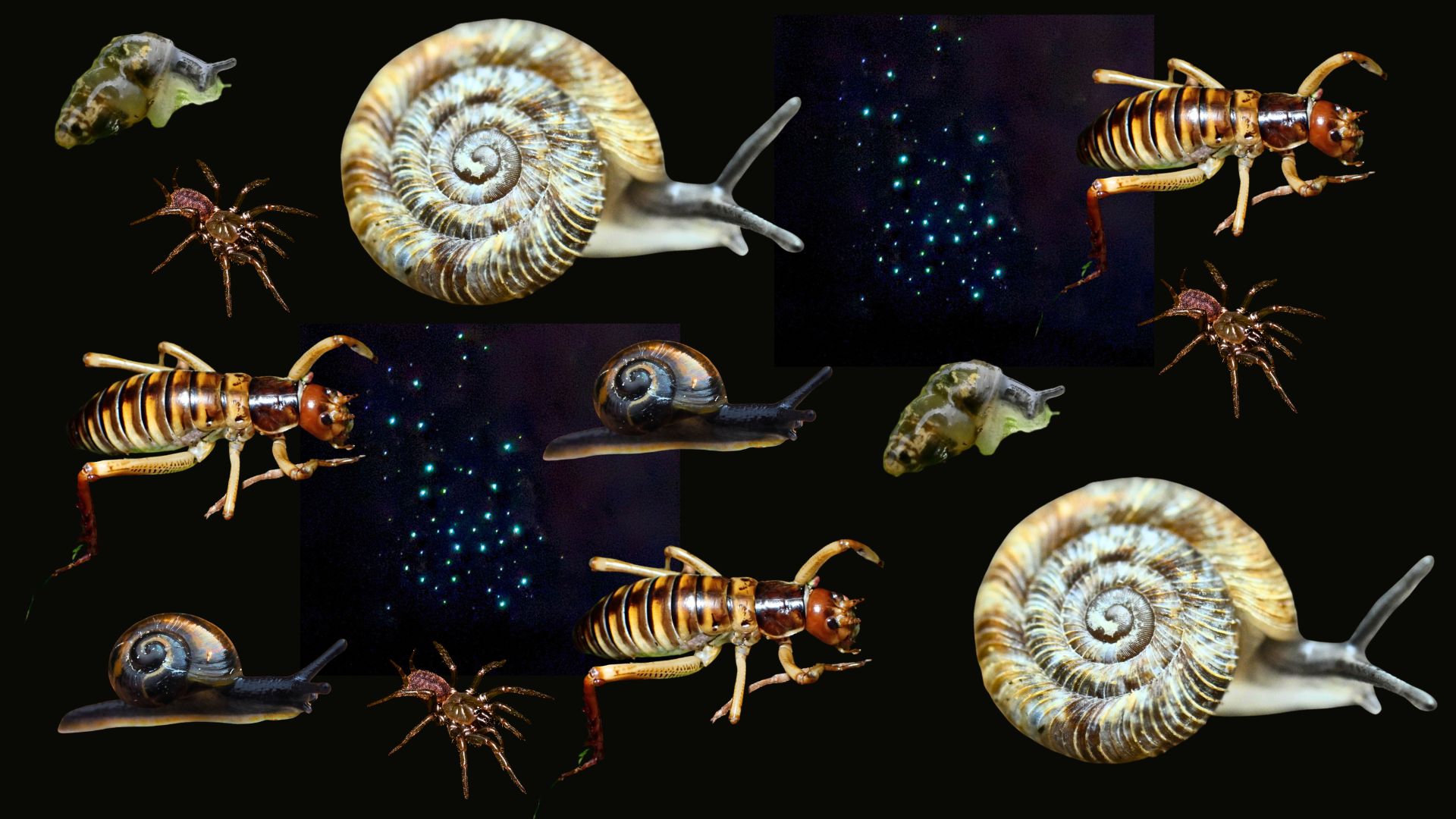
On warm, wet nights, in a Golden Bay garden, a head torch reveals cave spiders hunting, native snails feasting on lichen, and glowworms twinkling. Thirty years ago, it was choked with weeds, littered with rubbish, and dominated by introduced critters. After years of patient restoration and predator control, it has become a whole different world.
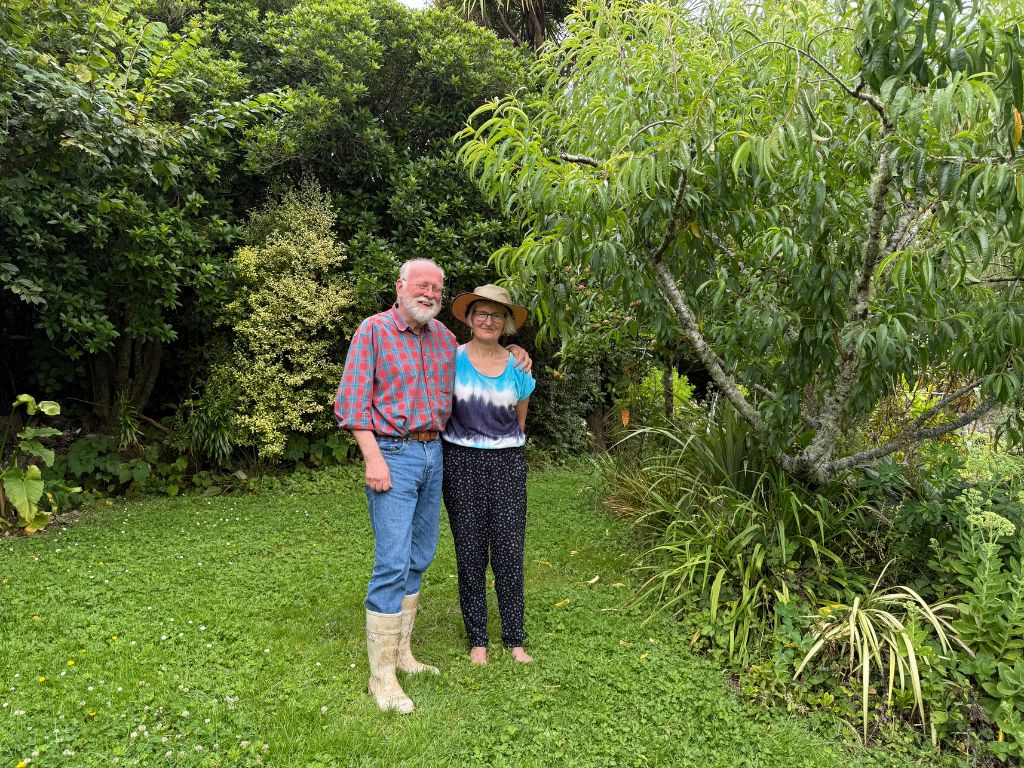
“Terrible” is how Saskia Wood describes the state of the Pōhara property when she and her partner Frans de Jong bought it more than 30 years ago.
“It was full of rubbish, in every crevice. Introduced vines and weeds were smothering the trees, there were rats, possums and hedgehogs everywhere.”
Saskia got to work immediately, clearing rubbish and ripping out endless Chinese jasmine, tradescantia, blackberry and honeysuckle. Reestablishing native plants was the hardest part.
Golden Bay, in the Tasman district, is characterised by limestone, which creates incredible cliffs, bluffs and cave systems, but can be hit-and-miss with soil. They couldn’t completely rip out everything and start from scratch “because limestone sucks up heat, and if there’s no leaf litter or shade, seedlings would dry out and die”.
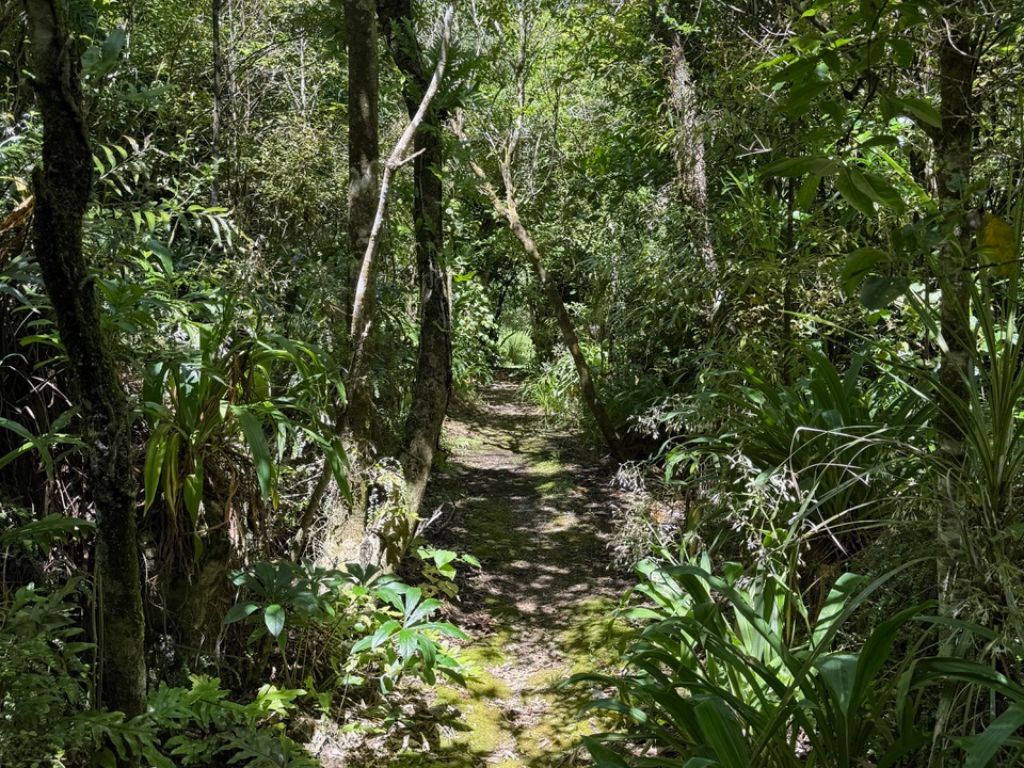
Planting māhoe turned out to be ideal. It’s a fast-growing native tree that can tolerate a range of conditions and provides a protective canopy for other plant species. Its purple berries feed tūī and kererū, which in turn spread more māhoe through their poop.
Alongside planting, Saskia set traps for rats, mice, hedgehogs, and possums. She caught nearly 400 possums before their numbers finally began to dwindle.
As predator numbers fell, changes became more obvious. Saskia and Frans were surprised to find native skinks under rocks and in the shed. They noticed snails and other bugs still clinging to life in the garden. Often, birds are the obvious markers of recovery, but small things like bugs are fundamental signs that nature is recovering.
“We’re lucky, they were surviving in a little gap between the limestone and soil. Snails and invertebrates rely on camouflage and standing still, and the rats, hedgehogs, mice and weka had driven them underground and nearly wiped them out,” Saskia says.
She realised her work wasn’t about creating an all-new garden; it was about making it possible for what was already there to come back and thrive.
Saskia now describes their garden as “amazing, a whole different world”.
After dark, the garden comes alive
“We now have six native snail species in our garden. Not only that, but cave spiders, wētā, flatworms, glowworms, moths, and lizards,” Frans says proudly.
The couple laugh, thinking they must “look mad” to the neighbours when they’re outside on wet nights with a headtorch and magnifying glass, wandering around the garden looking for critters smaller than the size of a fingernail.
With Frans’ background in taxonomy combined with a lifetime of close observation of nature, the pair have become adept at seeing a world overlooked by most.
“You must look carefully because many invertebrates are cleverly and beautifully camouflaged,” Frans says.
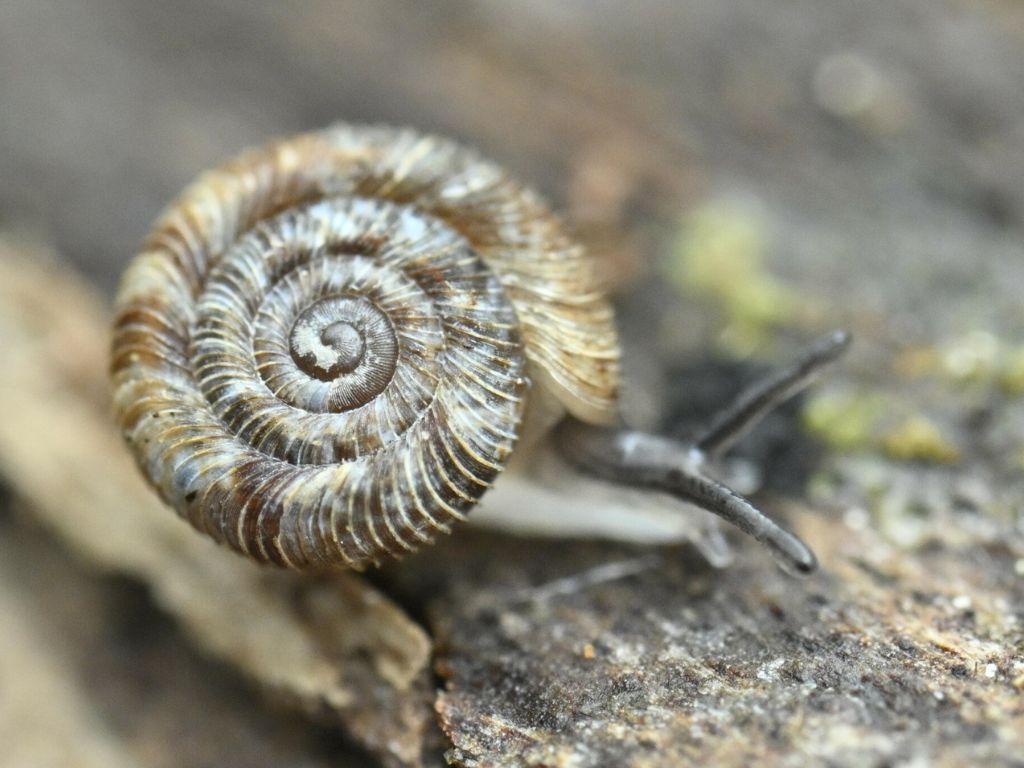
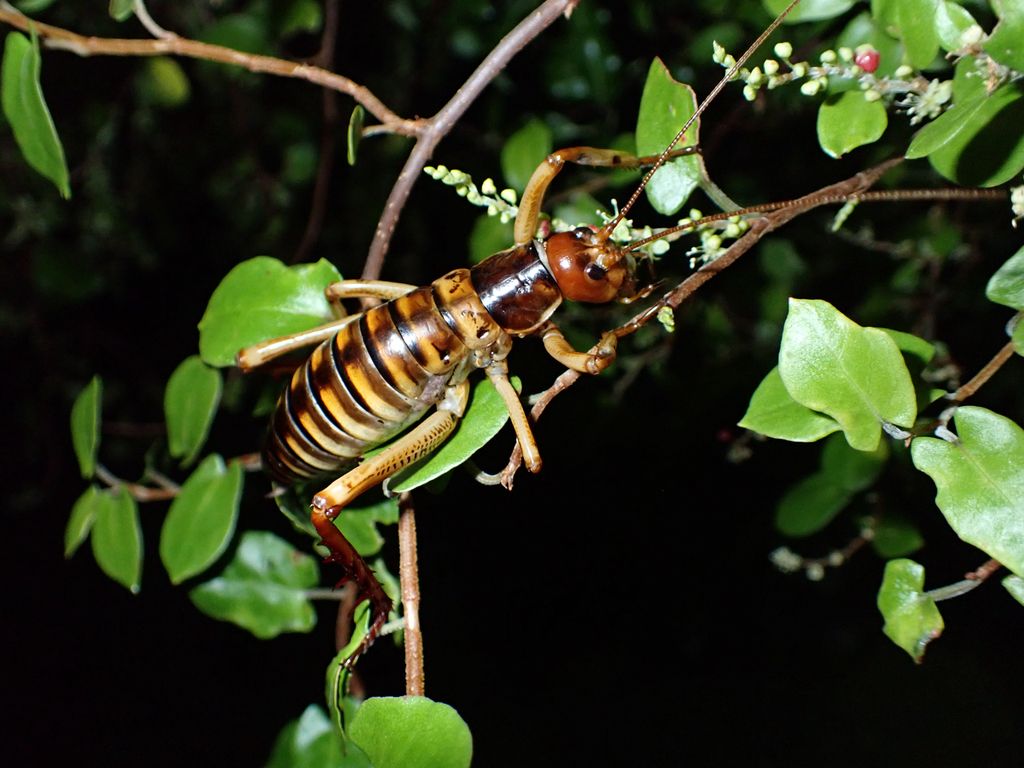
Māhoe trees are a favourite spot to look. Frans and Saskia see wētā on the distinctive mottled bark as well as snails (flammulina perdita) with shells only five millimetres in size, cruising up and down the tree trunk.
“We observed them two metres high on the tree, and we were wondering why these tiny snails spend so much energy climbing the tree trunks,” Frans says.
Turns out, the snails were risking being seen by predators to graze on an introduced fungus called “rosy crust”. Under closer inspection, Frans and Saskia could see the snail’s teeny teeth chowing down on the fungus.
“I like walking around and seeing the changes. It’s a lot of fun to go out with a torch and see a whole different world in this little strip of bush,” Saskia says.
Beyond their backyard
The couple see their property not as an isolated patch, but as part of a broader corridor of recovering habitat in the Golden Bay area.
As members of Friends of East Mohua, their backyard is part of a collective effort to restore and protect nature at the top of the South Island.
They are proof that recovery can take decades, and doesn’t always announce itself loudly, but in the quiet glide of a snail or the emergence of a spider in the dark. Insects, after all, are “the little things that run the world“.