
Introduced species threaten ecosystems worldwide, but New Zealand stands out for its solutions. From self-resetting traps to bait-dropping drones, New Zealand’s conservation and invasive species management tech is finding promising markets overseas.

Low-labour trapping New Zealand’s “weird niche”
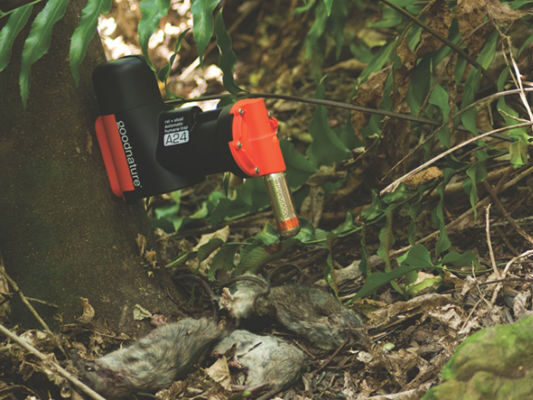
Probably New Zealand’s most commercially successful trapping export is the GoodNature A24, a self-resetting mouse and rat trap. Goodnature exports to 40 countries, with these exports accounting for 85% of its business.
Nick Leckie, Goodnature’s conservation manager, attributes much of that success to being first on the market.
“For a long run there, with the A24, it was really the only one in the [self-resetting] space. That was why people were coming to us. That story has shifted a little bit as some other competitors have entered the space more recently.”
Last year, the company produced a record 100,700 traps at their Wellington factory and experienced significant growth in US sales. The growth is attributed to the new consumer-targeted smart mouse trap, which is self-resetting, rechargeable, and has a long-life peanut butter and jelly doughnut lure.
Reflecting on the importance of bringing innovation to the market, Nick invokes physicist Sir Paul Callaghan, of Callaghan Innovation, “who talked about New Zealand being very good at weird niches”.
Goodnature isn’t the only Kiwi company making waves.
Envico, a company based in Tauranga, is best known for its bait-dropping drones. The drones have been used on 27 different islands around the world, and “they’ve all been successful eradication projects,” CEO Cameron Baker says.
The expansion of Envico’s drone operation is hindered by the size of the team, which can only service about six islands per year.
“We’re looking at where we can really upskill communities for them to take on the tech so they can do it themselves,” Cameron says.
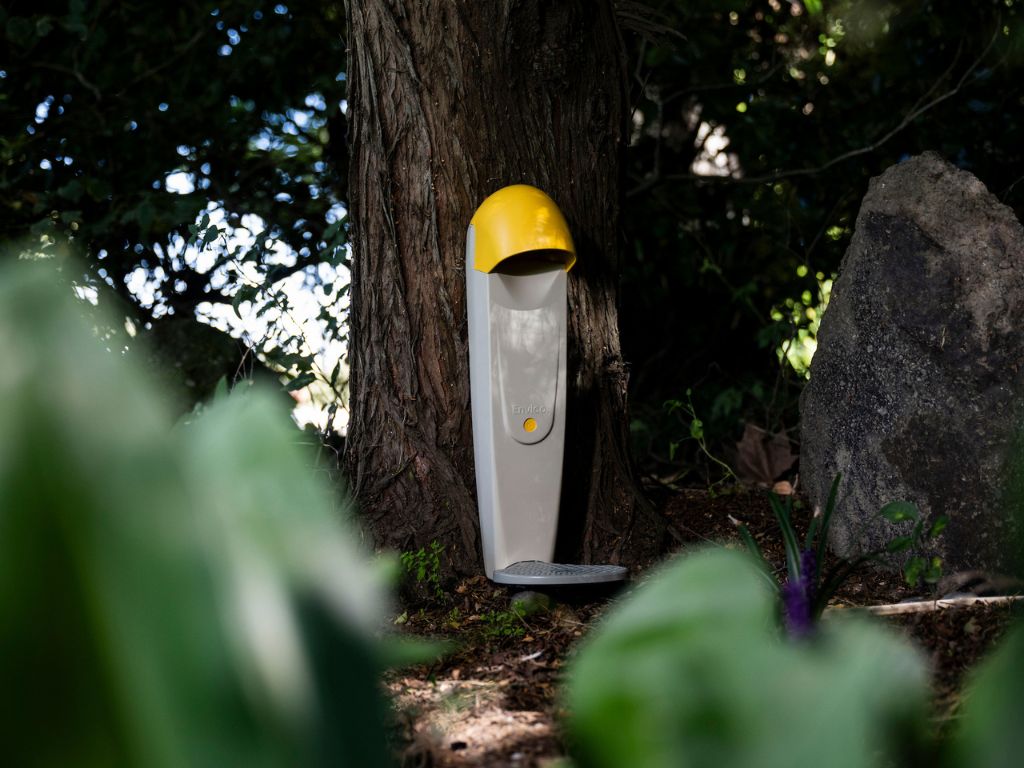
Envico has also developed a possum control device: the Spitfire. It sprays a toxin onto an unsuspecting animal’s fur, which is then ingested during grooming.
The Spitfire is designed for use after a drone bait drop, when the target pest population has been knocked back. It’s been in development for over a decade..
“We’re the third group to take [the Spitfire] on,” Cameron explains. “Once we had Predator Free 2050 funding, we were able to look at that device seriously. Without that funding… that project would have been sitting on the shelf that we found it on.”
The Spitfire for possums is not yet available in New Zealand due to approval processes with the Environmental Protection Authority (EPA) — a process that can take up to two years. It is being used overseas, in places like French Polynesia and Texas. In Texas, the device is being used to administer medicine to opossums, which are similar in size and shape to New Zealand’s brushtail possums.
Exports account for about half of Envico’s current sales, but the company hopes the Spitfire will contribute closer to 80%.
Self-resetting rat and possum trap takes on mongoose and snakes
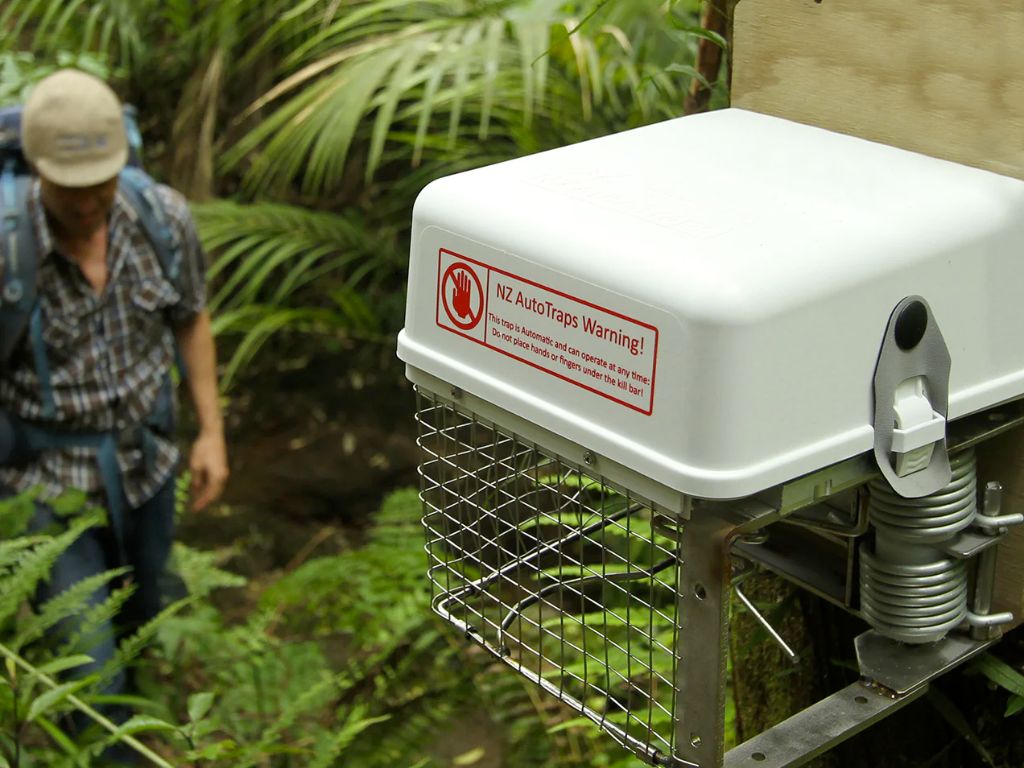
Whakatāne-based NZ AutoTrap’s self-resetting AT220 trap has performed strongly in New Zealand for possums and rats, and that success has caught international attention.
The trap is selling well in Hawai’i, where it targets mongoose, a small, carnivorous, weasel-like mammal that is decimating native bird species.
“As a result of that, wherever mongoose are an issue, like in the Caribbean, they’re interested in buying traps as well,” General Manager Bryce Wells says.
The company has won funding to develop a trap targeting Guam’s brown tree snakes. The snakes were introduced by the US military, leading to the loss of almost all of Guam’s native forest birds.
“A US-based outfit was being funded previously, but [their traps] didn’t work,” Bryce says. “Ours worked, so we’ve got the funding to develop it.”
Diversifying makes business sense
With conservation funding often the first to dry up in uncertain economies, diversification makes business sense.
Goodnature sells its rat traps to farmers and backyard enthusiasts, as well as conservation groups. They’ve further diversified with the indoor self-resetting mouse trap for residential homes.
NZ AutoTraps is also turning its attention to the commercial space, hoping sales to horticulturalists can support its conservation efforts.
“If we are successful in the commercial space, it’ll make the environmental space much cheaper, because we will have scale, so we’re hoping it’ll go hand in hand.”
Running a business in the predator control sector can be tough.
“We get asked all the time by politicians, primarily, ‘What can we do to help?’ And the answer is, ‘Buy more traps’,” NZ Auto Traps’ Bryce says.
Envico’s Cameron adds that while New Zealand is a world-leader in pest control, it can sometimes cling to older tools.
“In countries getting conservation funds from big organisations… They say, ‘What’s the newest, novel, top thing in the market? And how do we test that first?’ And New Zealand isn’t doing that.”
More than just exports
Exporting predator free technology doesn’t just strengthen New Zealand’s economy – it helps the world.
And as Goodnature’s Nick points out, what New Zealand is exporting isn’t just hardware – it’s a vision for nature.
In a world where we could be developing weaponised drones, our nation is producing drones that help ecosystems recover from introduced species, he says.
“What a beautiful [goal] to pick; to say, ‘Let’s get rid of invasive predators that are bringing our birds to extinction, and let’s unlock a thriving nature.’ That’s such a worthy goal.”