
Five years ago, the forest above Waikawa in Marlborough was more horror story than sanctuary: goats chewing through undergrowth, pines choking the hills, and wasps so dense they smothered the sound of birds. Today, it’s on the road to restoration.
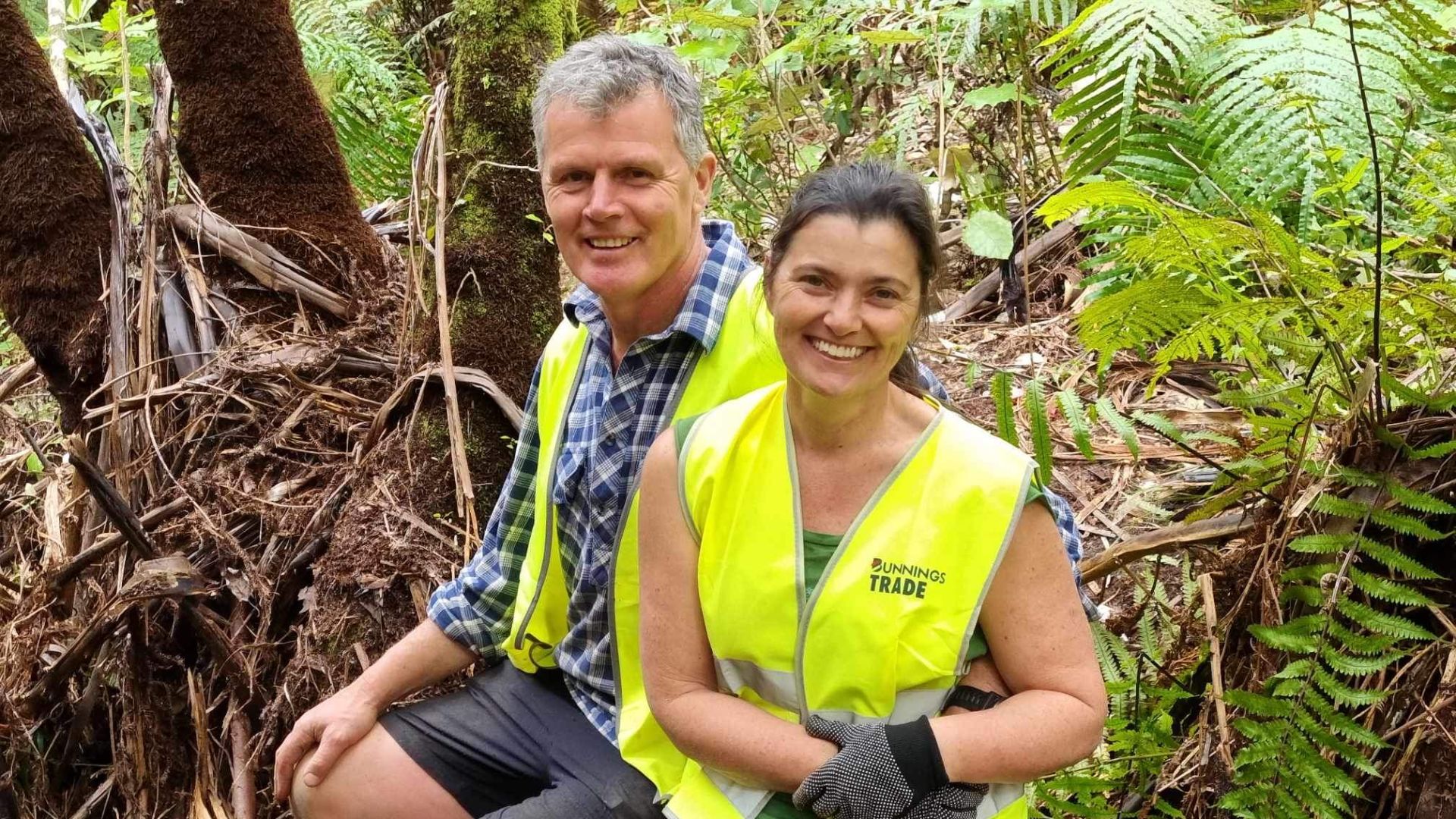
When Michelle Clark and Nigel Muir bought a 200-hectare section of land in the hills above Waikawa, ten minutes from Picton, it was completely wild – and not in a good way.
The land was overrun with weeds, wilding pines, and wild goats, while the air buzzed with millions of wasps – winged predators often overlooked as an ecological menace.
“That very first weekend we inspected the property, I think I pulled out 102 pine trees just while wandering along,” Nigel recalls of their first visit five years ago.
“I was interested in the adventure of the last property at the end of a valley and a couple of thousand hectares of DOC (Department of Conservation) land behind us, but it quickly dawned on us how much help the land needed.”
Joining them on that adventure from the start was local iwi Te Ātiawa and Waikawa Marae, whose sacred mountain, te maunga o Piripiri, is part of the land they now protect.
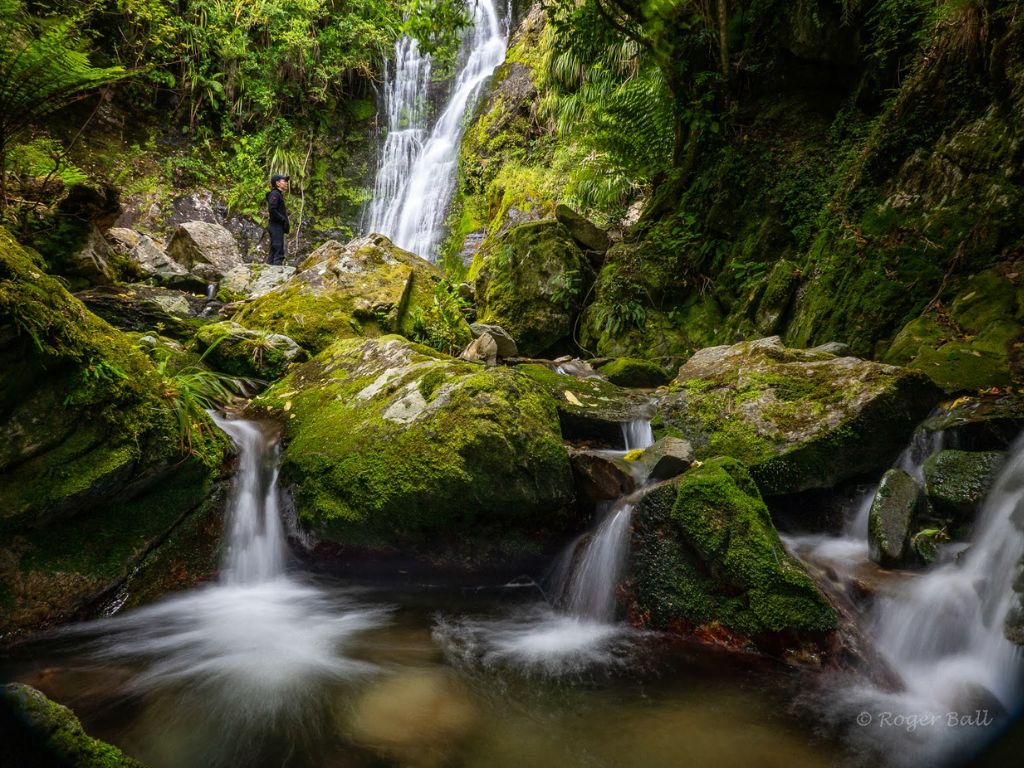
“They were amongst our first visitors and we’ve learned so much from them. It’s a precious partnership that inspires us to work even harder,” Nigel says.
In the first year, evidence of immense damage to the land was clear, with telltale signs of possums browsing on southern rātā, goats feeding on new shoots in the undergrowth, and pigs feasting on native snails.
But for Nigel, a lifelong hunter, one of the great surprises was the enormous impact introduced wasps were having on the beech forest.
The worry with wasps
According to the Department of Conservation, in some beech forests, such as in Waikawa, there are an estimated 12 nests or 10,000 worker wasps per hectare. That’s more biomass than all native birds, stoats, and rodents in the same area combined.
Wasps consume up to 90% of available honeydew: a sugary secretion from scale insects vital to native birds, bats, insects, and lizards. In addition to eating native insects, wasps can also kill newly hatched birds (PDF, 94.8 KB)
But despite their damage to biodiversity, wasps aren’t officially on the Predator Free 2050 target species list.
New Zealand has several kinds of native wasps that have evolved here and have never become a nuisance.
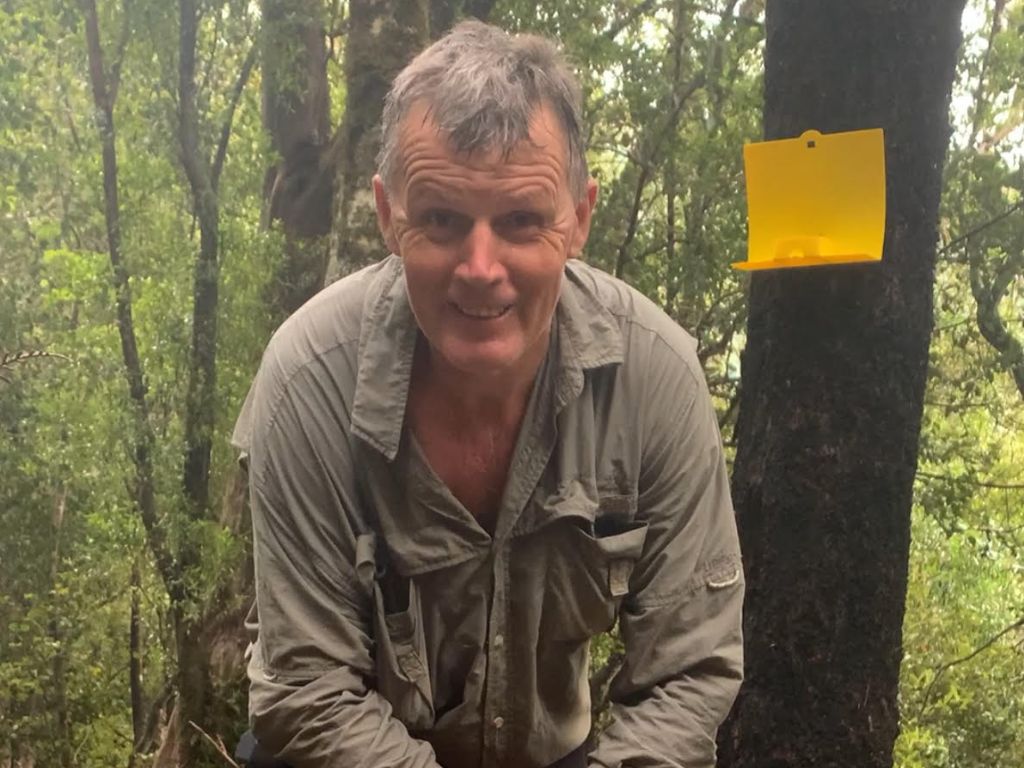
In the five years since purchasing the land, more than 1500 wasp nests have been removed as part of their wider Wild Waikawa restoration project. Wasp nests are mostly removed using Vespex, a wasp bait. It’s a protein bait with an insecticide and is not attractive to bees.
The difference has been stark.
“In the South Island beech forest, wasps are as bad, if not worse, than other pests. It’s not until you take them out that you realise, holy moly, their impact is extraordinary,” Nigel says.
“Around the second year of wasping, I noticed spiderwebs everywhere; it didn’t take long to put two and two together. Spiders are a great big, juicy chunk of protein, and they’re easy for wasps to find.”
A chorus once more
While wasp control is a high priority, Wild Waikawa is also focusing on other invasive threats. Almost 5,000 predators have been removed using a 14km network of traps, and nearly 18,000 wilding pines uprooted.
That effort is clearing the way for an ambitious restoration and the growth of a community alongside the land’s recovery.
“Waking up to a beautiful dawn chorus, or even just closing your eyes and hearing birds throughout the day, we just didn’t have that at the beginning,” Michelle says.
The regenerating land is also becoming more hospitable for 28 bird species, a host of insects, geckos and two species of rare carnivorous land snails.
Building a community
The extraordinary turnaround of the land is as much a result of Michelle and Nigel’s vision as it is of the more than 30,000 volunteer hours.
Wild Waikawa has cemented itself as a true community project, hosting educational and volunteer groups from kindergarteners to high school and polytech students, scientists, iwi and family and friends.
“When we started, it was the two of us wanting to help the environment. Now it’s an inclusive place where volunteers feel a sense of belonging and that there’s hope; that their own hands can make a difference to nature,” Michelle says.
It’s that strong community backing which helped Wild Waikawa win the Landscape and Habitat Enhancement award at this year’s Marlborough Environment Awards.
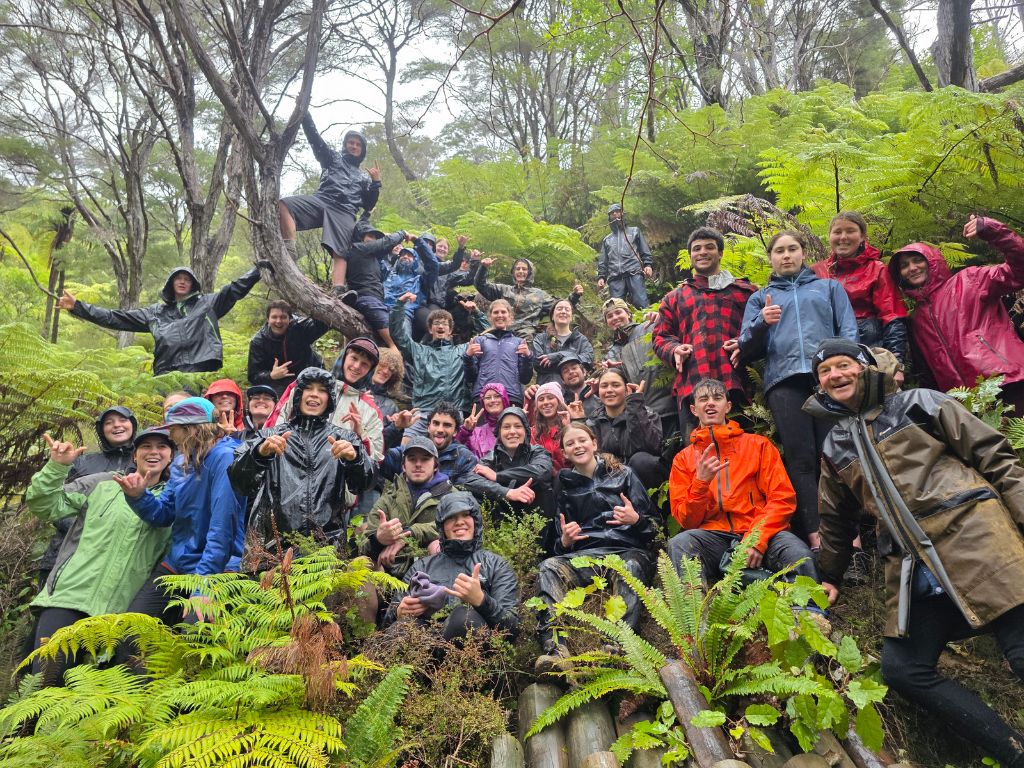
Nigel and Michelle believe that a strong partnership with Te Ātiawa Iwi, Waikawa Marae, the Marlborough District Council, and DOC has been crucial in their journey to restoring the land.
While the mahi to bring the land back to its former glory is ongoing, Nigel says there is one milestone he’s looking forward to.
On the ridgelines behind Waikawa Marae, the meeting place for Te Ātiawa, a budding cluster of southern rātā grows below Te Maunga o Piripiri Hautapu (Mt McCormick). As they mature, it’s hoped the trees will one day bloom their bright red flowers.
“We dream of the day when Allanah at the marae phones us and says, ‘come down here with that bottle of celebratory champagne’, because we can see the red flowers in the hills for the first time in decades,” Nigel says.
Until then, every trap set and tree planted brings that dream a little closer.