
When Cyclone Gabrielle unleashed havoc on isolated Mangaotāne in Te Tairāwhiti (Gisborne), Pete Swann and his biodiversity restoration team didn’t sit around despairing at the chaos. They dived back into pest control mahi on the ravaged land block as fast as possible.
Responding to the damage became a test of resilience — one they’re still building on today as they continue to protect whio, kiwi, and the ngahere from predators.
Mangaotāne is beautiful, but it’s a challenging place to work at the best of times. Cyclones aside, the forestry and native bush block neighbouring the Raukūmara Forest Park is prone to extreme, changeable weather.
It’s 5,500 hectares of steep hills, with limited roads and tracks.
Despite the challenges, Pete Swann, biodiversity manager for Mangaotāne Farms Trust, was making solid progress. He was partway through a three-year, multi-species predator control project funded by Ngā Whenua Rāhui’s Māori Land Fund/Jobs for Nature programme.
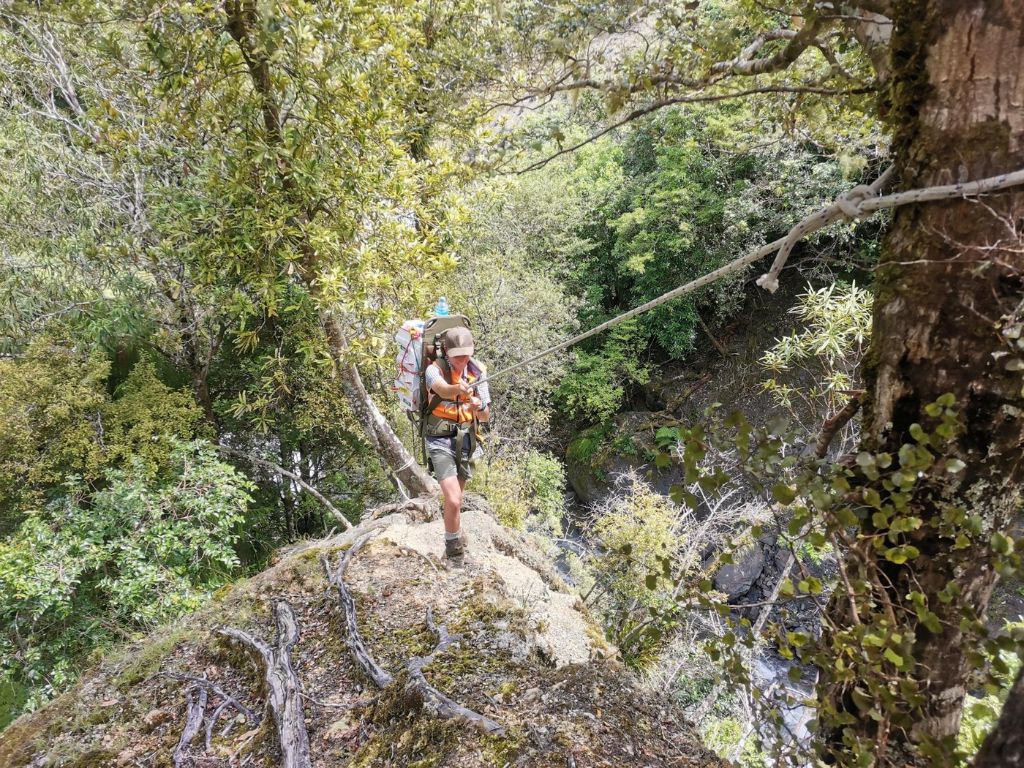
Pete’s team used helicopters, flying foxes, horses, and motorbikes in their efforts to control predators. They were used to cutting tracks to walk into inaccessible areas.
After Gabrielle struck, they needed all these tactics, plus a four-wheel drive tractor and a digger.
They also needed keen determination, and what Pete calls “Māori ingenuity.”
The cyclone aftermath
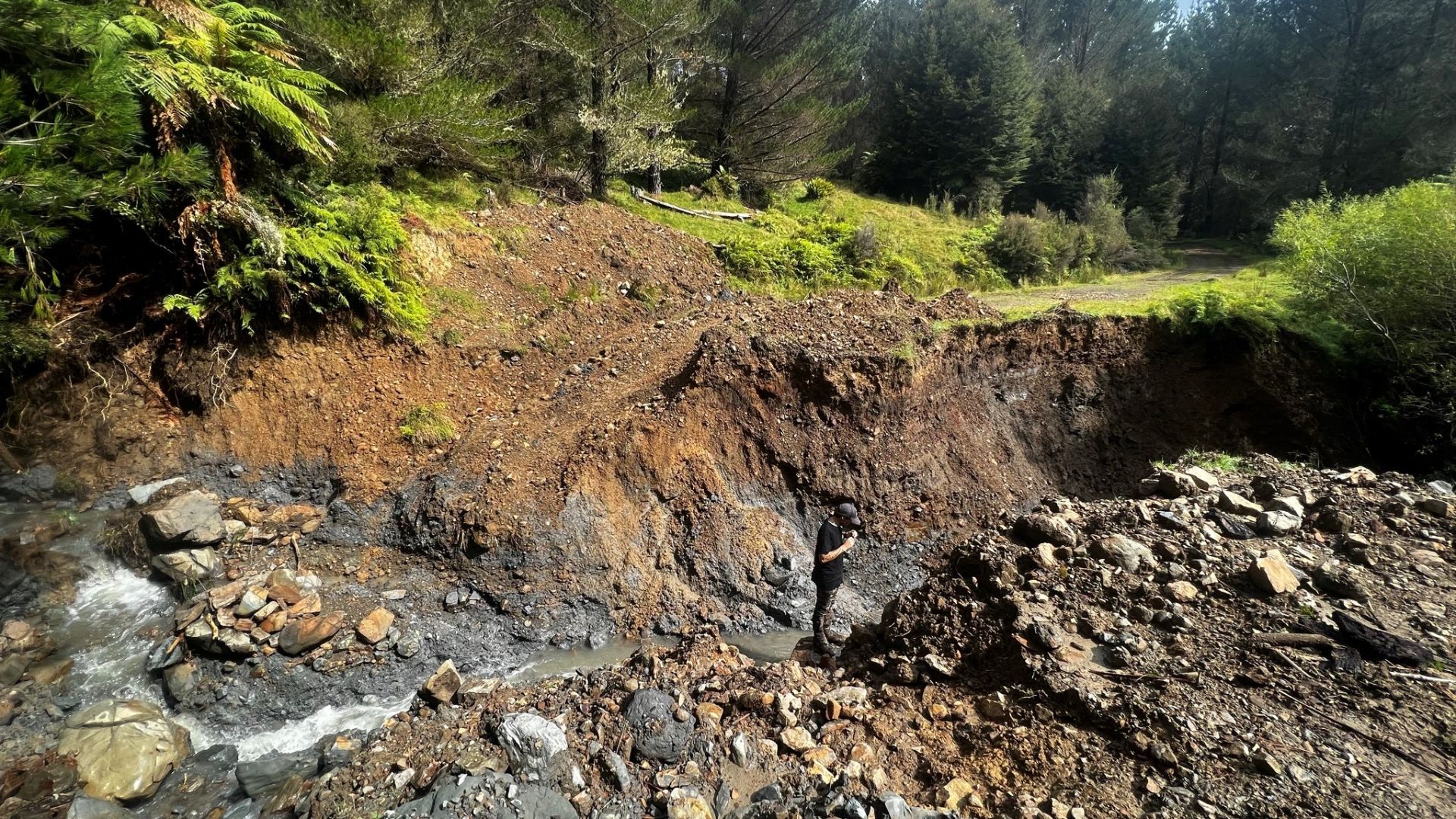
Devastation greeted the team when they could finally re-enter Mangaotāne several days after Gabrielle’s gale-force winds, easterly swell, and record rainfall (over 400 mm).
The team was the first to survey the damage – nobody lives permanently on the remote block, almost two hours’ drive from the nearest urban centre of Gisborne.
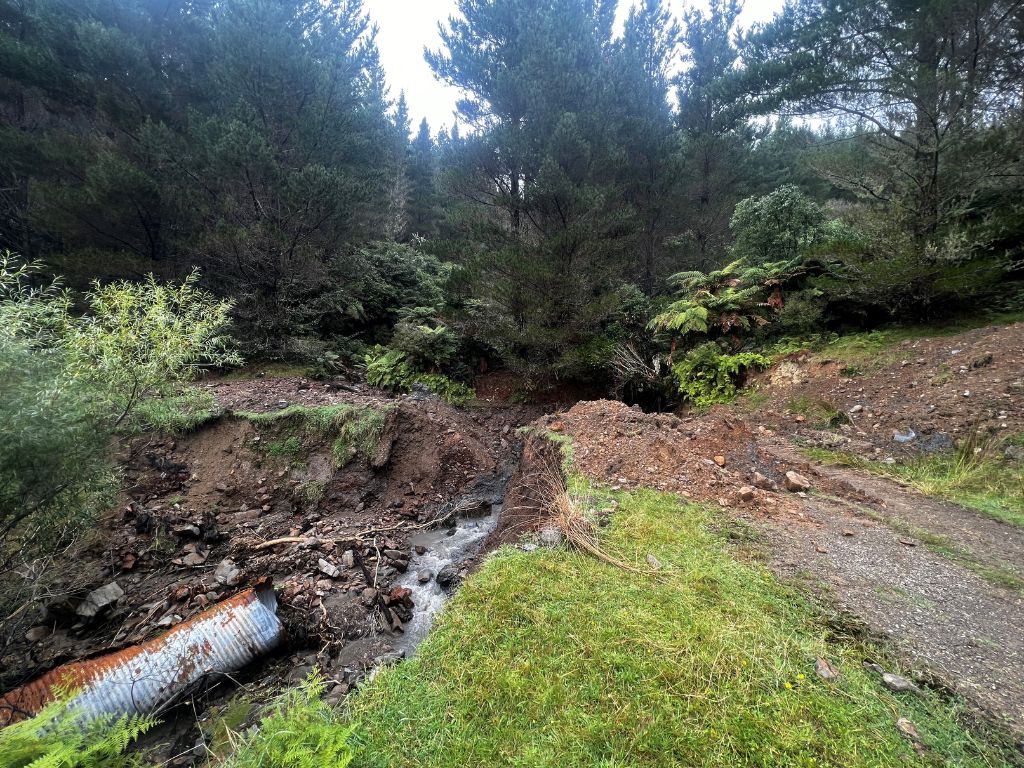
Sections of the access road had dropped out or simply disappeared, along with essential river crossings and many culverts. Numerous trees, mainly pines rather than native species, lay sprawled in the forests and blocked the tracks. Large slips tumbled down gorges and hillsides.
Traplines, vital to the pest control mahi, had washed out or blown away.
“Our commitment was to open up as best we could, and keep the work going,” recalls Pete, also of River of Man Adventures, a hunter-led conservation team.
“The easy approach would have been to close the block and come back next summer when everything had dried out. But we had jobs and families to think about, and we didn’t want to lose our skilled workforce. And we had funding deadlines to meet. We worked out a temporary road in and got back to the traplines,” Pete says.
“We had to keep going”
“Initially, the guys could only get around on foot, and they’d work with saws to open the tracks up. We lost every culvert from our driveway in, and all our river crossings were blown out. We airlifted in new culverts, which didn’t cater for utes and trucks but could take ‘side by sides’.
“This would only get the guys as far as the river, then they’d have to get themselves and their gear across on the flying fox. We had another bike helicoptered into the other side, and they’d use that to go to work. We purchased a four-wheel drive tractor and a big trailer, so we could start clearing our tracks from the inside out. The neighbours allowed us to use a road through their forest and loaned us a bulldozer.”
Today, the tracks are open, the traplines are running.
After Jobs for Nature funding dried up, the project has continued thanks to financial support from the Mangaotāne Farms Trust, plus volunteer shareholders and sponsors assisting with deer and goat management.
The storm left lessons behind: in an era of more frequent extreme weather, protecting native species will require the same mix of grit, adaptability, and community support that carried Mangaotāne through the cyclone’s aftermath.
A kawenata legacy
Mangaotāne Farms Trust signed a Ngā Whenua Rāhui kawenata (covenant) agreement in 1996. The recently renewed covenant protects 3,139 hectares of ngahere in two blocks, including several hundred mature mataī, rimu and tōtara.
Pest control mahi in the kawenata areas started slowly, but over time, the ngahere was regenerating, and manu populations increased.
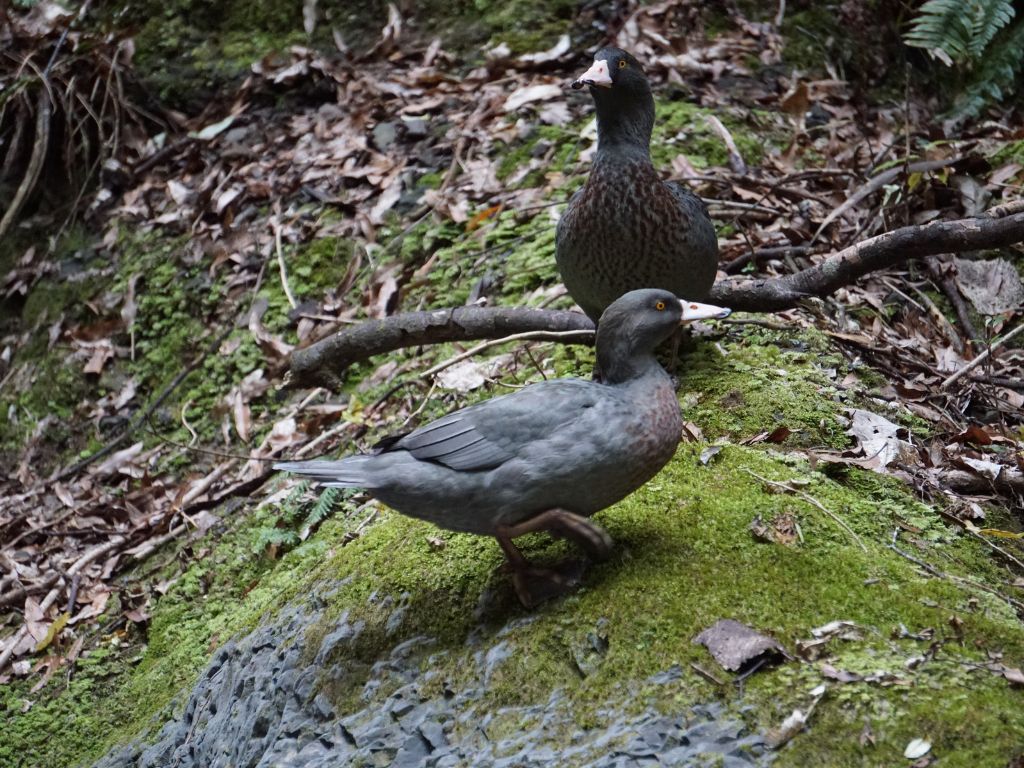
Then Pete, out hunting deer, recognised a whio (blue duck) on the awa outside a protected space. He started trapping pests in the whio habitat, with trustee support, helpful volunteers and local business sponsorship.
Meanwhile, other valued species, such as kiwi, and the high presence of pest animals, were identified on the whenua.
“We realised we had to expand what we were doing, and we needed funding,” says Pete.
“We ended up with Jobs for Nature.” This welcome pūtea (funding) has enabled skilled kaimahi (staff) to be employed to control deer and goats, trap other pests, and maintain tracks and huts throughout Mangaotāne – in both kawenata areas and pine forests.
A place with lessons for the world
Climate change influenced the cyclone. It’s ironic, perhaps, that the cyclone hammered Mangaotāne so hard.
Mangaotāne holds ancient rocks that some research considers internationally important to help understand “what future global warming could have in store for the planet”.
These rock layers in Mangaotāne Stream, once deep beneath the sea, contain fossils that superbly record a global environmental crisis about 94 million years ago.
“We’re looking back in time to figure out what might happen in the future,” says paleontologist and geologist James Crampton, in Sheridan Gundry’s 2019 history written for Mangaotāne Farm Trust.
This story, in part, was originally published in the Ngā Whenua Rāhui 2022-2024 Biennial Report (PDF, 11.1 MB)