
You won’t find a supermarket or even a dairy in the tiny town of Minginui. But you will find a thriving backyard trapping community. The whole town is getting behind the predator free kaupapa, with whānau trapping in their backyards, a native plant nursery recloaking the land and birds returning to the ngahere.
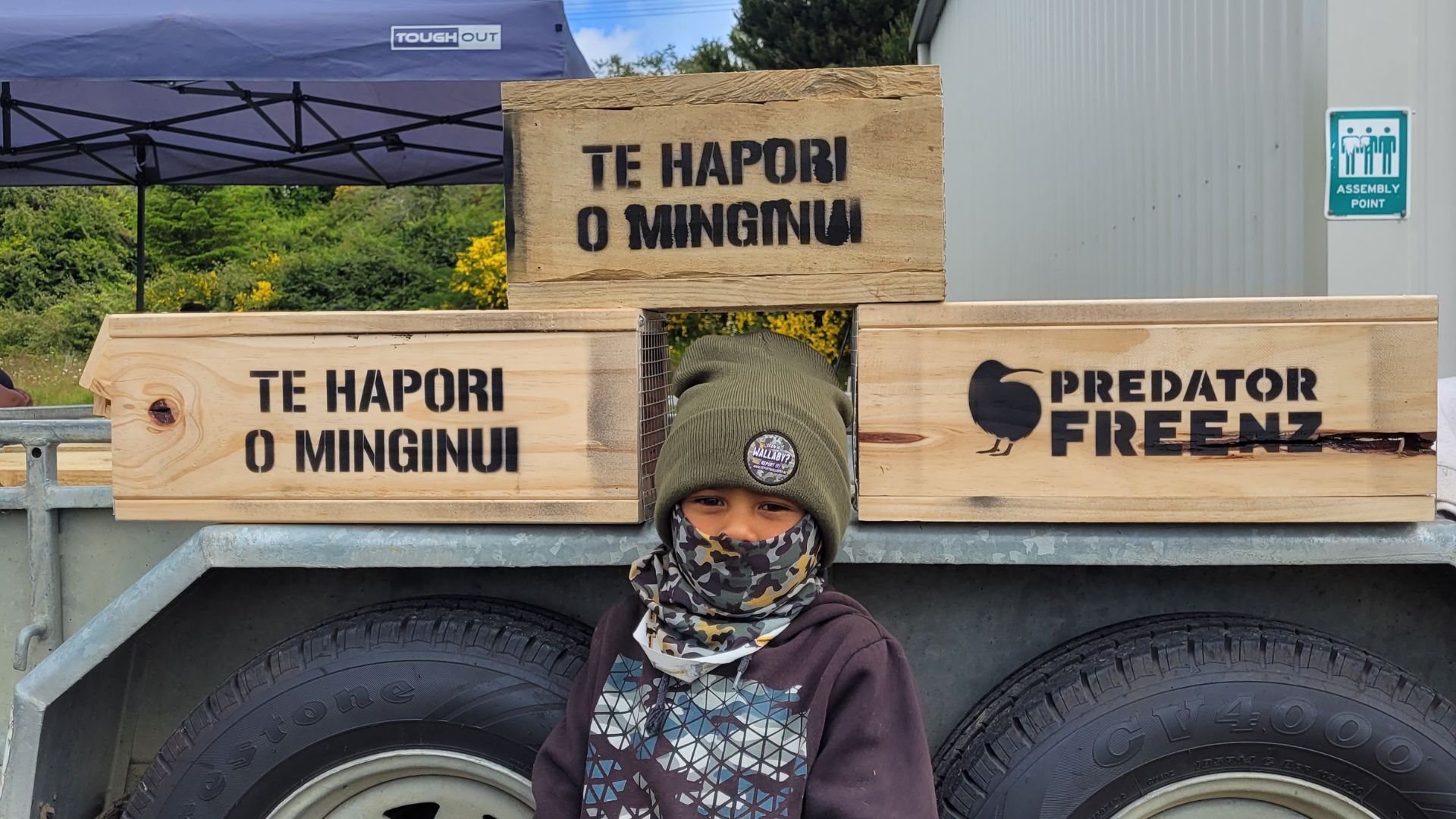
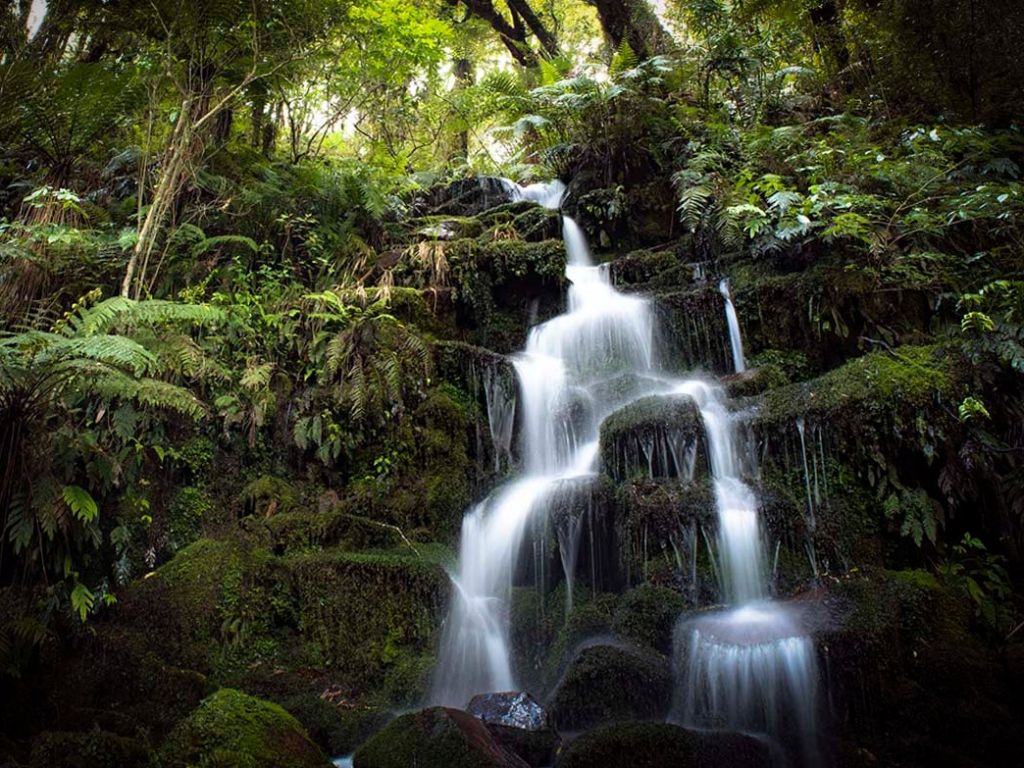
Mist, forest, the whomp of a swooping kererū – the tiny town of Minginui neighbours the beautiful podocarp forests of Whirinaki Te Pua-a-Tāne Conservation Park and Te Urewera. There’s no supermarket or dairy. The local kura consists of 11 students.
The town is recovering from the shutdown of the native timber industry. When that ended, the town lost its economic backbone and its vibrancy. But now, with the help of local iwi Ngāti Whare, locals are turning it into a town of nature restoration instead.
Described by his colleagues as a “pou” (pillar), Department of Conservation ranger Kohu Kohiti (Ngāti Whare) says during the era of native logging, “Minginui and Te Whāiti were a thriving community of working men.”
That “suddenly changed overnight when the industry ended. In some way or another, so did a part of Minginui, almost as if it were forgotten.”

Ranger Kohu is named for the famous mists of the region. He grew up in Minginui and now dedicates himself to the future of the whenua and its people.
“Anything we can support with here, if it interests any of our rangatahi, then it is worth it,” he says.
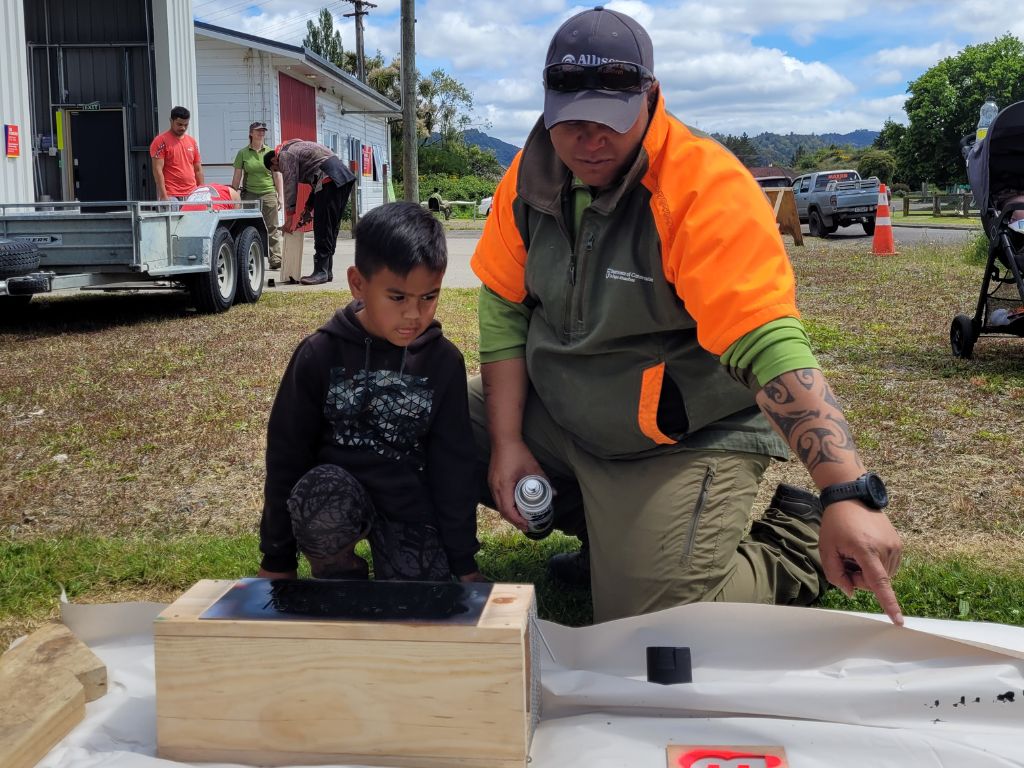
That kohu (mist) is also significant to fellow DOC and Predator Free ranger Freddy Carr (Tūhoe, Ngāti Awa), who travels to Minginui from Whakatane. Freddy is from neighbouring iwi Tūhoe, who are known as Ngā Tamariki o te Kohu – the children of the mist.
“As a descendant of Tūhoe, we come from the mist maiden Hinepūkohurangi and the mountain Te Maunga. We didn’t arrive on a waka, that’s our story.”
“I always wish, when I go [to Minginui], that Resene will sponsor paint for all these whare, because with a lick of paint, their places would look so good. The gardens are swish. Everyone’s quite immaculate with their lawn mowing.”
The whare may not be getting a makeover, but the neighbouring forest is. The thriving Ngāti Whare native nursery in Minginui is working on native forest restoration. “Ironically, in parts of Ngāti Whare that were once logged, this is being achieved,” Kohu says.
The forest restoration work goes hand in hand with a backyard trapping project that received funding from Predator Free New Zealand Trust’s community funding programme to put a trap in each of the 120 households, marae and community hall.
Freddy held a trap-building day, offering kai, games and community. She says tamariki are lapping up the knowledge on offer.
“So funny how kids just love dead stuff. It’s screaming and fun.
“We talk a bit about why we are killing these pests. The forest is Papatūānuku’s makawe (her hair) and then all these possums and rats are like the kutu (nits) we gotta pick out and kill.”
Freddy is working in partnership with the local school Te Kura Toitū o Te Whāiti nui-a-Toi and their kaumātua on this project. That connection is super important to her mahi.
“I think often we kind of swoop into these isolated villages that are beautiful.
“They may not be as affluent or have as many opportunities as bigger towns, but… they’ve had a relationship with taiao (environment) for 40 generations. Even if their data set is different to yours – if it’s stories and songs and not ones and zeros – it’s really important to listen and to take their advice.”
Why it’s all about kererū
The forest surrounding Minginui is renowned for its rare birds – whio, kōkako, kiwi, kākā. But the manu (bird) Ngāti Whare would really love to see thrive isn’t quite so rare. For them, it’s about sustainability for the future.
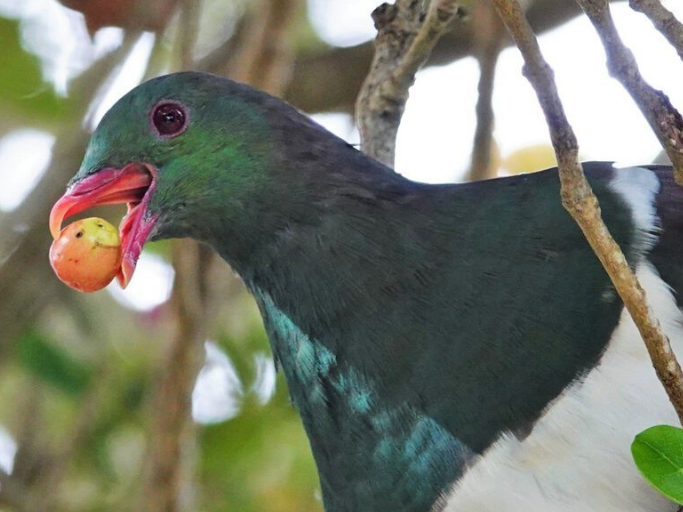
Kohu says Te Rūnanga o Ngāti Whare’s goal is to “increase the presence of kererū within Whirinaki Te Pua-a-Tāne, as it is significant to their culture and is a taonga they would like to protect and see in abundance for years to come.”
Historically, kererū have been significant to Ngāti Whare for customary purposes, both as a food source and for weaving. Freddy explains, it was first provided to “our old people, to our pregnant women and the men [ate] the bones. That’s how it rolled out. It was quite a prestigious sustenance in our way of living. ”
Kererū are also important for their ecological role. Now the moa is extinct, kererū is the only bird species large enough to swallow the juicy berries of karaka, miro, tawa and taraire. Without them, native forests would struggle to regenerate.
But kererū are under threat from predators. In some parts of Aotearoa, the Department of Conservation says, “many nests produce no fledglings at all.” Rats, stoats, cats and possums target the eggs and chicks.
With Minginui households and marae armed with traps, the community is creating a buffer zone around te taiao, the forest, helping to protect nesting kererū and securing their future.