
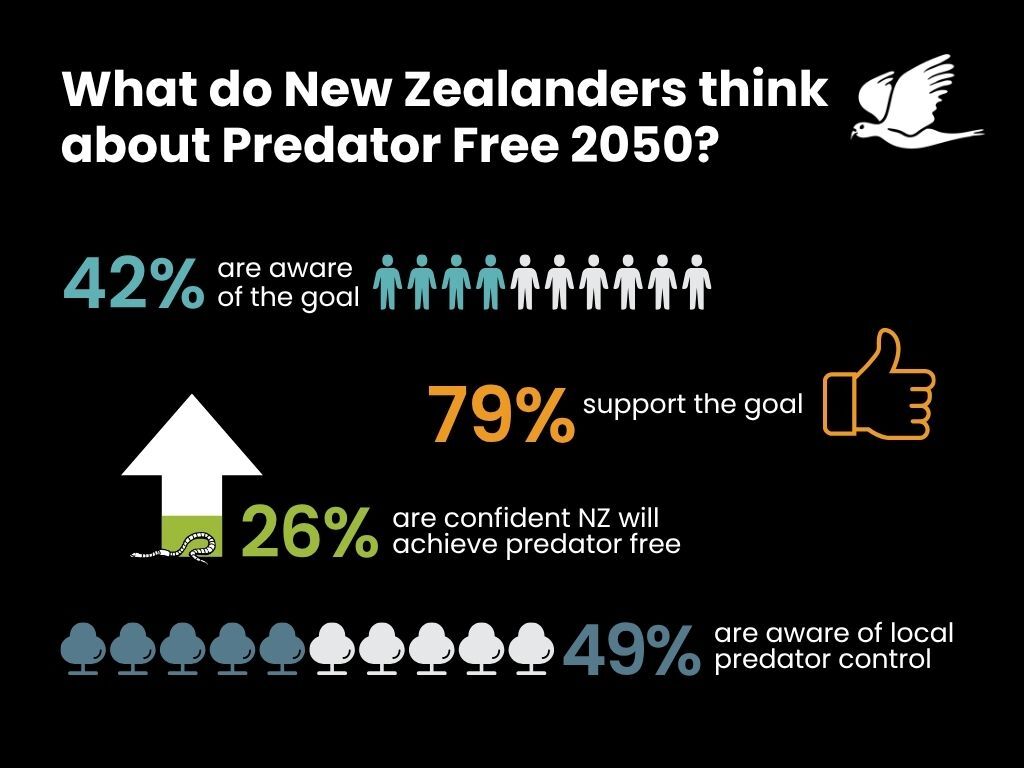
Nearly eight out of ten New Zealanders support the ambitious goal of completely eradicating introduced predators. While only about 26% of people currently have confidence that it can be done, that number is growing.
The survey (PDF, 597 KB) asked more than 1,200 New Zealanders their thoughts on multiple aspects of the predator free movement. Spring Insights Ltd independently conducted the research.
It found awareness of the Predator Free 2050 goal has grown to 42%, up from 35% in 2022.
When asked about support for the goal, 79% of respondents said they back it, with only 5% opposed. The remainder were neutral.
Respondents linked the success of Predator Free 2050 to the protection of iconic species such as kiwi and kea, alongside more abundant birdlife, bats, lizards, and insects, and healthier forests.
But there is a wide gap between aspiration and confidence.
Confidence has a way to go
Only 26% of respondents are confident that New Zealand will be predator free by 2050.
“Which is fair enough. Ten years on from the goal’s announcement, we are still figuring out how to do something that has never been done before,” says Predator Free New Zealand Trust chief executive Jessi Morgan.
“Right now, large landscape-scale projects in cities, farms, remote bush, and inhabited islands are testing technology and tactics that could eventually scale up to nationwide eradication.
“At the same time, communities are checking stoat traps, trapping rats in backyards and reducing possum numbers on farms. This is holding the line against predators and preparing communities for full-scale elimination,” Jessi says.
While confidence remains modest, it is increasing. In 2024, only 20% of respondents (PDF, 8.7 MB) expressed confidence. In 2026, that number rose six percentage points.
In some parts of New Zealand, there are already signs of what’s possible. Predator free projects have removed possums from the Otago Peninsula and Akaroa. More than 100,000 hectares are close to predator free in South Westland.
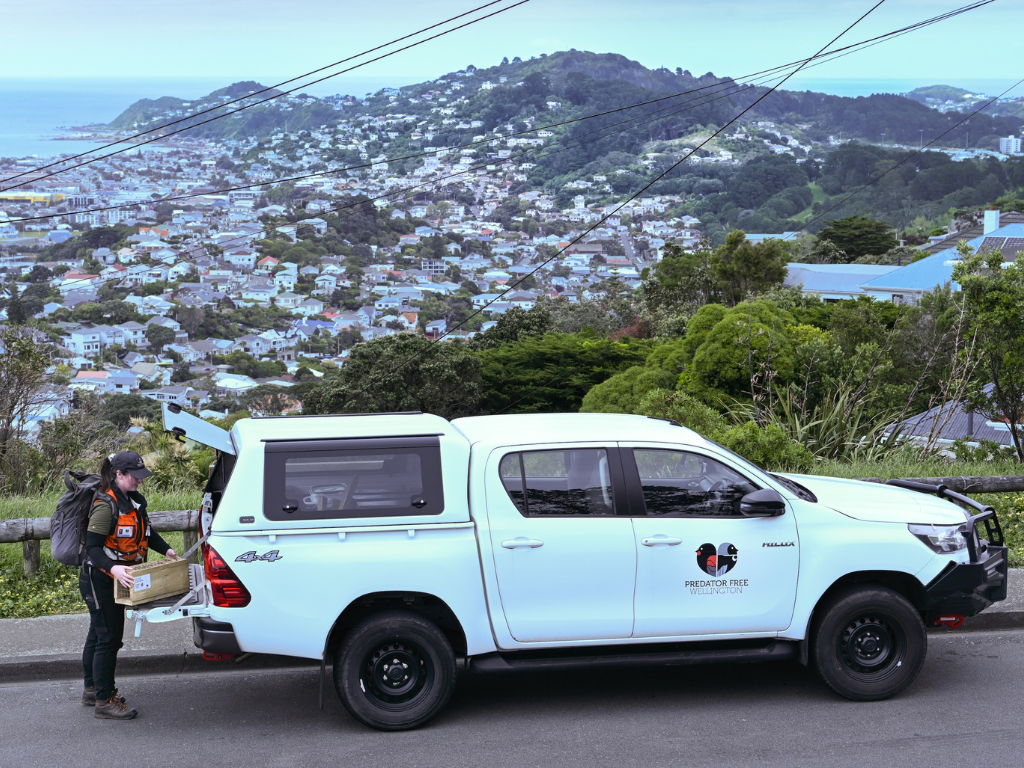
Confidence was markedly higher in Wellington, sitting at 35%.
“This likely reflects the visible local success of Predator Free Wellington in the city. There are entire predator free suburbs, and bird life is rebounding in a visible and audible way. It makes the goal feel more real and achievable,” Jessi says.
Geography and resources seen as major barriers
Key perceived barriers to eradication are geography and resources.
Respondents said things like “Too much land, too few resources,” and “[Predators] breed faster than they can be eliminated,” and “Not enough money is being spent to fulfil this project.”
Respondents highlighted that improved access to affordable tools, such as traps and bait, and sustained targeted funding and investment from the government were needed for success.
“I agree we need more long-term investment.
“Right now, a lot of the successes of predator control are off the back of the grit and goodwill of volunteers. It’s amazing how many people are involved and how far they are willing to go.
“Everyone has a role, and everyone can benefit from removing predators. We need investment that matches the energy of the movement.”
Growing awareness, growing momentum
The predator free goal has captured hearts and minds in New Zealand like no other conservation movement, Jessi says.
“Awareness reaching 42% is pretty good, given it’s only been ten years and there has been no significant awareness campaign, unlike, for example, the $62 million spent on promotional and education campaigns to support the Road to Zero awareness campaign for road safety.”
Awareness matters because it’s the first step for change, Jessi says.
“It converts public knowledge into action and behaviour. And if a majority of New Zealanders are aware and care, the more momentum the movement has, the more it signals to funders, government, and agencies that Kiwis care about this and it can’t be ignored,” Jessi says.

“So tell your friends and family about Predator Free 2050. Invite them to see your trapline, show them a funny bird video, buy them a trap or a bird feeder for a birthday present.”