
The bush of the Kaimai Ranges is unforgiving: slippery clay, tangly kiekie and steep ridges. For predator control crews, this is daily life. For Ngāti Hako, kaitiakitanga of this rohe for centuries, the mahi (work) is worth it.
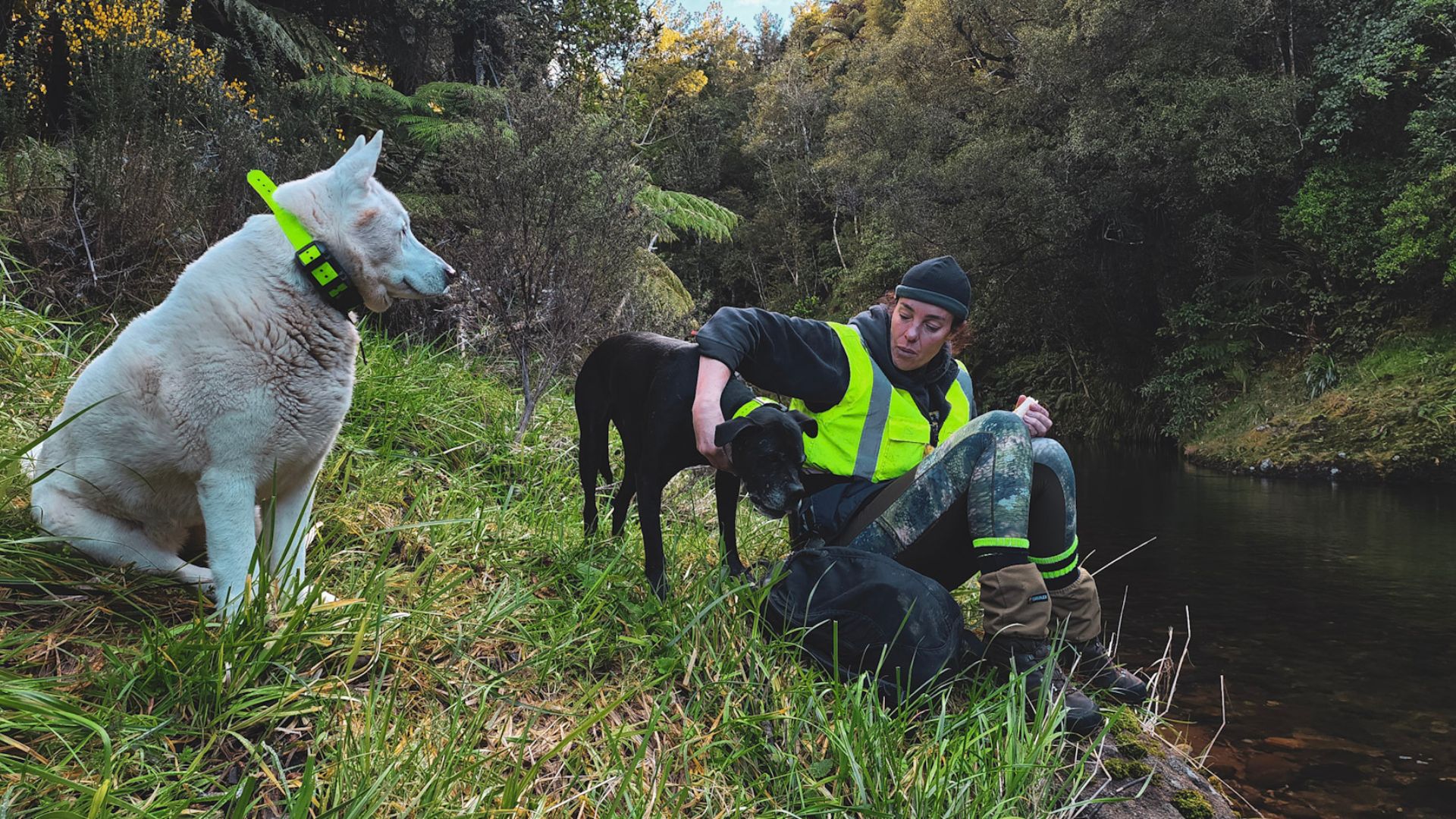
Since 2021, the Hako Restoration Project has been bringing life back to the lands behind Karangahake Gorge destroyed by colonisation, logging, and mining.
When these operations ceased, the land was effectively abandoned, and the weeds and introduced predators took over. The Hako Restoration Project is restoring the mauri of their traditional tribal lands through predator control and native planting.
Rebecca of Manaaki Kaimai Mamaku Trust leaves behind her office desk and joins trapper Laura Barton (Whakatōhea and Ngāti Porou) for a day on the traplines, mud, sweat and peanut butter.
5.30 am
As the sun rises, so does Laura and her two kaitiaki kurī (dogs). Bongo is trained to hunt pigs, and Moon is an expert on sniffing out mustelids.
Before a hard day of mahi in the ngahere (forest), the trio need a wake-up walk and a big breakfast.
7.30 am
They’re in the bush by 7.30 am, while the rest of us are waking up and heading to warm, air-conditioned offices.
Laura’s aim today is to empty, re-bait and reset traps in a 125-hectare area, a quarter of the 500-hectare Hako Restoration Project area. She usually does this alone, but today, I’ll be following her around.
11.54 am
I meet Laura at the much more sociable hour of midday. She’s already worked for nearly five hours, and yet she’s bouncing with energy – excited to share her mahi and mātauranga (knowledge) with me.
Before we get into the ngahere, we have a health and safety briefing which includes a karakia and a lesson on how to call a helicopter if Laura and/or the dogs are in a critical accident. Kererū fly overhead, pīwakawaka flutter around us, and I’m reminded to clean my boots to protect kauri – this is the last place in Aotearoa that is free from kauri dieback.
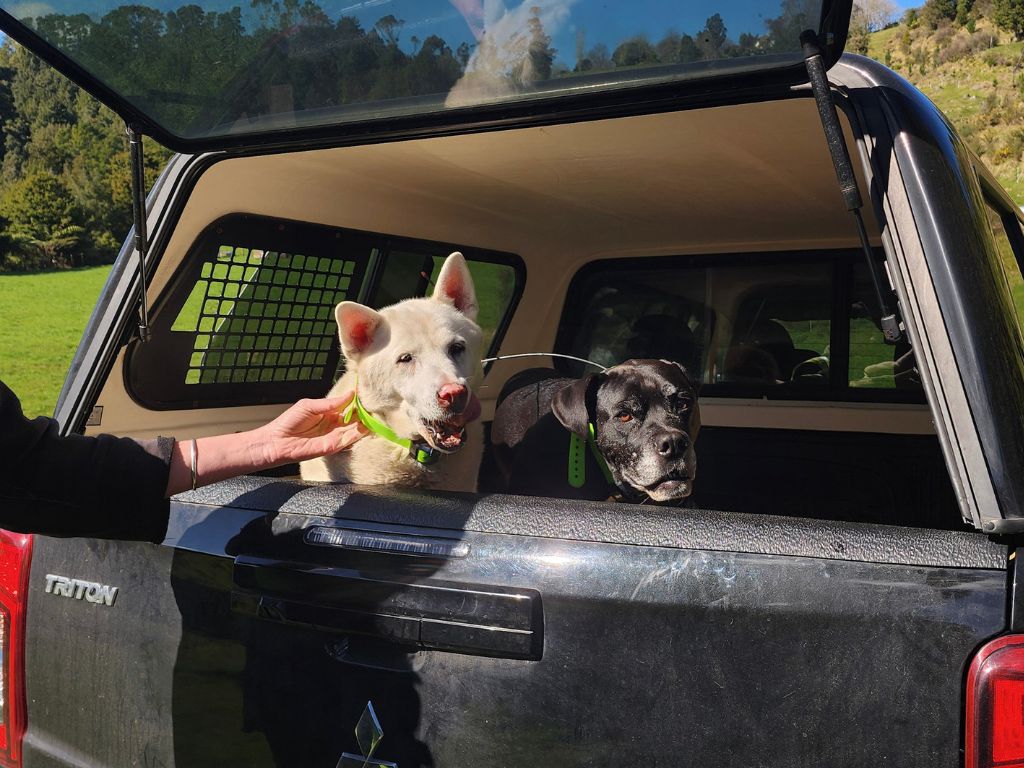
Laura carefully lifts her kaitiaki kurī out of the ute tray, and our hīkoi begins.
12.17 pm
We’re off to a shockingly bad start – Bongo and Moon are so serious about their mahi that I can’t pet them. I keep my hand out, just in case they change their minds.
12.36 pm
As we reach the project border – an electric fence separating a private farm from protected public conservation land – we spot a possum hanging from a trap, just one of many successful kills we’ll be clearing out today.
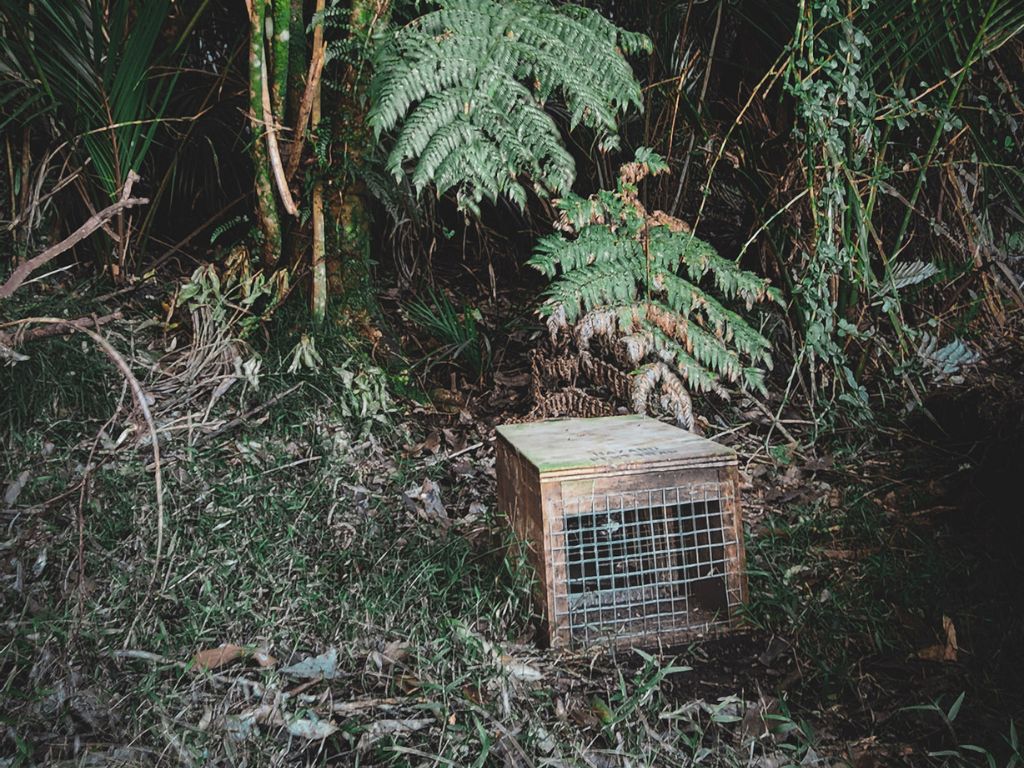
Possums aren’t fussy eaters; they love the eggs of our taonga manu (birds) just as much as they love the berries birds rely on. Laura opens the Flipping Timmy trap, gives it a clean and re-baits it with a bright blue paste that smells like cinnamon and is highly palatable to our bushy-tailed foe.
Continuing down the trapline that Laura and the other Hako Restoration Project kaimahi cut in the past year, an AT220 gets a service.
It’s recorded at least five kills, but no bodies lay around it, suggesting predation by feral cats. Laura sets a trail camera to confirm her educated guess. If a feral cat is spotted, a different trap will be placed here to remove these fierce hunters from the delicate ecosystem.
We continue – checking, clearing and re-baiting traps every 75 metres. As we follow the fluorescent pink trap-line markers, Laura points out scat, wallows and scraping – signs of feral pigs, goats and deer.
2.25 pm
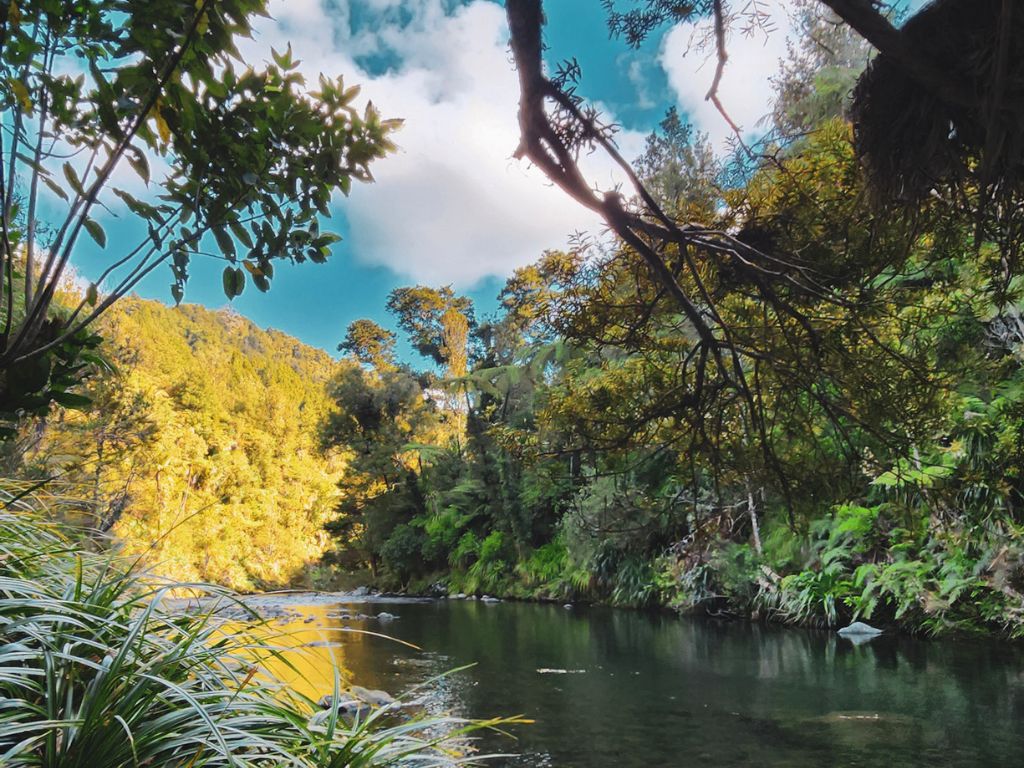
Phew. We make it to the northern Waitawheta awa, where we sit for a much-needed rest. We’ve already racked up nearly 5,000 off-track steps, which are twice as hard as pounding any pavement.
Audio recorders were recently placed here, confirming the presence of long-tailed pekapeka, Aotearoa New Zealand’s only land mammal. A slow-flowing waterway bordered by old trees is the perfect habitat for the nationally critical bat, as it allows them to feed on aquatic insects and roost in tree cavities.
Unfortunately, “highways” of flattened grass indicate this is also a popular spot for the pesky predators we’re hunting.
As well as pekapeka, kererū, kākā, and other endangered flora and fauna, this rohe is home to a diverse range of species. The predator control and native afforestation work of Ngāti Hako is imperative to ensure these taonga can thrive.
For a successful kōkako breeding season (approximately October to March), rat populations need to sit below 5% density. Laura and the Hako Restoration Project are working hard now to ensure they reach this target. In the past eight months, they’ve already removed more than 6,500 rats, possums and mustelids through trapping alone.
2.56 pm
Bongo has smelled something. Laura thinks he’s scared off a deer.
While I could sit here learning from Laura for hours, it’s time for us to go. We have at least an hour hīkoi before we reach the ute again.
We hike with purpose, up and down hills through parataniwha, kareao (supple jack), nīkau, kauri, kauri grass and kiekie. I only fall over twice trying to keep up.
4.10 pm
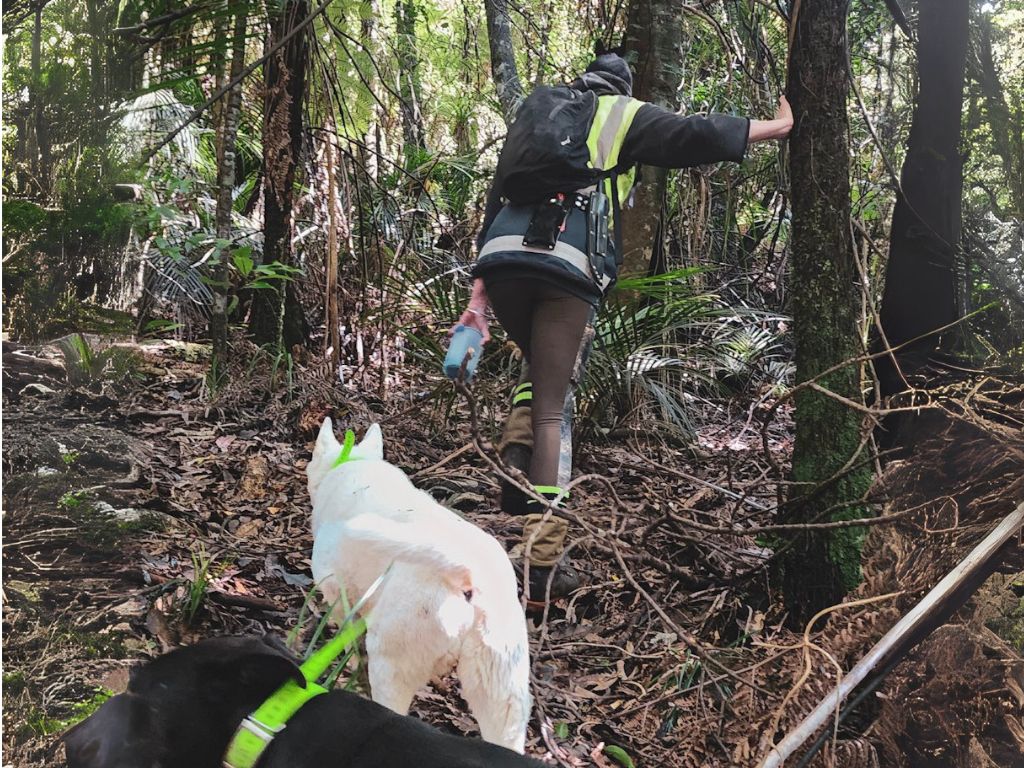
Laura closes the day with a karakia, thanking the ngahere and Papatūānuku for allowing us a safe journey.
Tomorrow, rain, hail or shine, she’ll be back in the bush. And so will 30 other Māori predator control experts working with the Kaimai Mamaku Restoration Project.
Collectively, eight independent iwi-led projects are effectively managing 7,500 hectares of tough terrain from Paeroa to Rotorua.
This work is forever, Laura says.
“Being kaitiaki is forever, there is no end. A mountain yesterday – A mountain today – A mountain tomorrow. He maunga inanahi nei – He maunga i te rangi – He maunga āpōpō. This is what we do as kaitiaki.”