
Every spring, the pukunui (Southern dotterel) leave their winter feeding grounds to breed on the mountaintops of Rakiura. Glenda Rees spends the summer heartsick, wondering which birds will make it back and which will be eaten by feral cats.
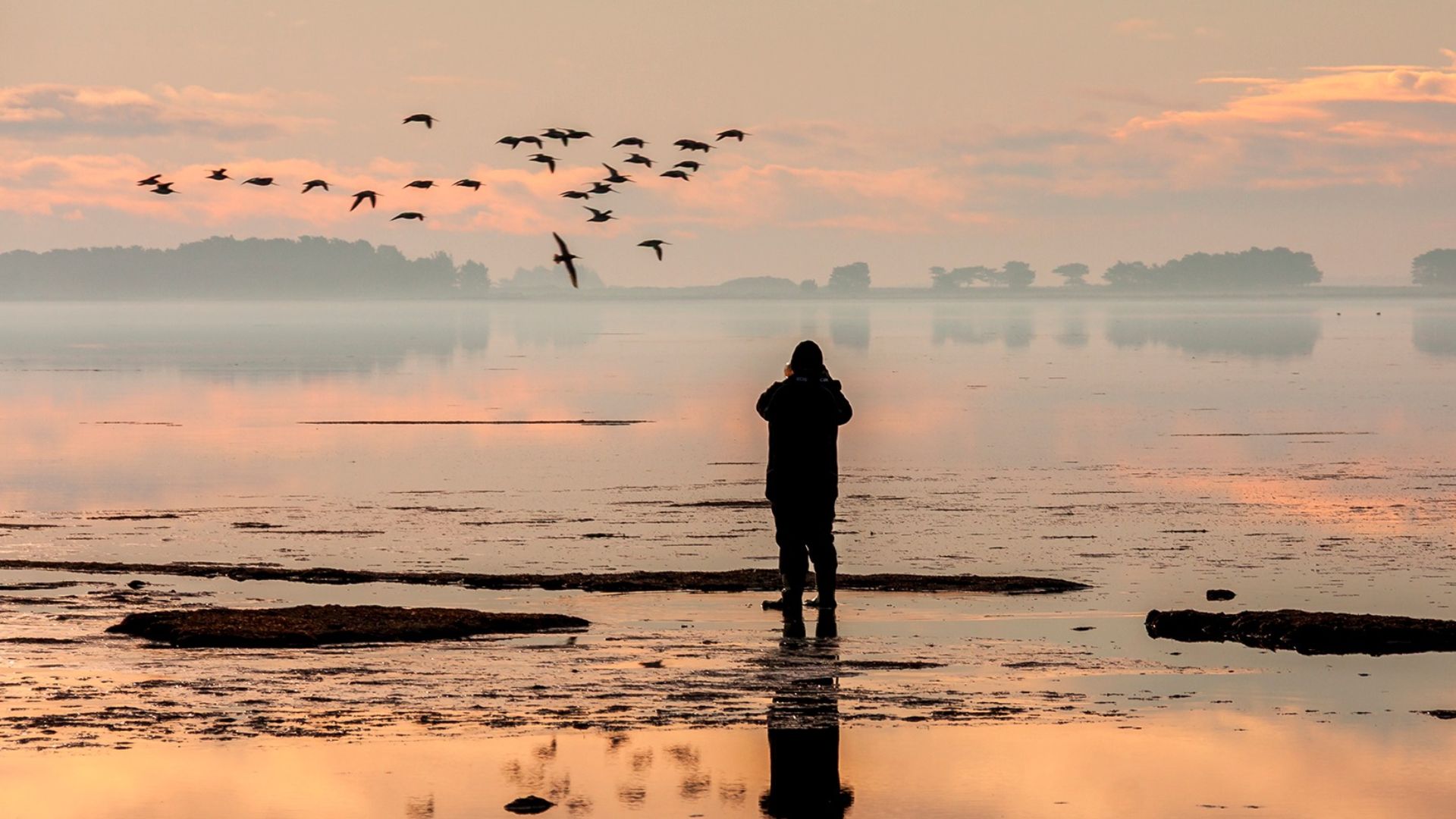
Awarua Bay, at the very bottom of the South Island, is where the pukunui (Southern New Zealand dotterel) feed in winter, and where Glenda has quietly become one of their most devoted sentinels.
In her retirement, Glenda can’t match the physical contributions of conservation rangers — hauling traps, climbing around the alpine breeding grounds — but she has found another way to help these endemic birds, which are on the brink of extinction, with only 105 left.
It started with photography
At first, her attraction to birds was mostly photographic. Glenda’s early bird portraits were good enough to be shortlisted five times for the Wildlife Photographer of the Year awards in the UK, and to earn her a finalist spot in New Zealand Geographic’s Photographer of the Year.
“I’ve officially finished entering competitions now,” she says. “My time with the dotterels has become far more of a caretaking role than a photographer’s role. When I go down, the first thing I do is try to locate absolutely every single one I can. I don’t relax until I’ve found them all.”
Her method is simple but meticulous. She notes the band combinations, makes rough record shots, and reports her findings to the Department of Conservation and the Pukunui Recovery Team. It’s unpaid, often solitary work, carried out in all weathers. In the process, she’s become an informal historian of the flock, keeping tabs on individual birds year after year.
Falling in love with each bird
The birds are small and plain at first glance, a muted mix of brown and white. Tourists rarely notice them. But to Glenda, each one is an old friend, known by a splash of colour on its leg bands or a quirk in its gait.
She keeps a particular eye out for “Mr Red”, a bird with a distinctive metal-and-red band combination. He went missing this winter.
“I very much hope that he’s survived,” she says. “If he’s not surviving, he may have met his demise at Awarua Bay, but generally, they do okay there. It’s usually up in the breeding grounds on Rakiura that they face the greatest danger. It’s a bit of an emotional roller coaster now… I can’t separate my feelings for them.”
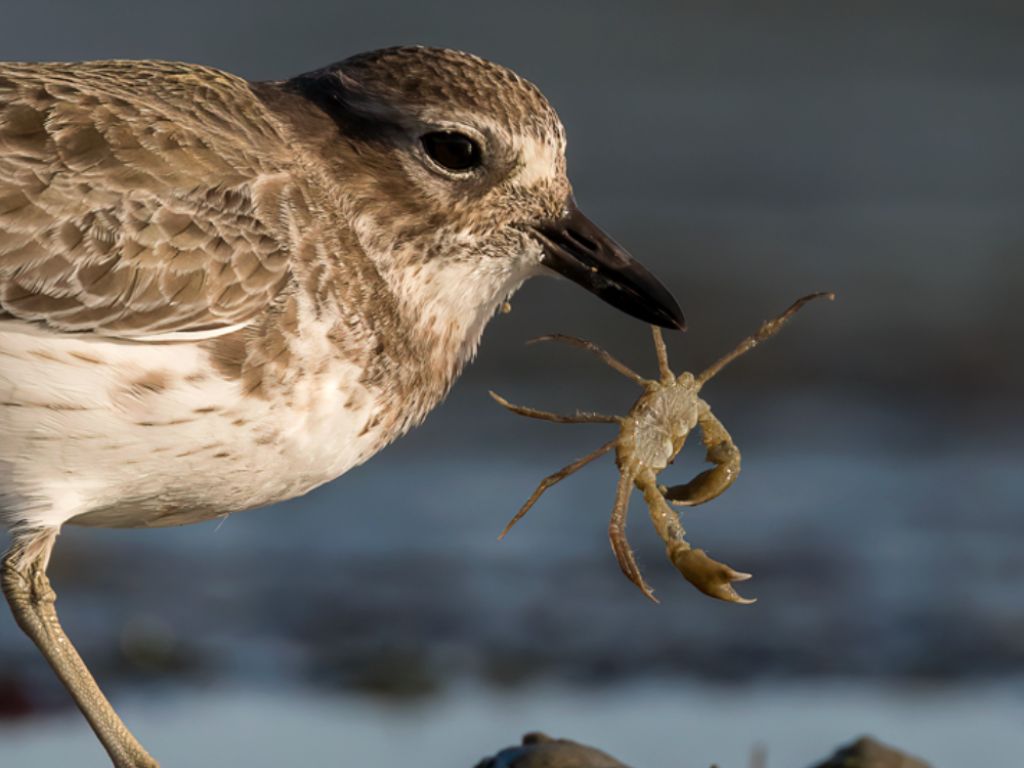
Pukunui breed on the ground and will defend their nests and chicks against feral cats, but they are no match for the claws and speed of felines. Their population is in a steady decline.
Conservation isn’t just traps and muddy boots
Glenda’s approach reflects a wider truth about conservation: it thrives on the contributions of people willing to work within their means.
“I’m time-rich, but I’m not physically able to do certain things,” she says. “So I get the balance in where I can. Even if I’m no longer required to do anything for the dotterels, I’ll still visit them for as long as I can — until I’m in a wheelchair and can’t get through the bog.”
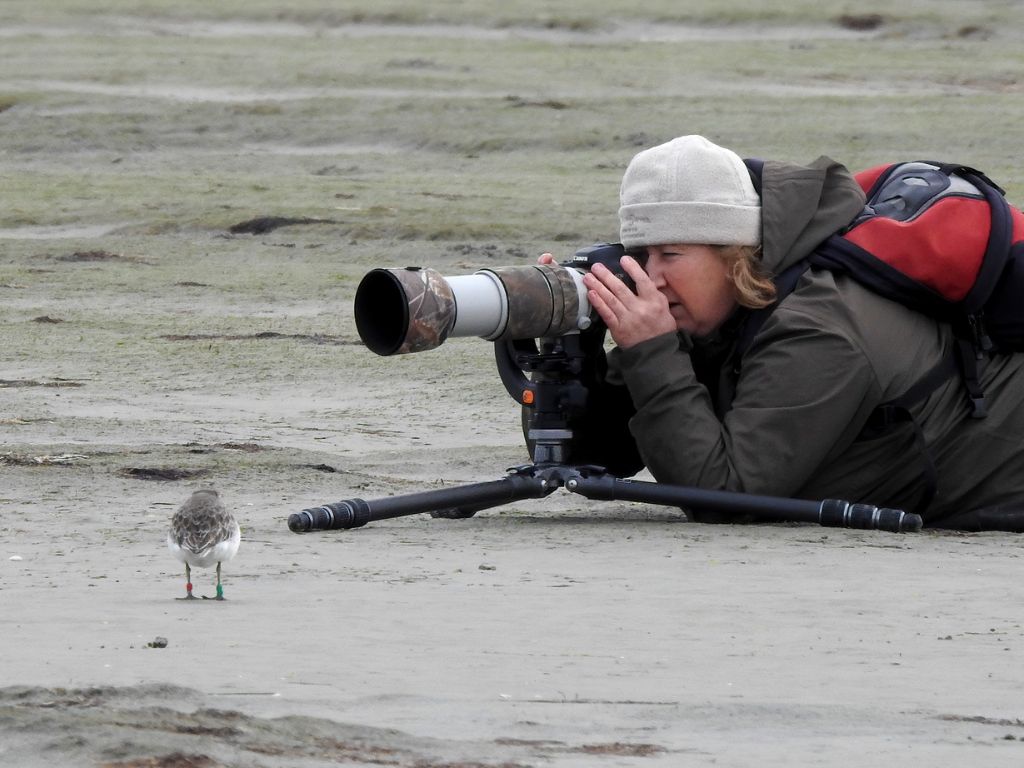
In her mind, conservation is as much about community as it is about habitat. It doesn’t matter whether someone’s skill is photography, fundraising, research, or just showing up.
Fifteen years in, Glenda has learned that conservation isn’t the domain of rangers or scientists alone. It belongs to anyone who notices and acts. She encourages others to start where they are, with what they have. “Imagine if there was a Glenda for every project,” she says with a laugh, before adding, “I hope they’d be much younger and fitter than I am.”
For now, she mines her photographic archives, sifting through years of images to help researchers retrospectively identify birds by sex and age. It’s a slow, home-based job, but it adds to the collective understanding of the species.
Her Facebook friends might roll their eyes at yet another dotterel shot, but she persists. The repetition, she knows, is part of the point. To care about a species, people need to encounter it again and again until the sight of it feels familiar. And in a small way, that’s how a flock of anonymous shorebirds becomes “my flock” to more than just one woman.
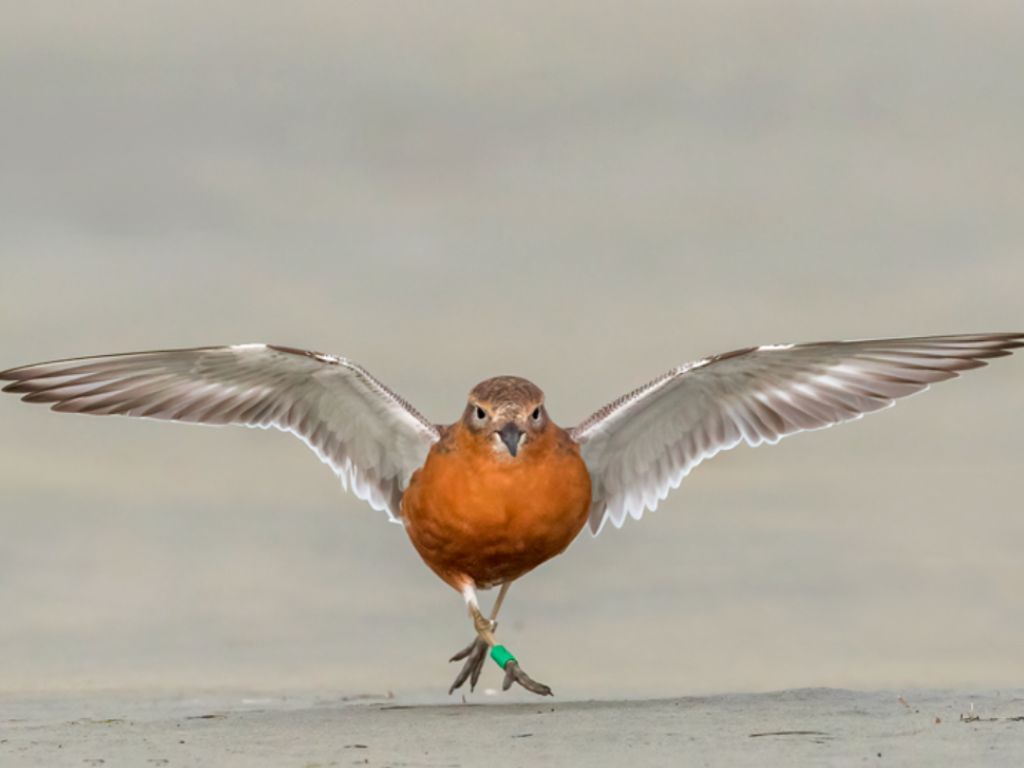
Her work has never been about ownership, but about creating and holding attention for these tiny birds. She is fond of saying that “you can’t protect something you can’t see,” and her photographs have become a bridge between the dotterels and the wider public. She knows that images of a bright-plumaged adult in full breeding colour will travel further than a list of band codes ever could.
Home and away
In April, with help from the New Zealand Nature Fund, she joined a helicopter supply drop to see the breeding habitat for herself. The supply drop kitted out the Pukunui Recovery Team rangers, helping their work to trap feral cats.
“It was great to see why the birds turn so orange and how well camouflaged they are,” she says.
“The environment is so harsh, and you can see why they have adaptations like a longer middle toe. It was a privilege to understand their world a bit better.”
The trip was a rare chance to connect the dots between the two halves of the dotterel’s year; the alpine tops where they breed, and the coastal roosts where they recover.
“They come to Awarua for what I call their vacation time,” she says. “They’re not under the same pressures as up on the tops. It’s when they’re just being birds.”
This summer, the pukunui might have a better chance at survival.
The first phase of an aerial 1080 operation to reduce the number of rats and feral cats has kicked off across 40,000 hectares of Rakiura National Park. Early results are promising, with DOC detecting zero feral cats in 400,000 trail camera images in the first three weeks after the operation.
Glenda’s journey began with a camera bought for a holiday and led to the quiet heart of a conservation effort. The truest measure of her work is in the small acts repeated week after week: driving to the coast, scanning the tide line, counting every bird until the list feels complete.
This article, in part, was originally published by NZ Nature Fund. If you’re feeling inspired, you can learn more or donate to the project saving the southern dotterel.