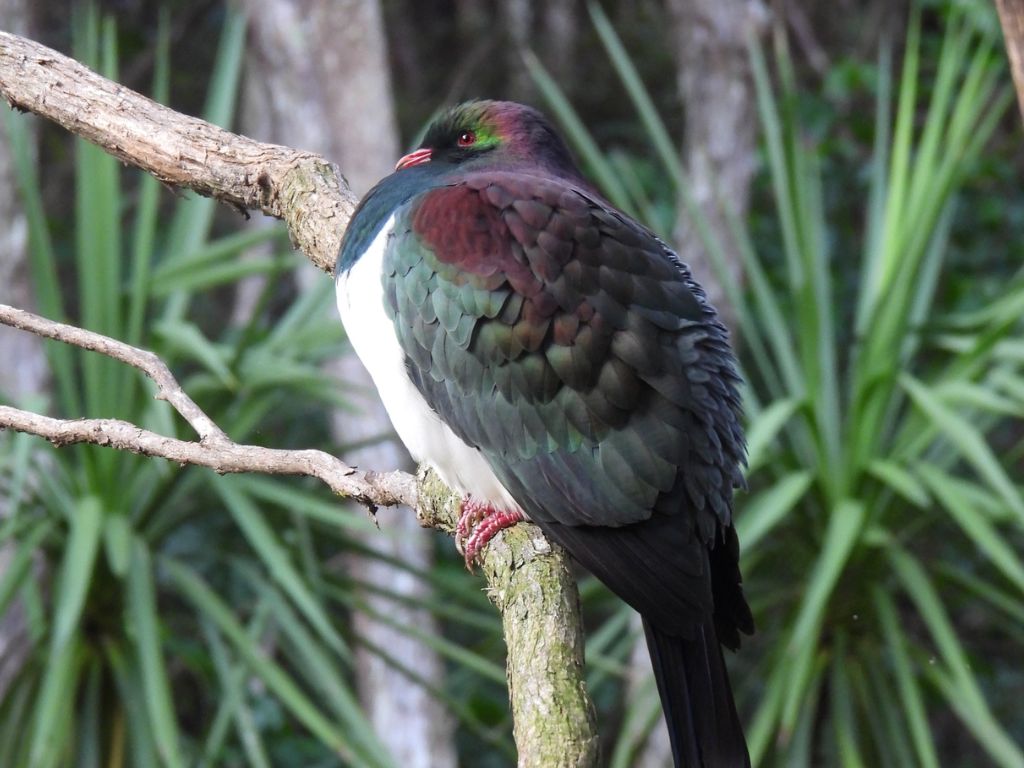
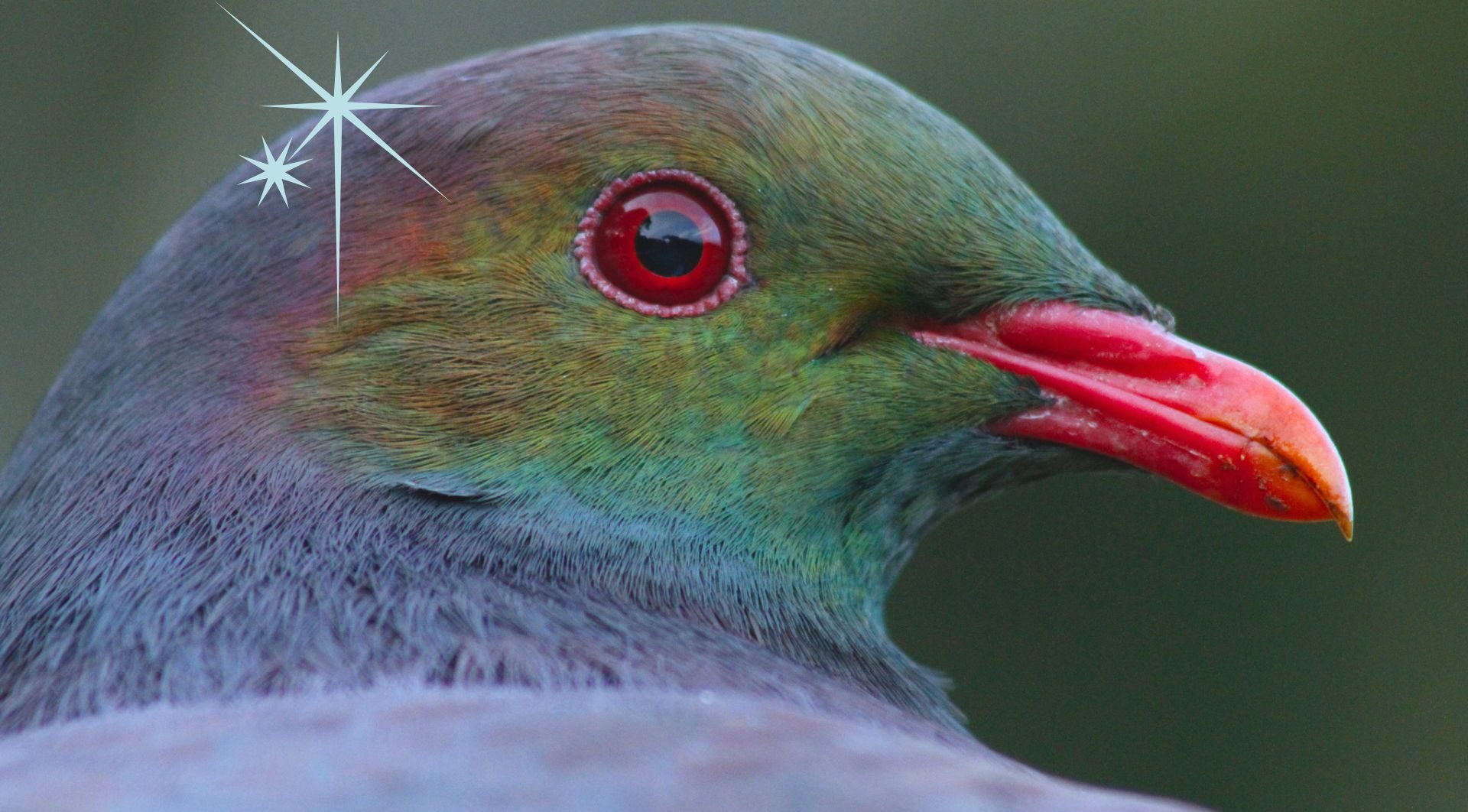
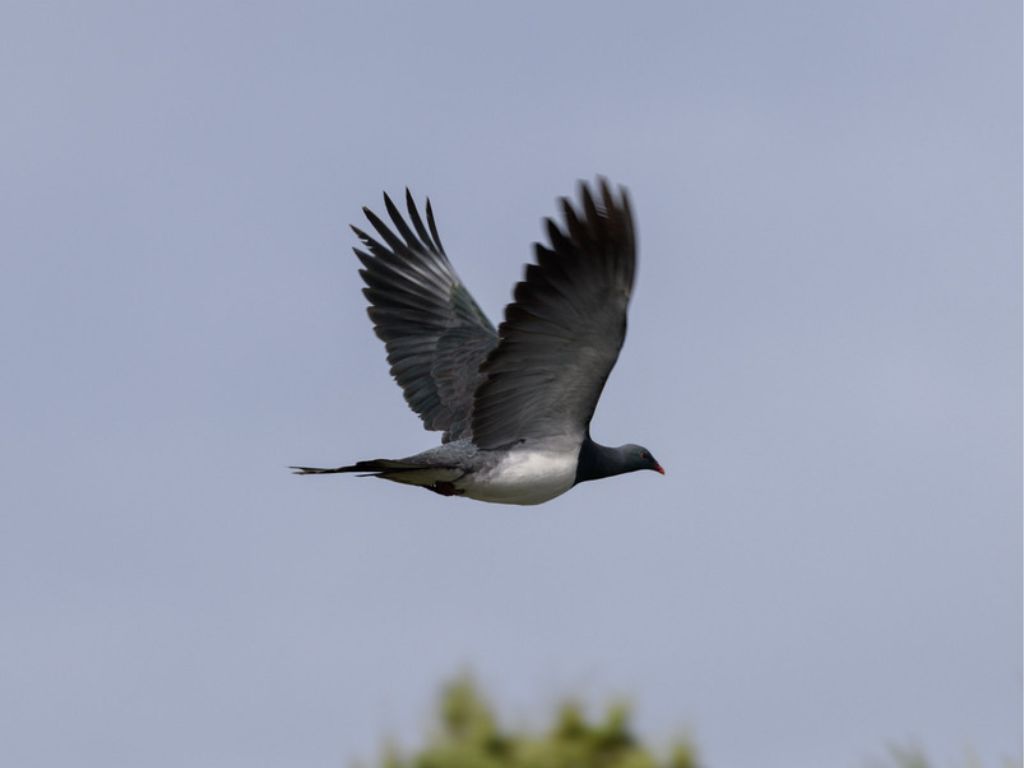
What’s rotund, wears a white singlet and gets drunk in the sun? Not your uncle at Christmas dinner – we’re talking about the much-loved kererū. Also known as kūkū or kūkupa, kererū (wood pigeon) are becoming a more common sight in backyards as predator control increases in our towns and cities.
1. They make milk (sort of)
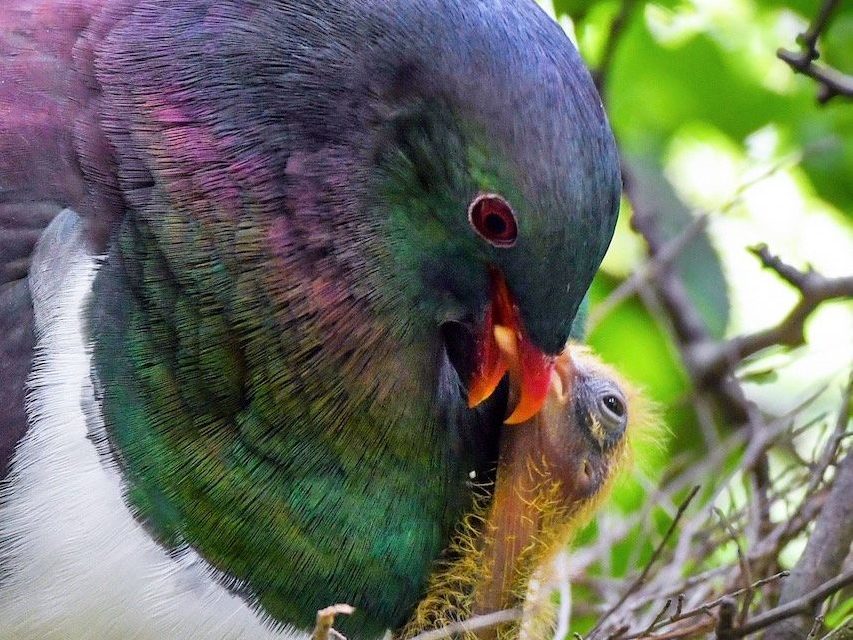
Well, not exactly milk as we know it – they make “crop milk”, which is a protein and fat-rich secretion produced in the crop of some birds (the crop is a pouch at the base of the oesophagus). Other pigeons, flamingos and emperor penguins are known to produce crop milk.
Both parents feed their young this “milk” for the first weeks. As they get older, it gets combined with fruit pulp in a kind of karaka berry smoothie until chicks leave the nest around 40 days old.
With kererū eggs taking about four weeks to hatch, this 40-day period makes for a long window of vulnerability to introduced predators.
2. They’ve got an even chonkier cousin
With the power to munch large berries and significantly sag power lines, it’s no secret that kererū is massive.
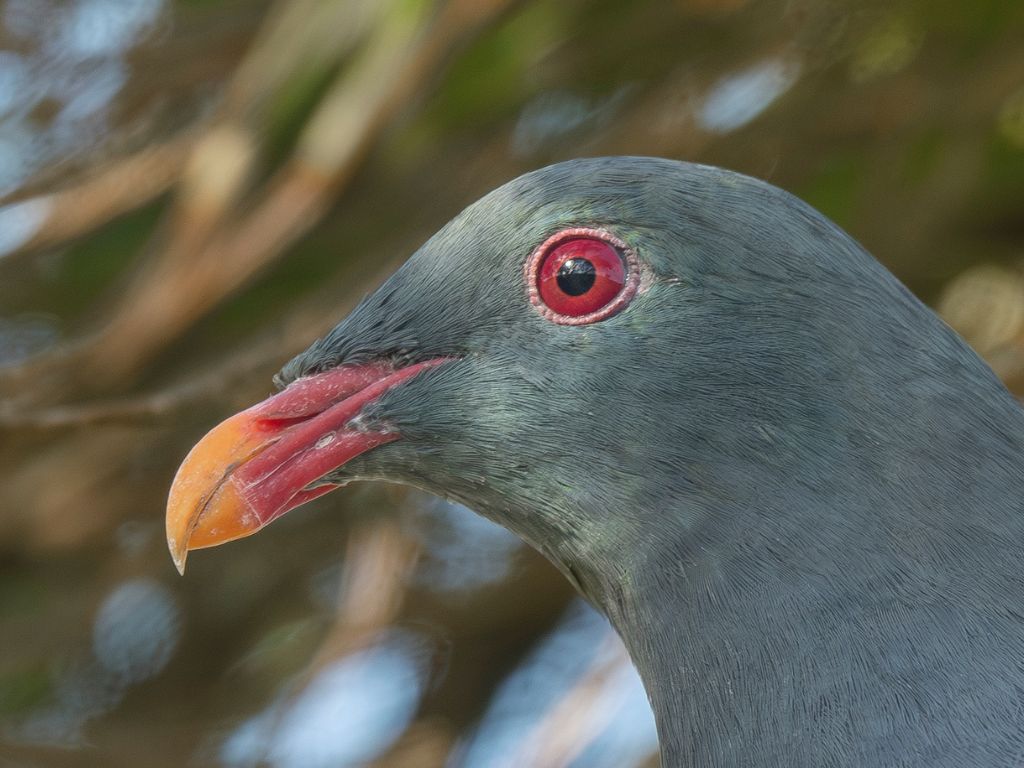
They’re famous for their chubbiness and can weigh up to 850g, which is about the same as a builder’s hammer. But they have a little-known cousin that is even bigger.
The parea, found only in the Chatham Islands, is about 20% heavier! Parea can also be distinguished from the kererū by their lighter rump feathers and yellow-tipped beak.
Parea and kererū weren’t alone; there was once a known subspecies on Norfolk Island, and kererū bones have been found on Raoul Island, where their extinction was caused by feral cat predation.
3. They are intrepid travellers
They may seem too busy scoffing berries and leaves, hanging around one area for months, but kererū can travel long distances to find food, especially as the seasons change.
Kererū in Taranaki were recorded flying up to 60km to find fruit in the autumn, and a 2011 study in Southland saw one satellite-tagged bird travel almost 500km over 100 days, including four crossings of Foveaux Strait.
On top of this, the existence of parea on the Chatham Islands proves an ancestor once made the 650km plus journey – an impressive feat of endurance.
4. They poo forests back to life
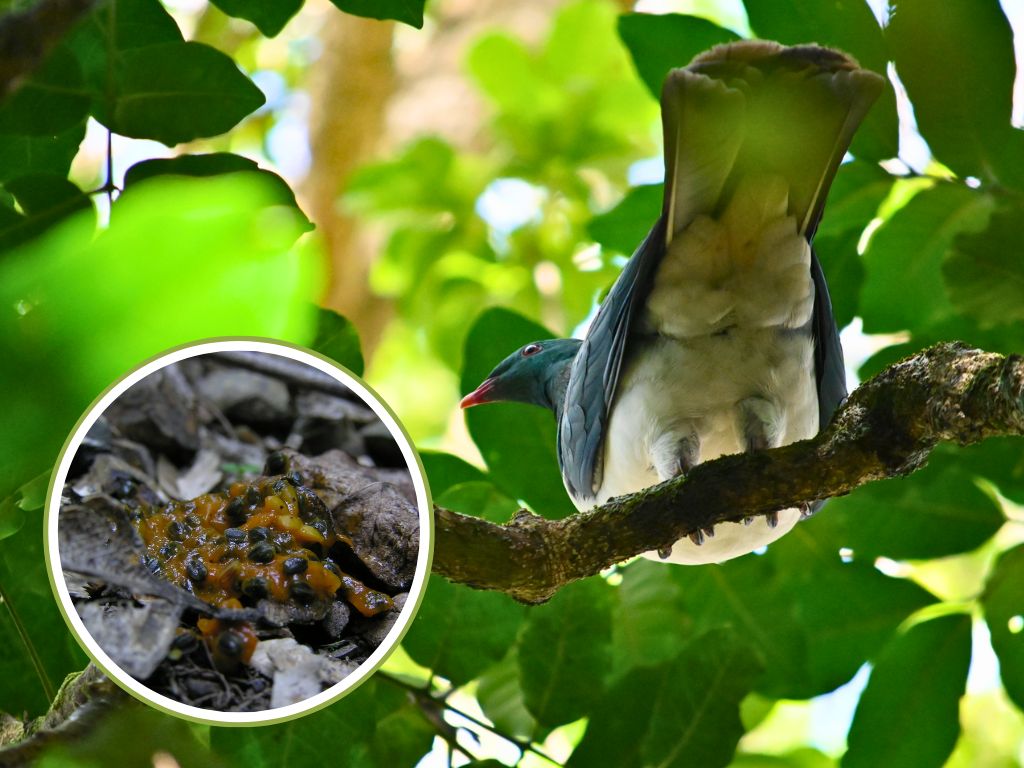
Kererū have the widest gape of any living native bird in Aotearoa, with an impressive ability to gulp down big fruits. These extra-wide beaks make them important dispersers of our large-seeded plants like karaka and miro, and they’re the only surviving bird species that can swallow the large fruit.
As kererū fly around and poo out the seeds, they reseed the forest, fertiliser included, so some restoration projects are putting kererū to work. At Waikereru near Gisborne, “seed islands” of native trees look like a promising alternative to time-consuming and labour-intensive manual planting.
5. They are delicious (they were an important food source for Māori)
When you look at a kererū, it’s clear that there would be plenty of meat on those bones. Kererū were an important food source for Māori.
They had an ingenious method for hunting kererū. A trough called a waka kererū was suspended high in the canopy and filled with water. As birds came for a drink, they got caught in snares on each side.
Once caught, they were either cooked in a hangi for immediate consumption or spit-roasted and preserved in their own fat for eating later.
Kererū have been a protected species since 1907. The idea of returning to customary harvest is talked about, but predator problems are too significant to make this a reality in the near future.