
Fieldwork in Fiordland usually starts with cold hands, damp boots, and an eye carefully fixed to the uneven ground. But herpetologist Dave Laux also has his eyes (and his lens) looking out for tiny cold-blooded creatures.
Dave and his team were salvaging critically endangered awakōpaka skinks from their only known habitat, a small area in Fiordland, before a predicted beech mast would bring an influx of invasive predators that could make the species “functionally” extinct in one season.
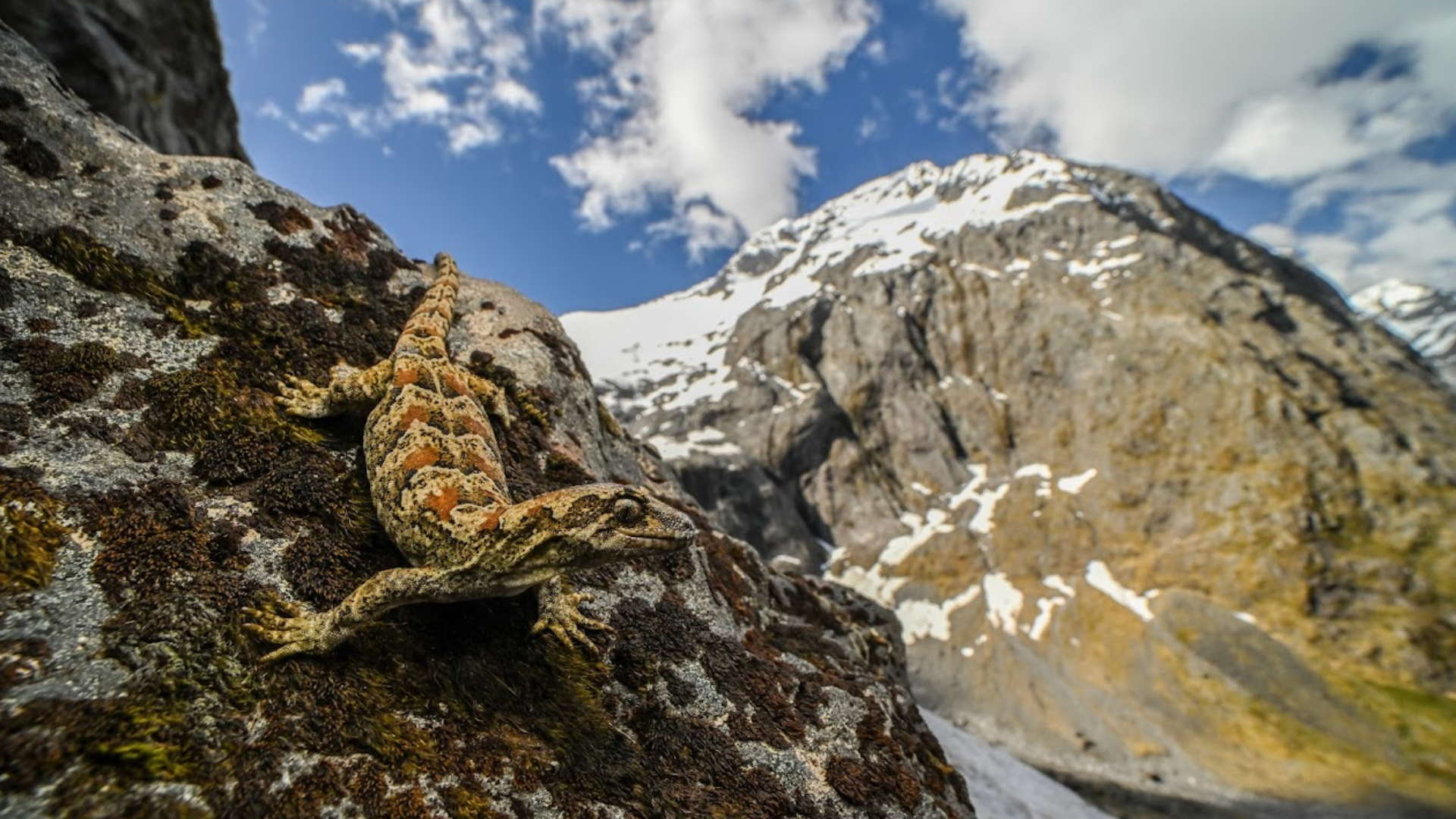
But when he opened one of the live capture traps, he found something else waiting inside. A cascade gecko, which was gently moved and obligingly sat for a photograph.
“I remember removing it from the trap and just being absolutely blown away by how beautiful it was,” Dave says. “The idea that these things endure freezing cold, months of darkness, challenges everything I think I know about reptiles.”
Encounters like these sure are special, but exist within a sobering reality: Aotearoa has 147 native gecko and skink species, all found nowhere else in the world. Nearly 86% of these species are threatened or at risk of extinction. Only four species are not threatened. The main pressures are familiar: introduced predators, climate change and habitat loss.
Behind the lens
For Dave, these kinds of moments are why his camera is never far away. His work takes him to all sorts of reptile habitats, so he has learned to keep his Nikon Z8 close by.
“Wildlife photography is all about opportunity,” he says. “You’re never going to get to photograph reptiles if you don’t go out where reptiles are.”
Still, there are no guarantees. Reptiles can sit hidden in plain sight, camouflaged in their surroundings and disappear before your eyes have properly found them.
“You probably lose more than you get,” Dave says, despite his Instagram feed being flush with gorgeous photographs.
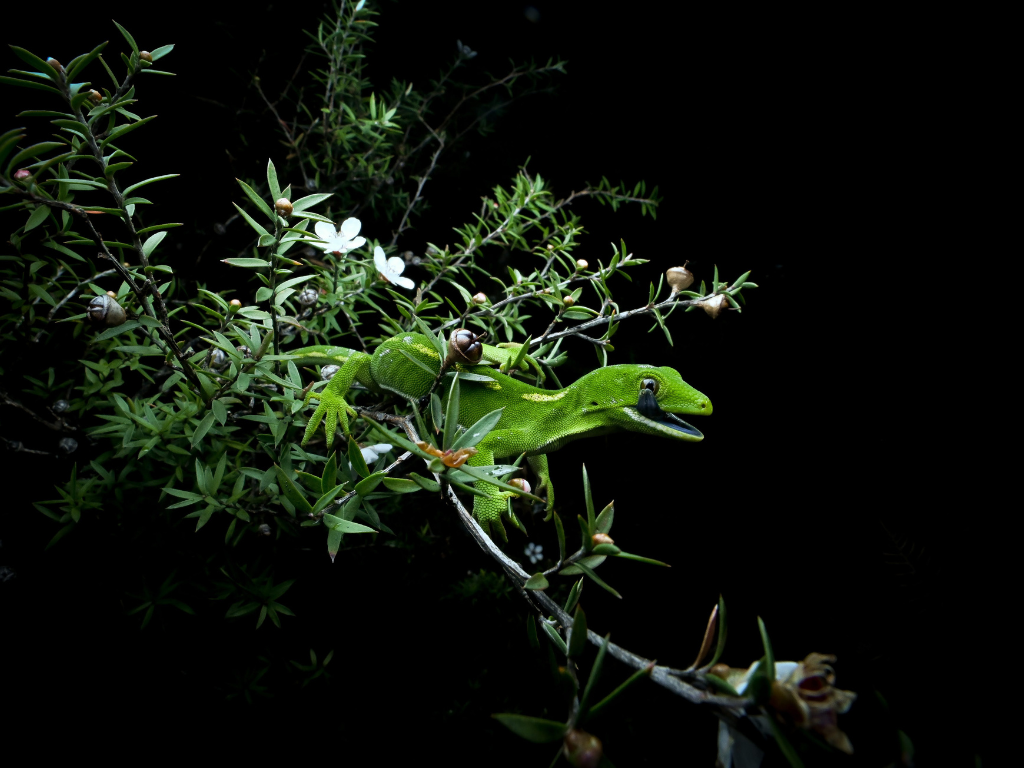
It’s what makes reptile photography so different: it calls for patience, stillness, and attention to the littlest details.
Many of his images have the subject against deep black backgrounds, with every scale and feature in sharp focus. It looks almost studio-like, but all the animals are wild. He works with the light, cover, and distance until the background falls “into oblivion.”
“It really forces me to slow down and take stock of the environment I’m in,” he says.
Through his photography, Dave hopes to show reptiles as interesting and important parts of New Zealand’s environment. “Hopefully, we can foster more care for the little guy,” he says.
Sharing these animals has to come with responsibility and a sense of kaitiakitanga. Dave gets a lot of messages about the animals’ locations, but he won’t share specifics. “You don’t want to gatekeep these amazing animals, but equally, the risks of poaching, the risk of damaging these populations is very, very real.”
An acquired taste
Aotearoa New Zealand’s lizard species are quiet and small. Most people simply don’t know they are there, but we are a veritable hot spot for lizards, with more lizards found here than any other temperate climate in the world.
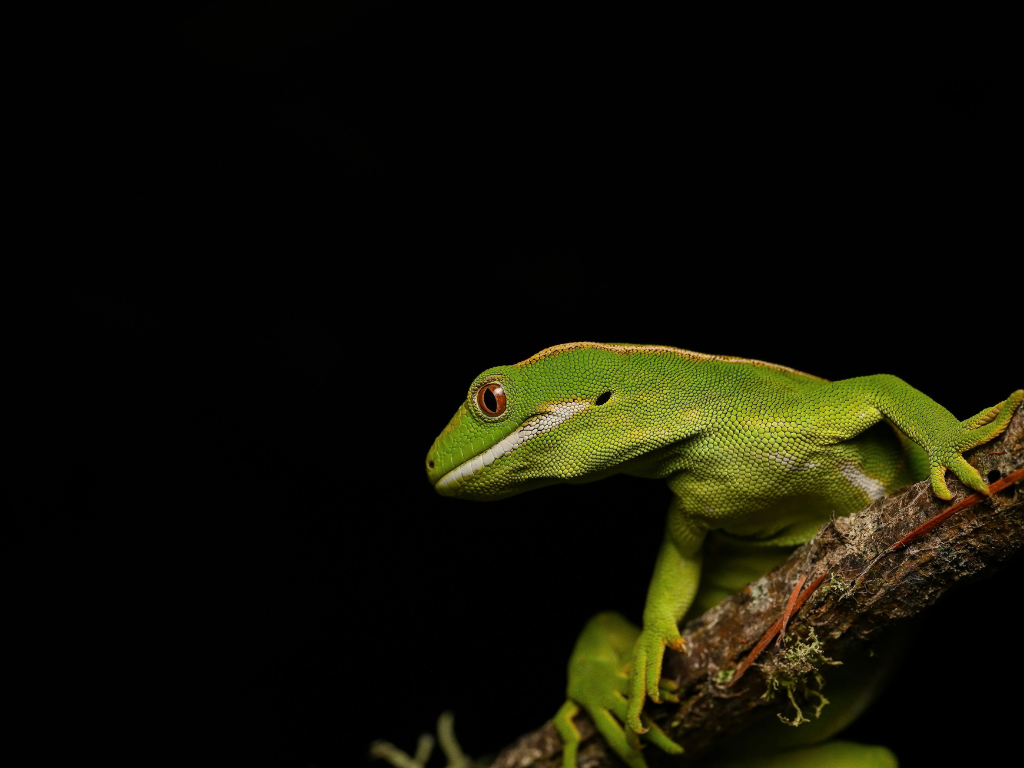
“I think people underestimate how present they are,” Dave says. “I hear it a lot that ‘we don’t have geckos here,’ or they assume everything is a plague skink, which quite often isn’t true.”
Dave thinks birds get a lot of attention because they are accessible. “They’re loud, they’re highly visible, and they’re easy to enjoy,” he says.
People often connect with animals by finding something familiar in them. A kākā can seem cheeky; a kea is famously curious. Reptiles are different.
Fondly described by Dave as “an acquired taste.” A lizard’s life is only the essentials: seeking warmth when it’s cool, finding shelter in a storm, eating when hungry, and resting when tired.
“I really enjoy the honesty and simplicity of reptiles,” he says. “At least with my reptiles, I always know where I’m at with them.”
Making room for reptiles
New Zealand has some pretty ambitious predator-free goals across the motu, and for some, it can feel impossibly large. But for our native skinks and geckos, individuals truly can make an enormous difference.
A lizard-friendly garden, predator control, and responsible pet management can turn a backyard into a safer habitat. Dense planting, leaf litter, rocks and logs can all provide warmth, shelter, and food for lizards.
“I have friends that have set up lizard gardens,” Dave says, “They’ve attracted multiple species of native lizards into their garden within sort of 18 months, two years.”
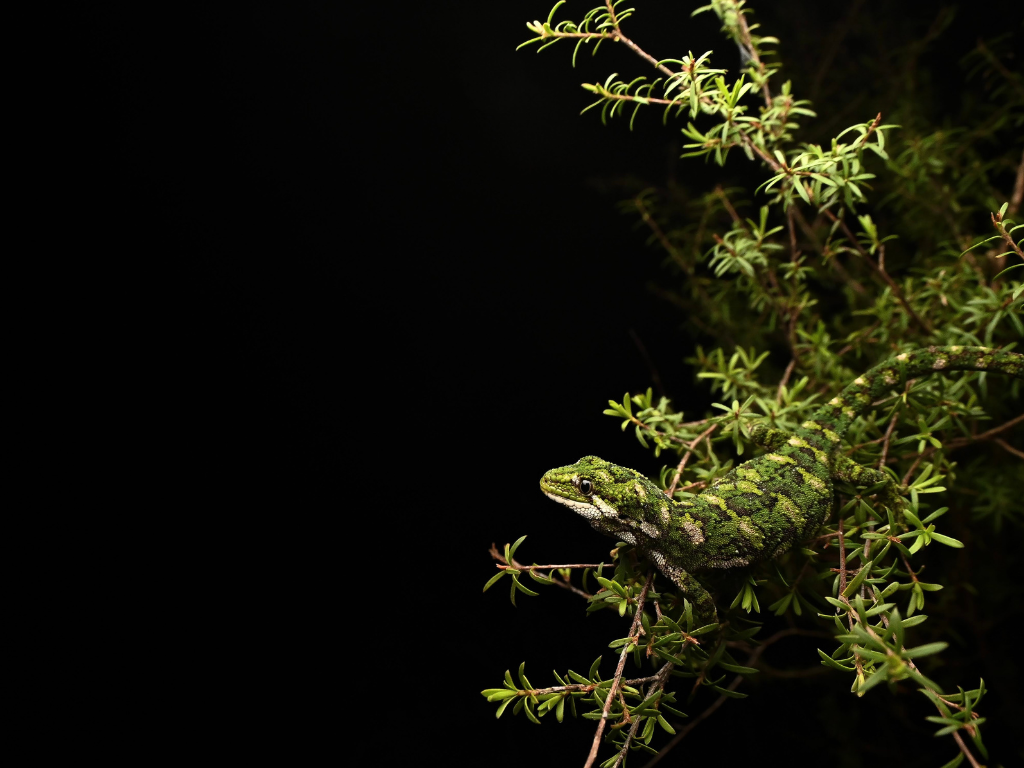
“There aren’t many animals that you as an individual can have that profound effect upon that quickly,” he continues. “It might only be 10 square metres to you, but for that animal, it’s literally their entire universe.”