
After more than 100 years, kiwi are finally back in the hills above Wellington, showing up in backyards and at mountain bike parks. What got them there was years of controlling stoats – and unexpectedly, a ten-centimetre piece of wood.

Stoats are the number one killer of kiwi chicks.
To release kiwi into Wellington, the Department of Conservation required that stoat numbers be detected in no more than 5% of lured tracking tunnels, measured quarterly for three consecutive years. It’s a high bar, and any conservation project aiming to restore kiwi has to be laser-focused on removing stoats and keeping them at bay. With the current tools available, the best way to get rid of stoats (PDF, 2 MB) is with ground traps.
When Capital Kiwi launched its project to restore a large wild kiwi population in the southern hills around Wellington, the team encountered a frustrating problem: hedgehogs kept clogging their ground traps.
While hegehogs are damaging to many native species, particularly in braided river systems, they were not a primary concern for the goals of Capital Kiwi.
Every time a hedgehog sets off a trap, in this case DOC 250s and DOC 200s, it’s a lost opportunity to catch a stoat. As traps are checked monthly, it means that the trap is out of action to catch stoats until it’s reset.
And when your project area is 24,000 hectares with 5,300 traps, that delay matters.
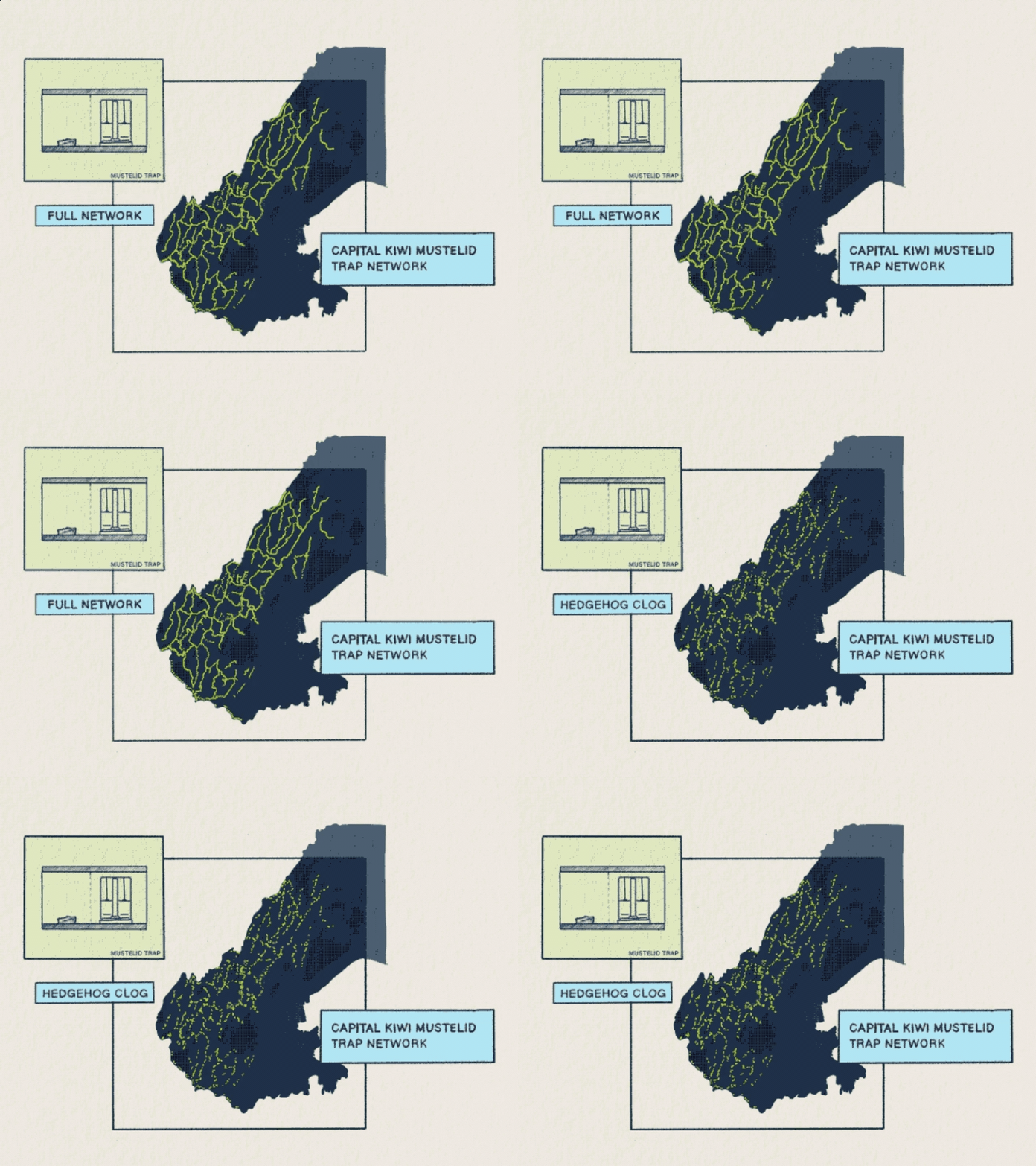
So, they turned to science and field trials. Captial Kiwi Science Advisor Dr Christine Stockum led a research project and their solution to trap fewer hedgehogs and catch more stoats was recently published in the international journal Conservation Science and Practice (PDF, 14.5 MB).
The 10 cm modification
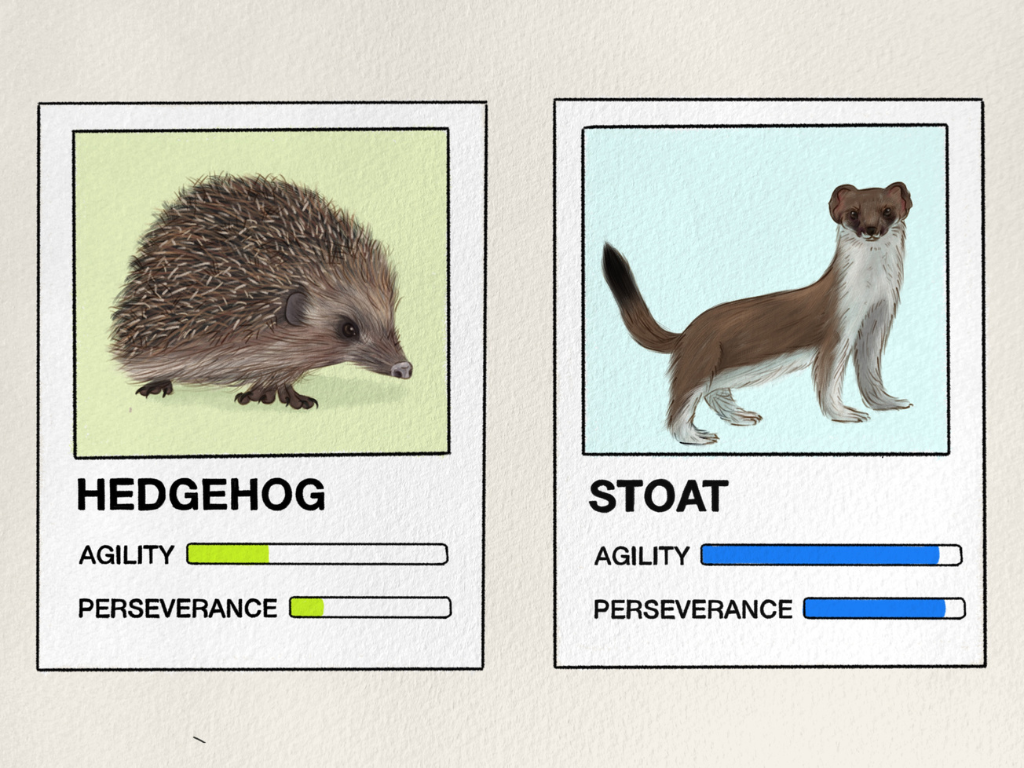
The solution for the “chog clog”, as it became known among the team, was rooted in animal behaviour.
Hedgehogs are able, but reluctant, climbers. Stoats, by contrast, are exceptionally agile and skilled climbers. The team wondered if raising the traps would discourage the stumpy-legged hedgehogs.
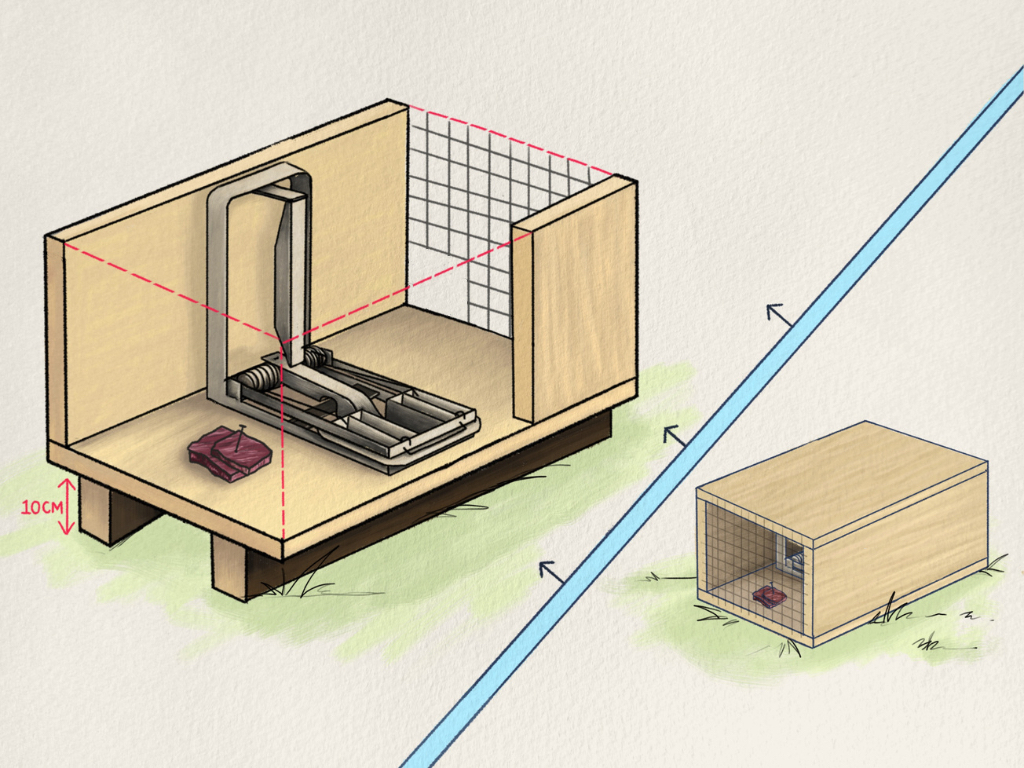
Capital Kiwi mainly used DOC 250 and DOC 200 series traps: robust, multi-species traps designed to target stoats and ferrets, and housed in wooden boxes placed on the ground.
The team trialled lifting the traps up 10 cm off the ground.
Eight traplines were used, totalling 214 traps: 107 raised and 107 control traps.
Traps were raised using 2×4 wooden blocks to standardise the distance from the ground, and vegetation was cleared from the trap entrance. All traps were serviced and lured in the same way.
“We wanted to ensure that our operational decision was based on more than just a hunch. We wanted to know that raising the traps achieved its goal – less chog clog – but we also needed to gain assurance that raising the traps wouldn’t lead to catching fewer stoats – our number one target to enable kiwi chick survivorship,” says Paul Ward, founder of Capital Kiwi.
Crunching the numbers indeed showed that raised traps caught markedly fewer hedgehogs, but they also delivered an unexpected result: the raised traps caught significantly more stoats than the traps left on the ground.
Lifting the traps by only 10 cm proved to be a fast, cheap fix that immediately freed them to catch the project’s number one target: stoats.
The details matter
It seems like just a modest tweak, but backed by scientific evidence, raising the traps helped Capital Kiwi operate more efficiently to bring kiwi back to Wellington and keep them safe.
The hills of Wellington are now home to more than 200 brown kiwi, many of which are breeding and successfully raising chicks to the 1 kg weight at which they’re considered able to fight off the threat of a stoat.
“The rate at which our chicks are reaching stoat-proof weight is, pun fully intended, beyond our wildest expectations,” says Paul.
“Build the relationships with communities, iwi, and landowners necessary to get networks of protection out there.
“A block of wood might seem basic – it’s not a silver bullet or a substitute for getting out and doing the mahi, but it’s an example of getting to know your landscape, paying attention to its signals, and setting up systems to help you make informed decisions … when you’re tweaking a network of over 5,000 traps, assurance helps!” says Paul.