To achieve Predator Free 2050, every last individual predator needs to be caught – and the final few are often the hardest. That’s why scientists at Bioeconomy Science Institute (formerly Manaaki Whenua) are investigating how to get the last 1%. Could a central nervous system drug, or high-sugar, high-fat foods, coax shy predators into traps?
Too cautious to catch: the last 1%
Animals that evade traps and toxins aren’t random. They are survivors, shaped by experience and personality. They may have had a bad experience with a trap (that’s why properly set traps and smooth entrance holes are crucial!) or a sub-lethal toxin dose that makes them sick. Some are naturally the most cautious, least impulsive individuals.
In a small forest reserve in Canterbury, scientists helped a community group set up a trap network to eliminate possums. Most of the traps were of the “head-in” variety, where the trap is triggered when an animal sticks its head into the opening in search of food.
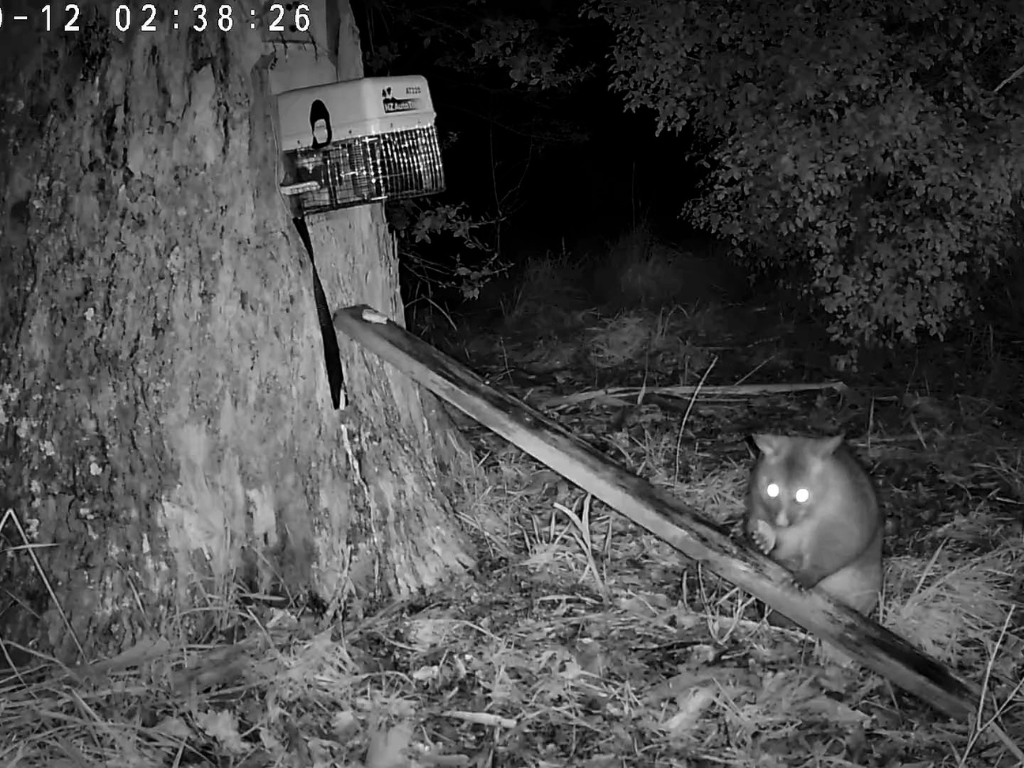
Over seven months, dozens of possums were caught, but trail cameras revealed the remaining possums would not put their heads in the traps.
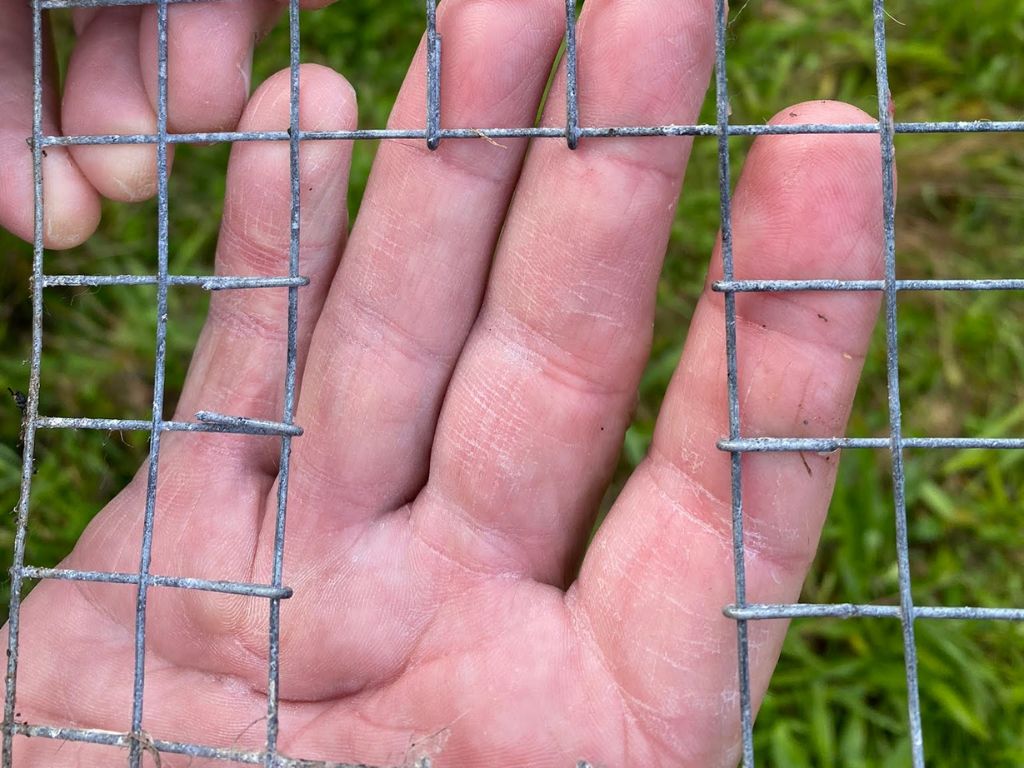
“The possums did everything, crawl, sniff and clamber around, but they would not put their head in the trap,” says senior research scientist Graham Hickling in a presentation of his research.
“We estimated we got 95% of the population. The question is, how do we target the last few?”
What trap shy animals are teaching scientists
This led the researchers to ask: could something so tempting that it triggers reward-seeking behaviour override caution?

In a series of captive trials, researchers tested pre-feed baits containing central nervous system stimulants to see if they could boost curiosity and reward-seeking behaviour in ship rats and possums.
“In mammalian brains, food rewards activate a neural circuit that triggers dopamine release, which reinforces the drive to seek out further rewards. This brain pathway can be hijacked by sugar or amphetamine,” says Graham.
They trialled three drugs commonly used for humans: dexamfetamine, oxycodone, and varenicline.
The results were the exact opposite.
“We saw reduced reward seeking with all three treatments. It was pretty disappointing and unexpected,” Graham says.
Possible reasons include dosage issues, trial duration, and the difficulty of testing captive animals.
The research confirmed something predator free projects are increasingly grappling with: success hinges on outsmarting the last animals. The solution isn’t plonking more traps out there; it’s designing systems that don’t let them get away.
Where to next? Oreos, obviously
“We’ve taken a step back to the idea that sugars and fats also operate on the dopamine cycle,” Graham says.
Anyone who can’t stop after just one potato chip or piece of chocolate can attest to that.
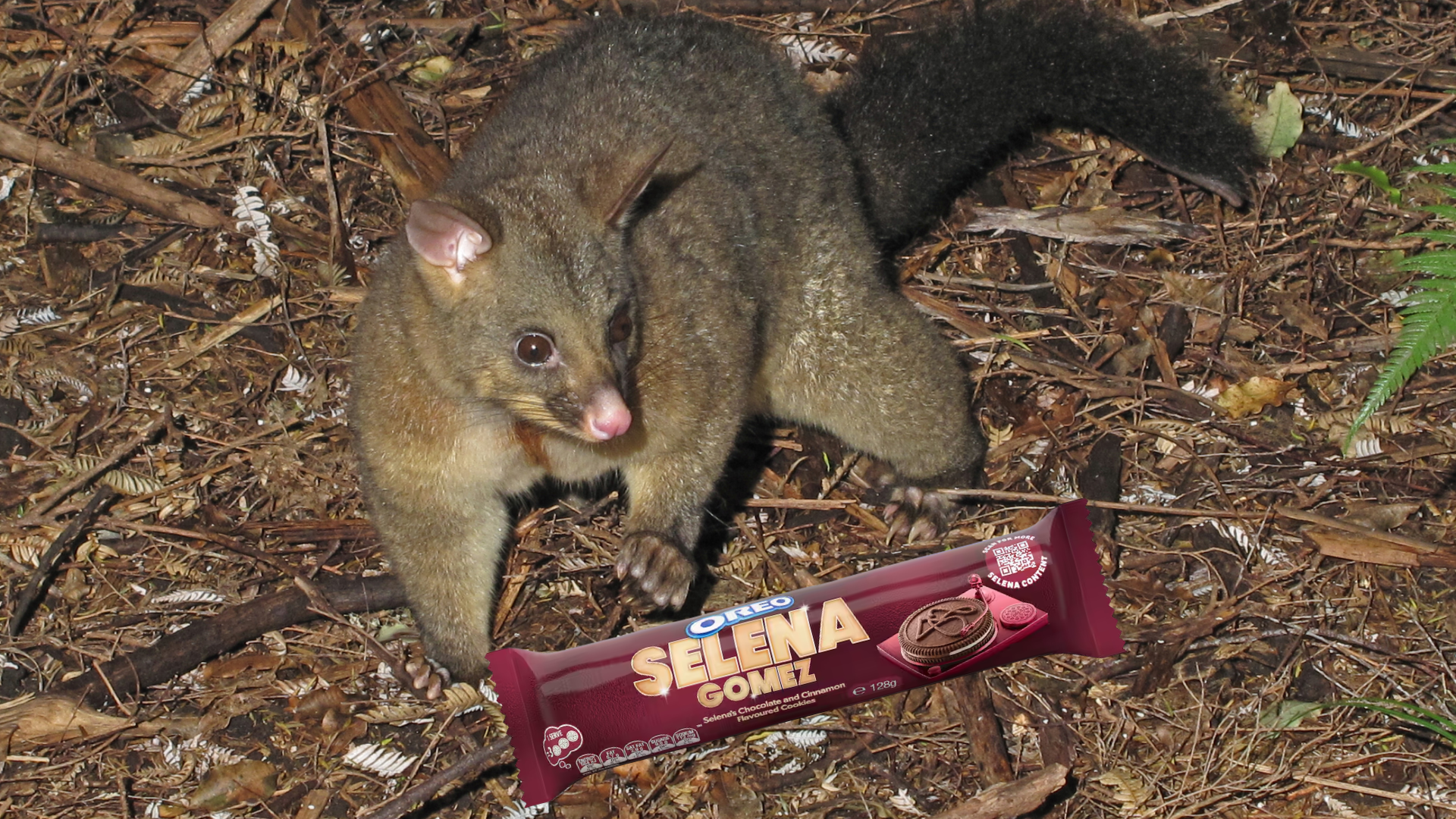
The researchers started early field trials with Oreo cookies as the incentive food, by chance, a limited edition chocolate cinnamon flavour Oreo was on supermarket shelves at the time. Cinnamon is a highly preferred lure for possums, and chocolate is favoured by ship rats.
In nine days before prefeeding, one possum was caught. When researchers placed Oreo cookies leading up to, and inside a trap, 15 possums were caught in just 20 days.
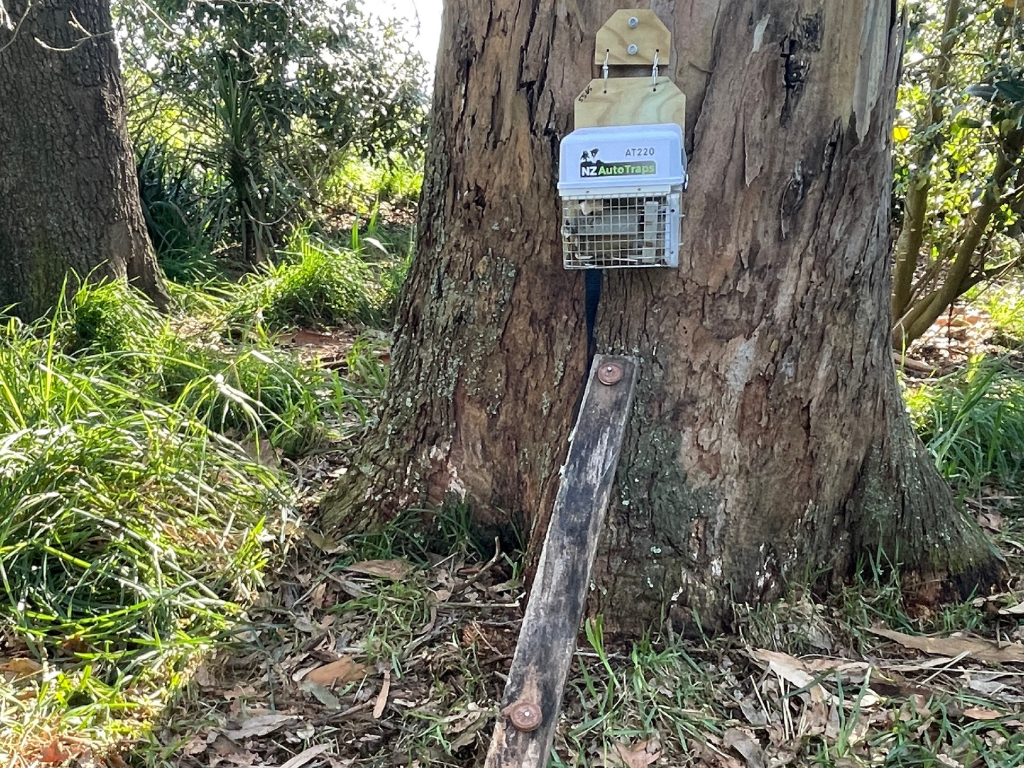
By day 30, trail cameras were picking up only one survivor. This possum would eat Oreos from around the trap, but still refused to put its head in.
“We added a more open trap design that doesn’t require putting a head into an enclosed space.” Two nights later, they caught the final possum.
“This suggests prefeeding with high rewards can incentivise some trap-shy animals. The last 1% are probably going to avoid head-in traps regardless of prefeed.
“It’s a difficult topic to target these survivor individuals. It’s a paradox: you can’t study untrappable animals in captivity because you can’t catch them. In the field, it’s difficult to separate a genuine survivor from a new immigrant into the area,“ says Graham.
The trials didn’t go as expected, but each one teaches us more about how to outsmart introduced predators. Understanding how animals think, learn and survive is the difference between catching 99 and 100%.