
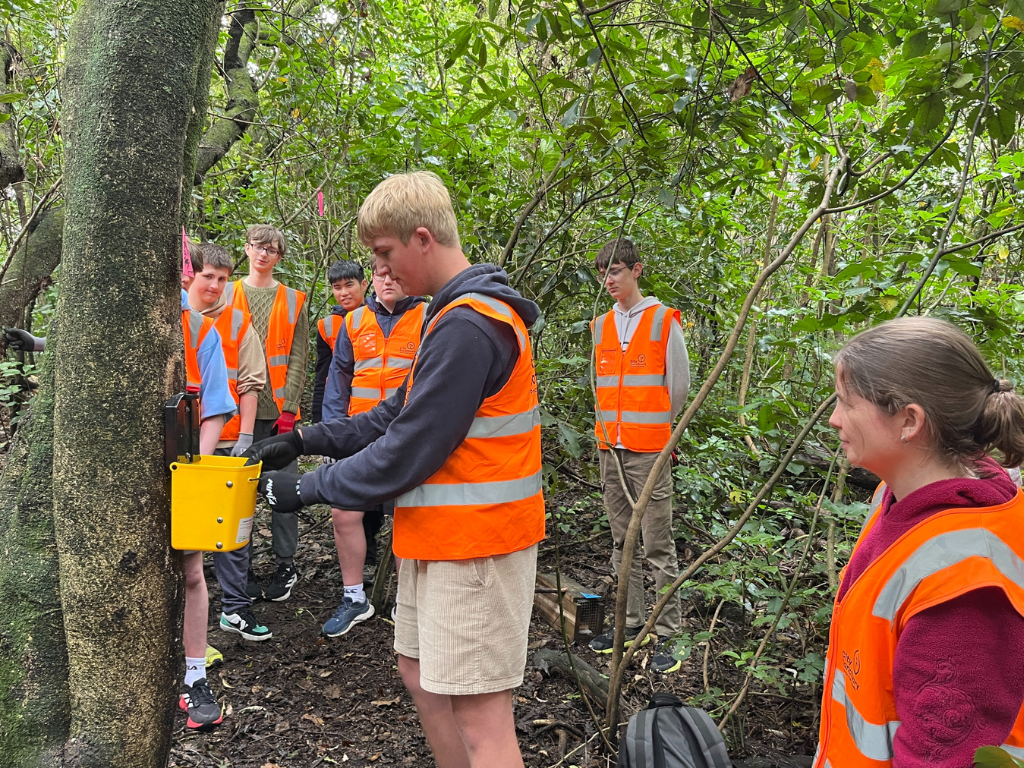
Year 12 student Mathew Campbell is teaching younger students how to check traps in the Ōtepoti (Dunedin) town belt. A few years ago, he was the kid asking the questions. Now he’s the one answering them.
“It’s quite cool, especially seeing the younger kids that come through, because they just have a lot of energy and positive attitudes towards what we can get done, and that’s quite refreshing,” Mathew, an Otago Boys’ High School Year 12 student, says.
He is one of many for whom the Dunedin town belt has become the backdrop for understanding their role in the natural world.
“It’s part of our identity, almost,” Mathew says. “We feel quite lucky to be in a space that has so much nature and so many species when some places don’t, and it’s really good for us to learn to appreciate the environment.”
Fresh faces of conservation
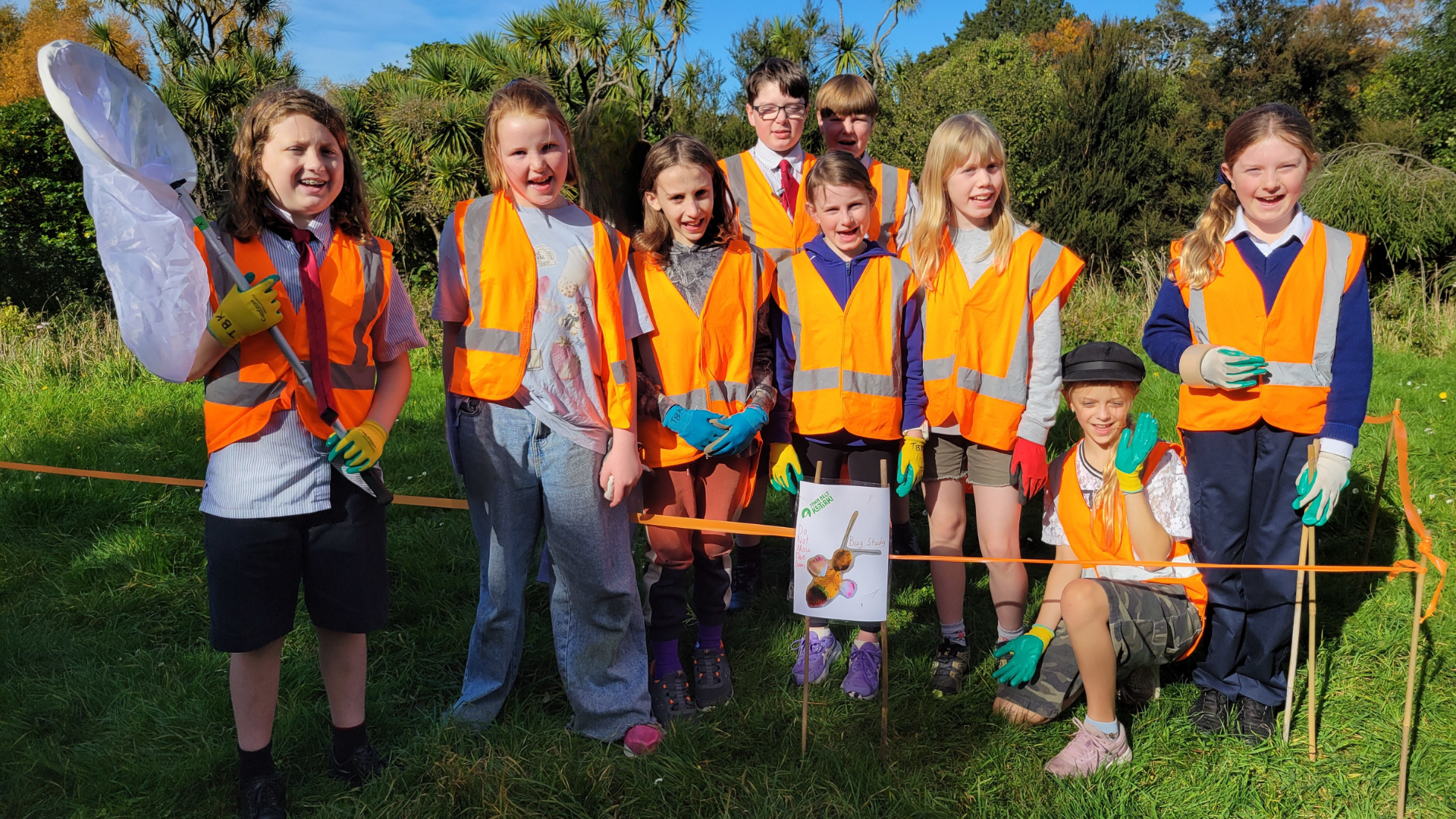
Mathew is one of the young leaders of Town Belt Kaitiaki (TBK), which supports more than a dozen schools and early childhood centres to bring learning to life outdoors.
The programme is supported by Predator Free Dunedin’s City Sanctuary, which operates across Dunedin’s urban areas, parks and reserves.
Mathew says that while he had an interest in conservation growing up, he only joined TBK a few years ago after being inspired by some older students. Now part of the group’s leadership team himself, he mentors other boys on a trap line set up around the school grounds.
He believes the programme helps young people realise they can contribute meaningfully to the predator free goal.
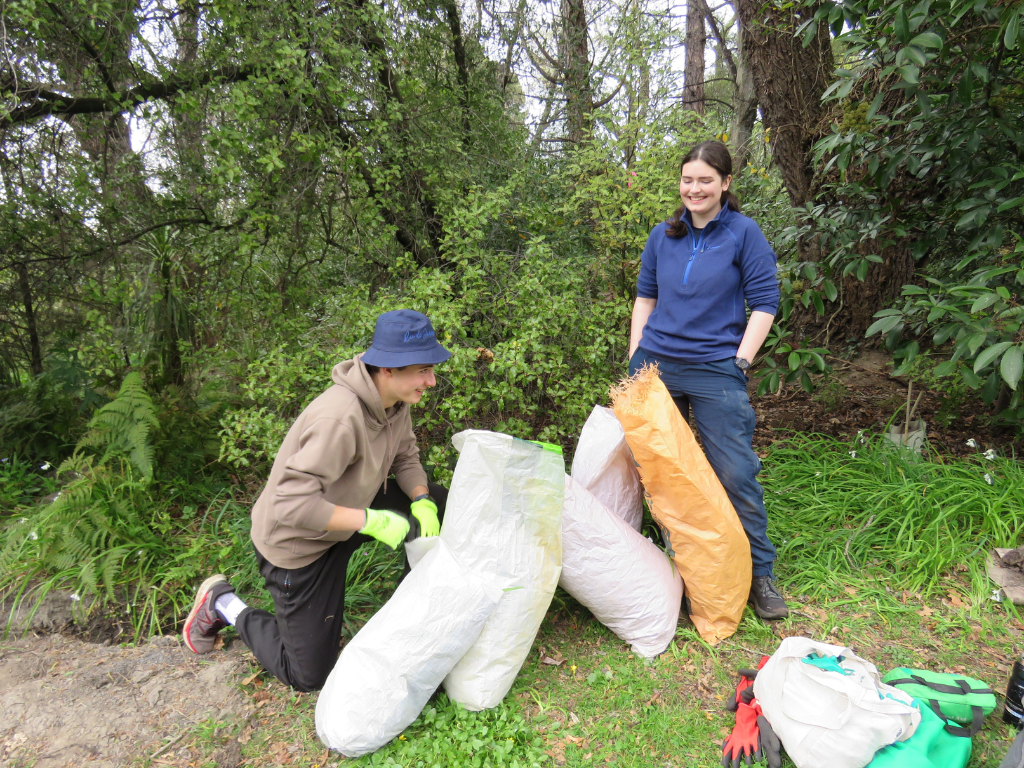
“You feel like you can actually do something, rather than just talking. Even from a young age, it’s a really purposeful thing to do.”
TBK senior education coordinator Maureen Howard believes the town belt is an invaluable resource for around 30 learning institutions that are within a kilometre of it.
From tree planting, weeding, and trapping, to wildlife monitoring, poetry, and science experiments, the town belt has many lessons to teach.
For her, it’s especially critical that young people spend time outdoors, given most people now live in urban areas.
“It’s so important because we’re not going to protect biodiversity unless we care for it. And we won’t care for it unless we actually know it and love it.”
City Sanctuary acts as the technical backbone for the wider conservation effort by training educators, ensuring health and safety, supplying tools, and building the capability of schools and groups so they can confidently lead their own predator free and biodiversity projects.
Young people the key to growing a lasting predator free movement
The City Sanctuary team also works directly with children, and its support extends to young people not in work or education, opening a pathway to conservation as a potential career.
In 2019, City Sanctuary was funded to conduct first-of-its-kind research in Dunedin, examining the best ways to engage different demographics on predator control in urban areas.
Project manager Kate Tanner says the findings strongly suggested young people were the key to growing a lasting movement.
“Winning the hearts and minds of the youth was the best way to create environmental actions from teachers, their school programmes, and their parents. If we got them excited about the work we do, it was contagious,” she says.
A teacher by background, Kate knows firsthand the difference engagement in conservation can have for those who struggle with traditional schooling.
“We often get people who absolutely shine when they’re connected to nature. We watch them grow and glow when they’re taken out of the classroom environment and into the work we do,” she says.
“Kids are the precious blank canvases that we can fill with this important information. As they turn into the older generations, we’re hoping they can rinse and repeat.
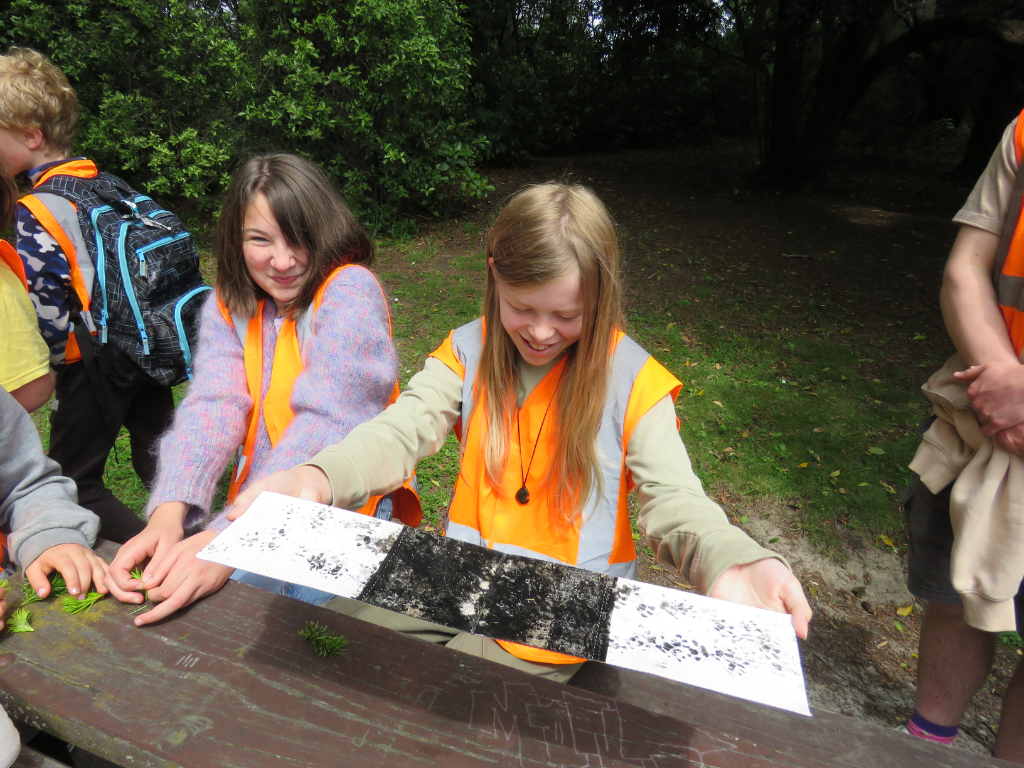
“We need everyone on board, and what better place to start than with our children.”
For Mathew, that future feels close. He already sees himself carrying on this work beyond high school.
“You can do a trapline until you retire,” he says. “We have people who help out from the university. They’re role models for people like myself because we see these almost adults, and they’re still working towards the same goals as us.”