Comic: bird nerd explains 1080 in a mast year

  1. Home
  2. /
  3. Research
  4. /
  5. Techniques and technologies
  6. /
  7. Comic: bird nerd explains 1080 in a mast year

Illustrator Andrew James outlines how the Department of Conservation is planning to respond to this summer’s forecast beech mast.
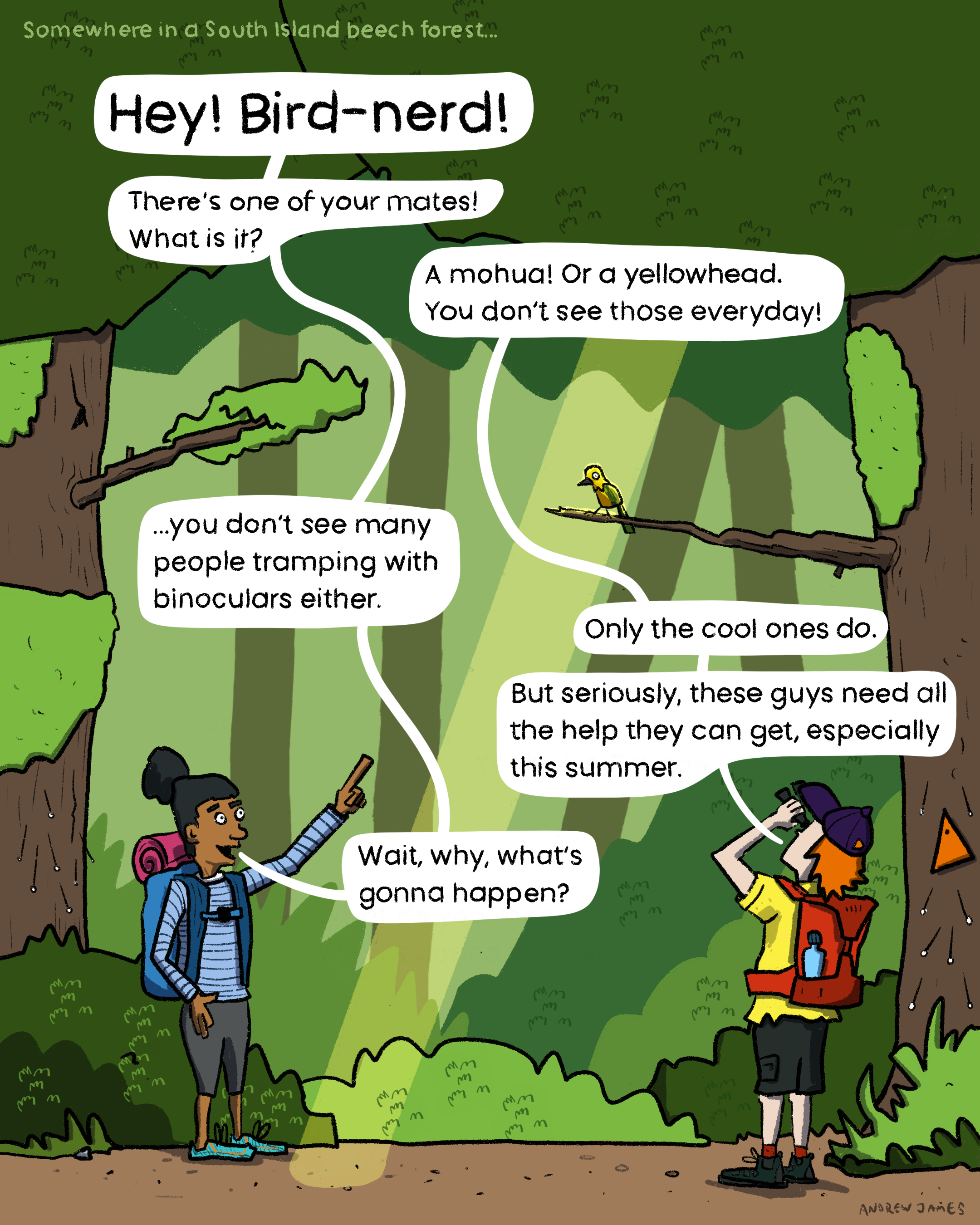
Somewhere in a South Island beech forest... “Hey! Bird-nerd! There’s one of your mates! What is it?” “A mohua! Or yellowhead. You don’t see those every day.”
“…you don’t see many people tramping with binoculars either.”
“Only the cool ones do. But seriously, these guys need all the help they can get, especially this summer.”
“Wait, why, what’s gonna happen?”
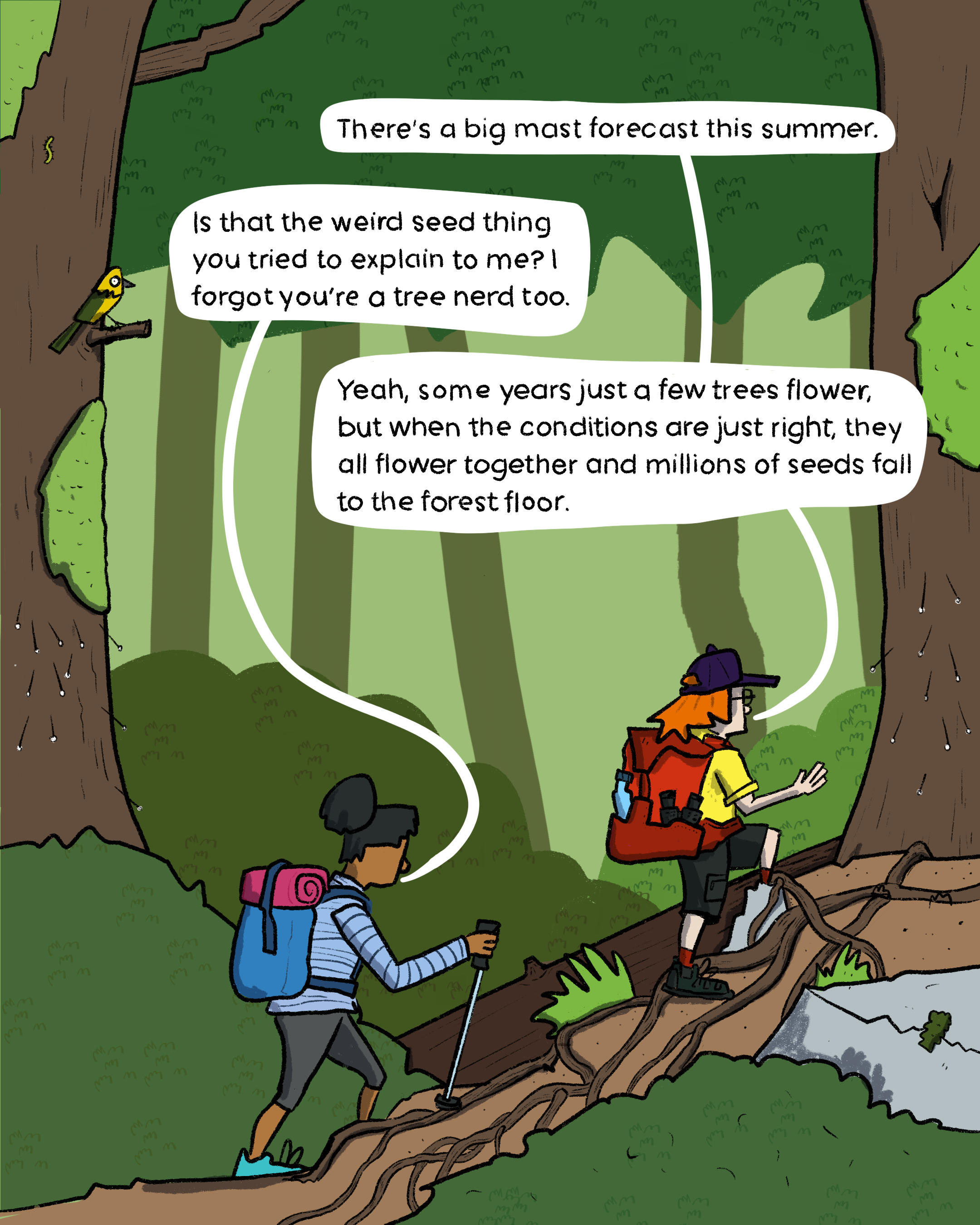
"There's a big mast forecast this summer."

"Is that the weird seed thing you tried to explain to me? I forgot you're a tree nerd too."

"Yeah, some years just a few trees flower, but when the conditions are just right, they all flower together and millions of seeds fall to the forest floor."
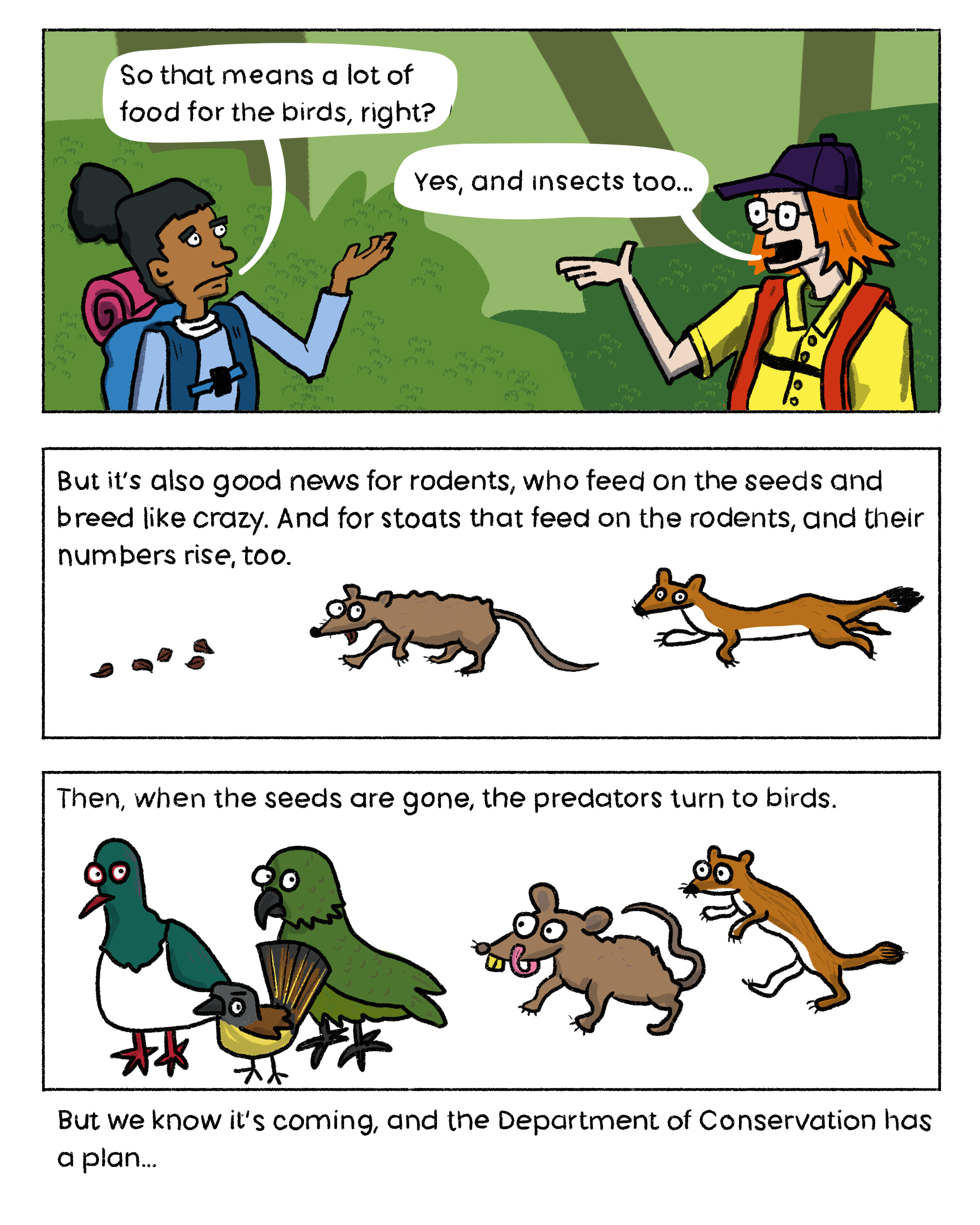
"So that means a lot of food for the birds, right?" "Yes, and insects too..."

“But it’s also good news for rodents, who feed on the seeds and breed like crazy. And for stoats that feed on the rodents, and their numbers rise, too.” 

“Then, when the seeds are gone, the predators turn to birds.” 

“But we know it’s coming, and the Department of Conservation has a plan…”
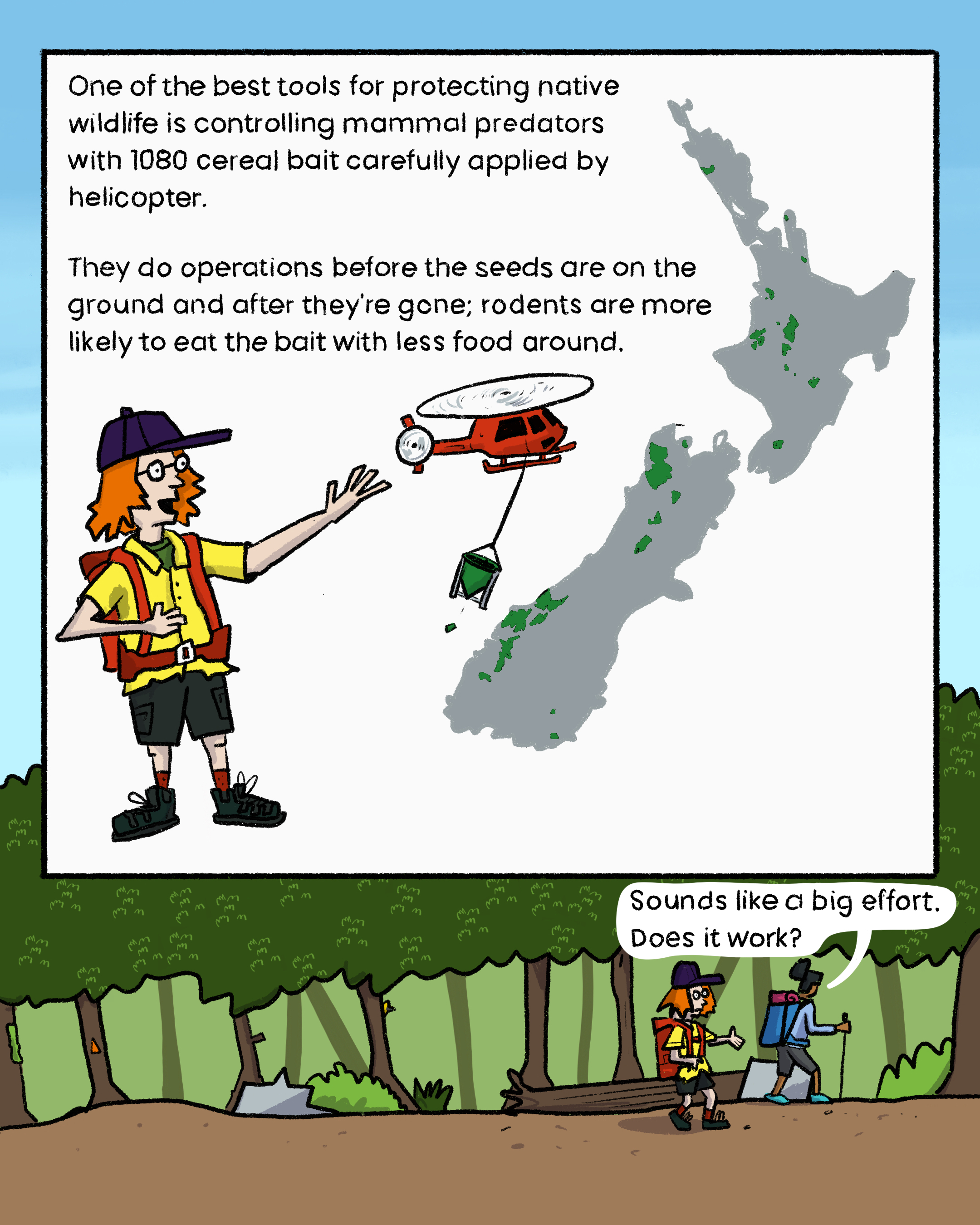
“One of the best tools for protecting native wildlife is controlling mammal predators with 1080 cereal bait carefully applied by helicopter.” “They do operations before the seeds are on the ground and after they’re gone; rodents are more likely to eat the toxic bait with less food around.” 
“Sounds like a big effort. Does it work?”
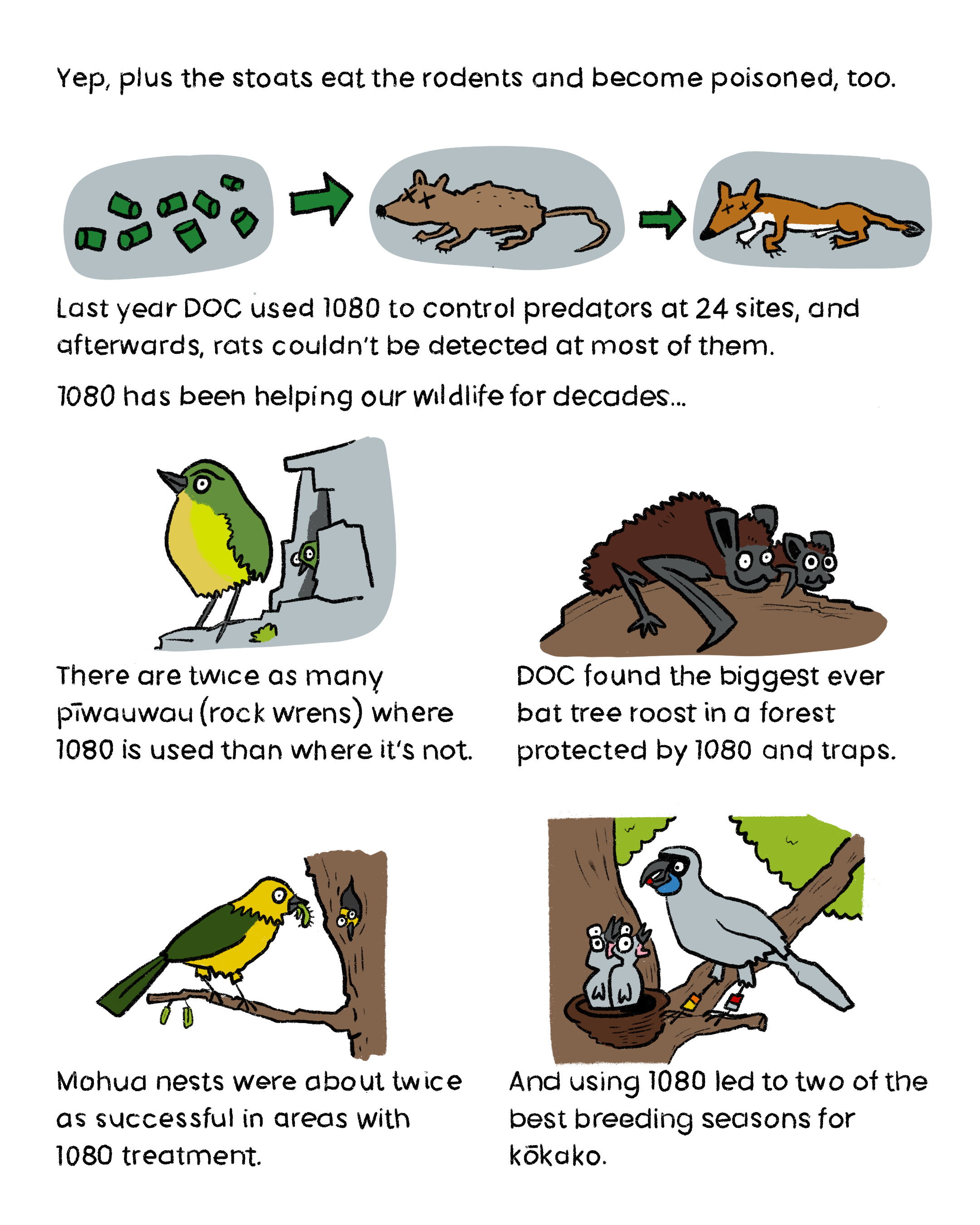
“Yep, plus the stoats eat the rodents and become poisoned, too.” “Last year DOC used 1080 to control predators at 24 sites, and afterwards, rats couldn’t be detected at most of them.” “1080 has been helping our wildlife for decades...” 
“There are twice as many pīwauwau (rock wrens) where 1080 is used than where it’s not.”
“DOC found the biggest ever bat tree roost in a forest protected by 1080 and traps.” 
“Mohua nests were about twice as successful in areas with 1080 treatment.” 
“And using 1080 led to two of the best breeding seasons for kōkako.”
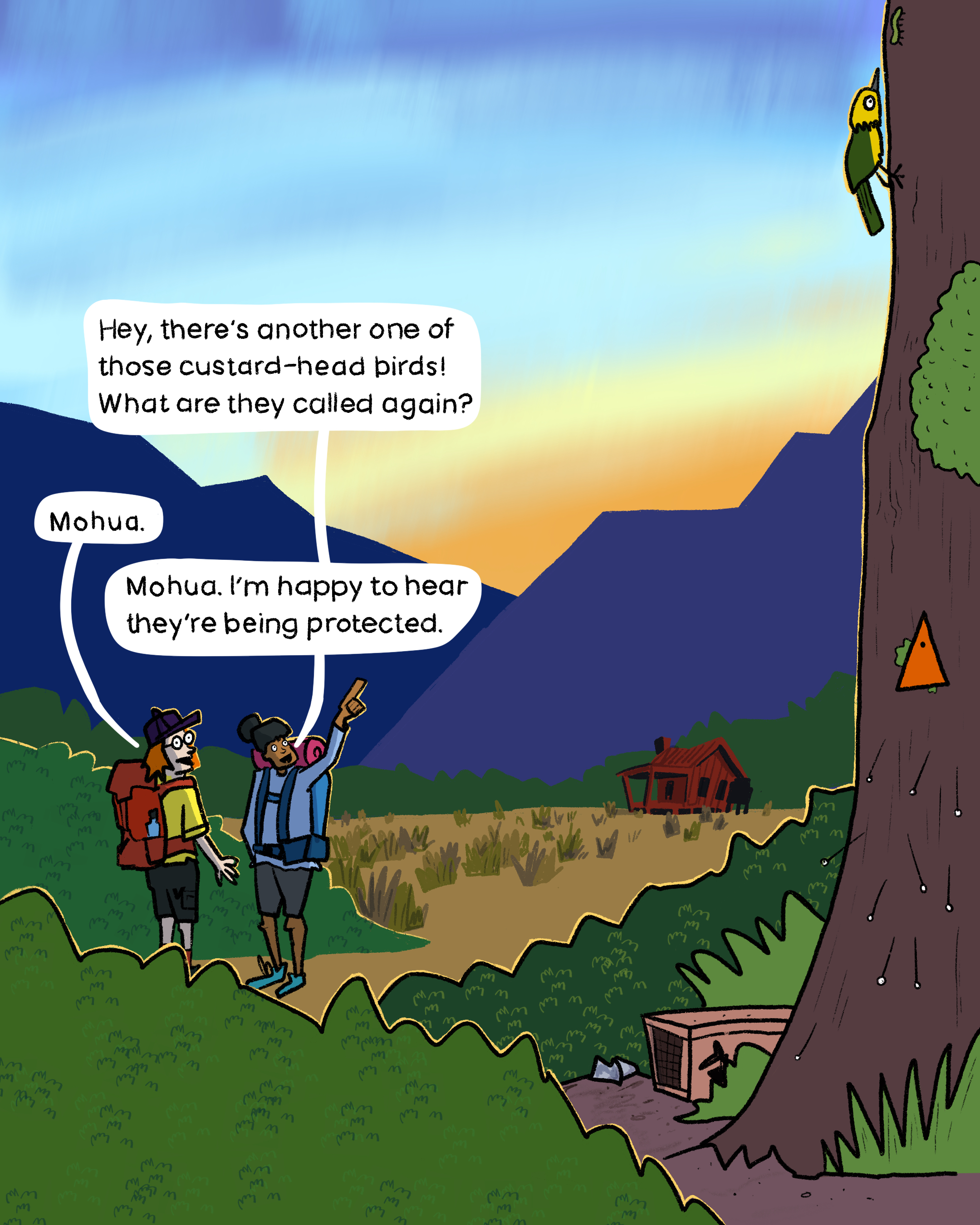
“Hey, there’s another one of those custard-head birds! What are they called again?” “Mohua.”“Mohua. I’m happy to hear they’re being protected.”

You can download a copy of Bird nerd explains 1080 in a mast year (PDF, 3.4 MB).

Media release: DOC ramps up pest control ahead of major mast.

Sources:

National map

Click our map to discover the extent of predator control being undertaken throughout the country.

Click our map to discover the extent of predator control being undertaken throughout the country.

Sign up to our newsletter

Trapping tips, stories from the movement and the latest research in your inbox.

* indicates required

Our vision

To connect and energise all New Zealanders towards a predator free New Zealand to enable our native species to thrive.

Follow us

© Predator Free New Zealand Trust