
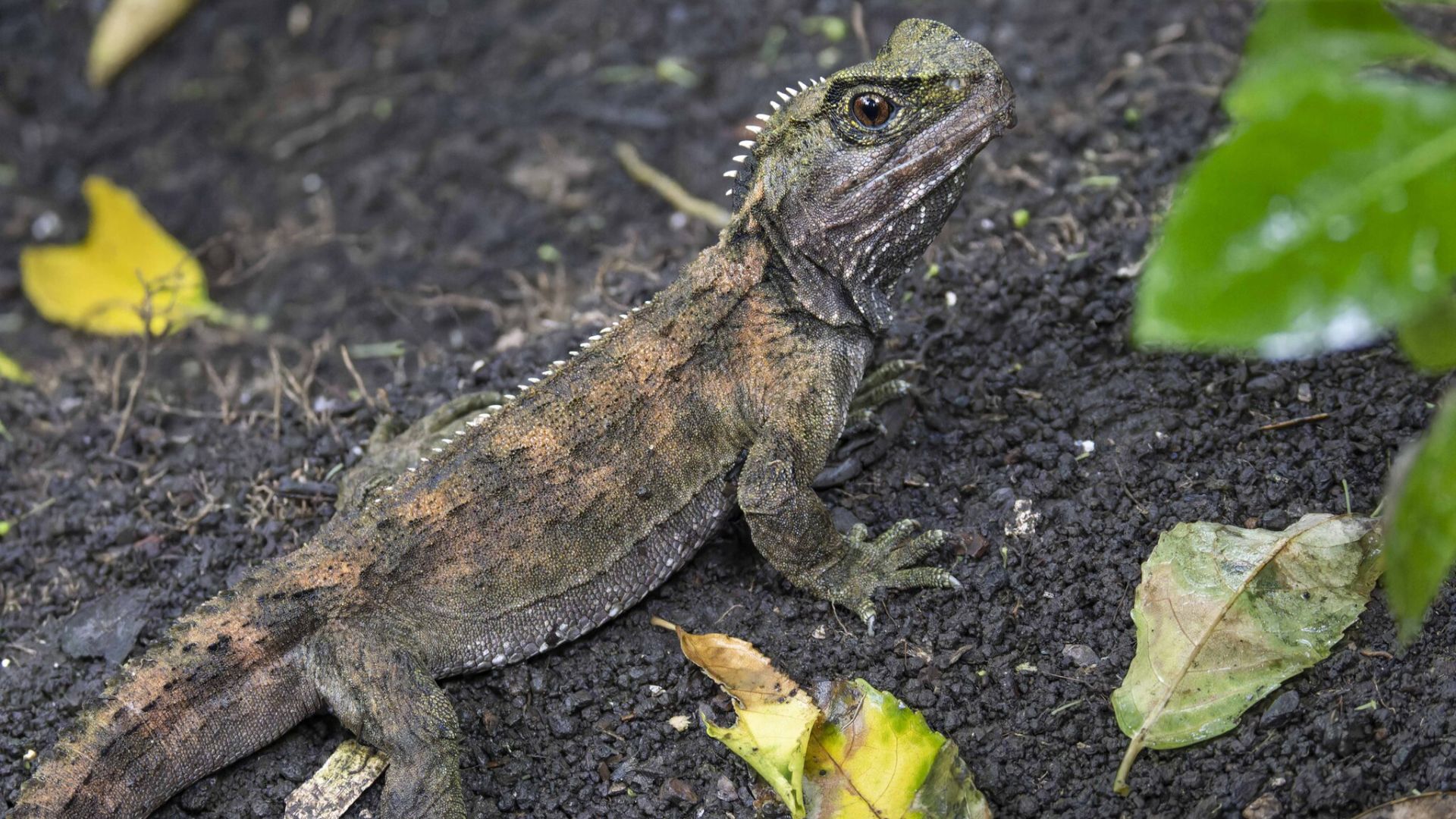
Tuatara owe their survival to rat control. Without rat toxin, these ancient reptiles would likely be wiped out by rats that consume their eggs and eat their invertebrate food. But, researchers have uncovered a twist: the very toxin that cleared the way for tuatara to live can also harm them. It’s a conservation catch-22 – but one that a new rat-specific toxin, norbormide, might help solve.
The lifesaver with side effects
Rats and tuatara don’t mix. At all. Where there are rats, there are no tuatara. Once found throughout New Zealand, tuatara were all but wiped out on the mainland, with the finger pointing to the earliest arrival of rats, kiore. Rats feast on the slow-breeding reptiles’ eggs and young, and compete for food.
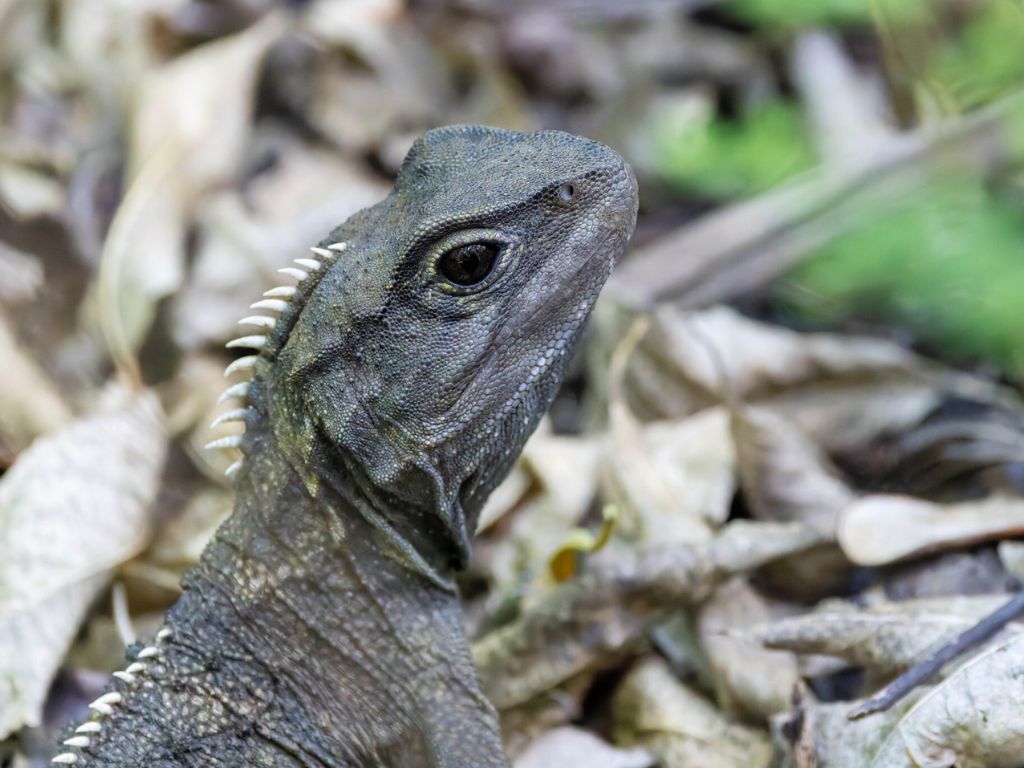
As ambush predators – tuatara just sit and wait for prey to cross their paths – they need a lot of insect action. They thrive on rat-free offshore islands, especially where seabirds’ guano creates an insect bonanza.
So, we know that rats pose an insurmountable problem for tuatara.
But analysis recently published in the New Zealand Veterinary Journal has concluded that the rat poison that helped create predator free islands has most likely proven fatal to tuatara. That could mean other native reptiles have suffered the same fate.
The analysis is of three South Island tuatara that died at a zoo facility between 2017 and 2019. Researchers discovered common rat poison called brodifacoum in all three tuatara, along with signs of anticoagulant poisoning. A limited understanding of how reptiles and tuatara respond to the toxin prevented a more definitive diagnosis.
Always read the label
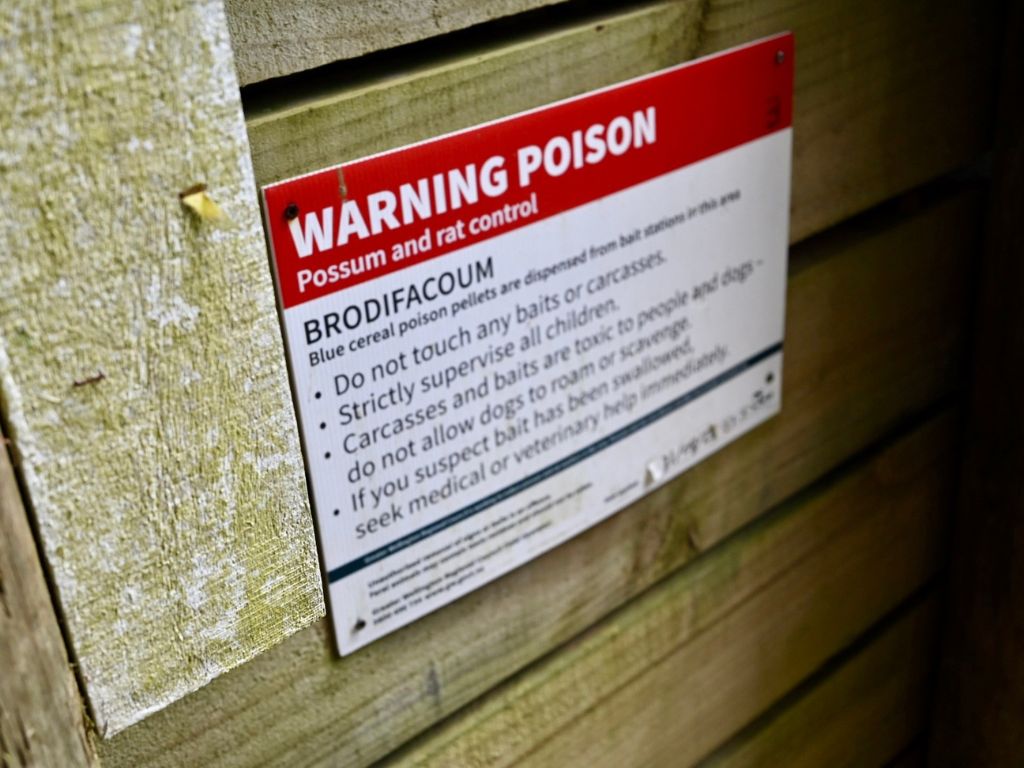
Brodifacoum is a widely used rat poison. If you’ve purchased rat poison from a supermarket or hardware store, chances are, it contained brodifacoum.
The Department of Conservation (DOC) stopped using it on the mainland in 2002 due to concerns that it was persisting in the environment; however, it continues to be used by private landowners, councils, community groups, and, evidently, zoos. NZ Food Safety is reassessing poisons that contain brodifacoum.
In the case of the poisoned tuatara, baits had been used just outside the tuatara enclosures continuously for six years, up until the diagnosis of suspected brodifacoum poisoning.
Researchers suspect insects fed on the bait before crossing paths with hungry tuatara. The poison may have slowly built up in the reptiles’ system, eventually overwhelming them.
Professor James Russell of the School of Biological Sciences at the University of Auckland says this research is important and shows the indiscriminate use of toxins can cause unintended harm.
“However, toxins are also important in managing threats to reptiles – the greatest of which is introduced rodents. Thanks to the judicious use of brodifacoum, rodents have been eradicated from over 100 islands around New Zealand, saving tuatara and many other native species.”
Russell points out that because tuatara can’t survive in rat territory, it’s uncommon for brodifacoum to be used where they are present, unless there has been a reinvasion. When there has been a reinvasion, removing the rats would have a “by far greater impact” than using brodifacoum, if that is the best tool available.
He urges caution when using the poison. “Although brodifacoum is easily available over the counter, we must resist the temptation to always default to it when other rodenticides are available,” Russell says.
“One always needs to check the ingredients and find out which type of anticoagulant is the active ingredient, or consider if alternative non-anticoagulant toxins might be just as suitable.”
Professor Nicola Nelson, Faculty of Science and Engineering, Te Herenga Waka – Victoria University of Wellington, says, “We don’t understand enough about the levels that cause death in our native species or the sub-lethal consequences.
“For reptiles with body temperatures following the environment, effects may be drawn out over a longer time frame… The potential for sub-lethal effects that reduce an animal’s capacity to avoid predation is a further pressure on threatened species.”
Hope! The rat-specific poison that doesn’t harm other creatures
A team of scientists (from Invasive Pest Control, Boffa Miskell and Auckland and Lincoln Universities) has been investigating a potential rodent-specific poison, norbormide. It’s looking like a game-changer of a poison – it’s fatal to rats, but not to other mammals or birds, and it doesn’t bio-accumulate, so it can’t be passed on by insects.
The poison was initially discovered in the 1960s as part of an arthritis research programme, but its use fell away when rats’ incredible adaptive feeding strategy – eat a bit and see if it makes us sick – proved an effective foil.
The team of scientists has been researching the effects of luring rats with a non-lethal form, then baiting with the genuine article. Remarkably, trials at poultry farms and in native forests have resulted in the complete eradication of the rat population.
Major predator free projects Predator Free Wellington and Tū Mai Taonga on Aotea Great Barrier Island are currently trialling norbormide as part of its registration requirements.
Toxins are an effective tool to reduce predator numbers, but require extra consideration and care of the associated advantages and disadvantages.